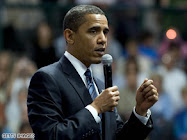
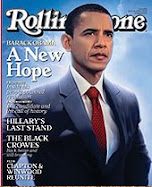
The tragedy of Trayvon Martin is the outrage that incensed Black America. The killing of a black teenager, in which the killer is not even questioned, is such an indignity that a movement has been born. This is the Emmett Till case in the time of social media. In addition to the social media, there are now black voices in mainstream media who can articulate the pain of what it means to be Trayvon Martin. As said: "We are Trayvon Martin!" With Reverend Al at the forefront of this struggle as activist/journalist, he challenges and reports. There are other voices, as well: Melissa Harris-Perry; Michael Eric Dyson; Mark Thompson, Joe Madison, Charles Blow, Karen Finney, Jonathon Capehart, and many other blacks who provide an inner voice on the meaning of Trayvon Martin. It took the President to say: If I had a son he would have looked like Trayvon.
The President's Remarks
Showing posts sorted by date for query melissa. Sort by relevance Show all posts
Showing posts sorted by date for query melissa. Sort by relevance Show all posts
Saturday, March 24, 2012


Tuesday, January 26, 2010
Dyson Corrected: On Obama and Race
Writing for the Nation Melissa Harris-Lacewell checks Michael Eric Dyson on Obama and race. Michael Eric Dyson, speaking for the Tavis Smiley clique, blasted the President saying "[Obama] runs from the issue of race like blacks running from cops!!!" Unbelievable!!! Tavis is understandable. He wants to be THE black leader or at pick who that person will be. Thanks to Professor Harris-Lacewell she takes on Dyson and the clique. RGN
All progress is precarious, and the solution of one problem brings us face to face with another problem. –Martin Luther King, Jr.
Barack Obama accepted the Democratic nomination for the presidency on the anniversary of Martin Luther King Jr's historic "I have a dream" speech. He was inaugurated the day after our national holiday celebrating the life and accomplishments of Dr. King. Many asked if Obama's presidency was the realization of King's dream. Cultural products, from t-shirts to YouTube videos, linked Obama's election to King's legacy.
Some observers have made far less complimentary comparisons between the men. Some self-professed keepers of King's legacy have insisted that Barack Obama is embarrassingly anemic on issues of race. Remembering King as an uncompromising paragon of progressive politics, these "black leaders" judge Obama as a wishy-washy sell-out, unwilling to stand firm for his constituency.
This sentiment was perfectly captured last week in the outrageous comments of African American Georgetown University professor Michael Eric Dyson. Lost in the din surrounding Harry Reid's "Negro dialect" comments and Rush Limbaugh's scandalous tirade about Haiti, was Dyson's assertion that "Barack Obama runs from race like a black man runs from a cop."
Dyson's comment is both offensive -to President Obama and to black men in general- and false- no other American presidential candidate paused in the middle of a campaign to deliver an exquisite commentary on race. Still, Dyson's sentiment is indicative of a small, but vocal group of black public intellectuals who have regularly criticized Obama during his campaign and his presidency.
Often comparing Obama explicitly to Dr. King, they conclude the President lacks the moral courage or Leftist determination of the civil rights icon.
I disagree. Barack Obama is stunningly similar to Martin Luther King, Jr., but to see this similarity we must relinquish the false, reconstructed memories of perfection we currently project onto King.
Martin Luther King, Jr. was a political philosopher and dedicated freedom fighter, but he was also a pragmatic political strategist. Seen through the perfecting lens of martyrdom, King appears to be to be an uncompromising progressive leader, undeterred by seemingly insurmountable challenges, willing to risk all to achieve the goals of his movement.
To see King exclusively in these terms requires active, willful revision of history. In his political work, King was surprisingly like President Obama. And I don't mean the oratory.
Consider this. Martin Luther King Jr. turned his back on Bayard Rustin. Rustin was his dear friend and trusted advisor. Rustin was the architect of the March on Washington. A fierce, lifelong pacifist, Rustin shepherded a young King through his first non-violent, direct action protests. Without Rustin there would have been no March on Washington and no national audience for the articulation of King's great dream.
Yet when he was pressed, Martin Luther King Jr. eventually disavowed Rustin and ejected him from the movement. Rustin asked King for his support, but King turned his back on Rustin. King rejected Rustin because Rustin was gay and socialist.
Faced with the political realities of homophobia and America's red scare, King chose to silence Rustin. King decided defending Rustin would distract the movement from its central goal of achieving an end to racial segregation.
Consider this. Martin Luther King, Jr. undercut the Mississippi Freedom Democratic party.
Black, rural laborers in Mississippi endured brutal beatings, death threats, loss of property, and exile from their homes because they wanted to vote. Despite these dangers, they formed the Mississippi Freedom Democratic Party. Under the leadership of Fannie Lou Hamer they brought a delegation to the Democratic National Convention in 1964. There they demanded to be recognized and seated in protest of the racial disfranchisement in their state. Hamer's testimony before the DNC credentials committee remains a powerful witness to the brutal conditions black Americans faced in their struggle for first class citizenship.
It was Martin Luther King, Jr. who brokered a deal with the Democratic leadership that cut Hamer and the Mississippi Freedom Democrats out of the Mississippi delegation. King knew that Johnson still needed the Southern segregationists to hold the majority. King needed Johnson to pass civil rights legislation. Johnson needed the Southerners to get elected. So King undercut Hamer. It was a strategic calculation.
Consider this. Martin Luther King, Jr. worked closely with many African American women, but staunchly refused to address gender equality as part of the larger movement for civil rights.
Women like Ella Baker, Diane Nash, Daisy Bates and Fannie Lou Hamer are dimly remembered compared to the shining beacon of King's legacy. This invisibility of women activists is neither accidental nor inevitable. Despite his sweeping, visionary, social theorizing, King had surprisingly little imagination about how the extraordinary women in the movement could share leadership and accolades with the male leaders. He often relegated his women peers to supporting roles and backstage efforts. King refused to publicly address gender discrimination and often argued that women's issues were distracting to the work of civil rights.
Deriding King and his legacy is not my goal in retelling these stories. We must remember that Martin Luther King was no earthbound deity, fearlessly pursuing an uncompromising agenda; he was a strategic political leader. He was a realist whose choices were often upsetting and unpalatable to those on his left.
Martin Luther King Jr's charismatic, audacious, courageous leadership dramatically altered the trajectory of American history. His leadership lasted just over a decade. In that decade he helped bring to fruition more than a century of struggle first inaugurated when black persons became free people in the United States. No personal or political shortcoming can erase or even tarnish King's contributions.
Remembering King's own strategic choices is not an apologia for President Obama. Barack Obama's legacy will ultimately rise and fall on the strength of his own accomplishments, not primarily on his comparative skill relative to other leaders. But a more clear-eyed assessment of King should make us more careful about how we judge our own imperfect President as he navigates his own complicated historical moment.
Barack Obama is not the leader of a progressive social movement; he is the president. As president he is both more powerful than Dr. King and more structurally constrained. He has more institutional power at his disposal and more crosscutting constituencies demanding his attention. He has more powerful allies and more powerful opponents.
We remember King as the beloved and revered leader of a nation-changing movement. We forget that King was widely criticized during his life. The American media derided this Nobel Peace Prize recipient for speaking out against the Vietnam War. Many argued King had overreached and had little right to weigh in on international matters. Despite braving vicious attacks, unfair incarceration, and attempts on his life, many young leaders mocked King for being insufficiently radical, overly tied to existing institutions, and inadequately brave in the face of racial attacks. One of the most gifted speakers of any age, in the final months of his life, Martin Luther King Jr. had trouble filling an auditorium for a public address.
I have criticisms of President Obama. He has not sufficiently championed the basic civil rights of LGBT Americans. He has escalated rather than ended our country's war effort. His health care initiative is not going to include a public option. But I am grateful that extraordinary change can be achieved even through imperfect leadership.
I see King in Obama: a leader who is imperfectly, but wholeheartedly groping toward better and fairer solutions for our nation.
Tuesday, September 29, 2009
Harris-Lacewell on Racism: Jimmy Carter and Bill Clinton
Jimmy Carter told the truth. Thanks to Jimmy Carter!!! It is amazing the manner in which he was demonized for stating the obvious. It took Bill Clinton to round out the poles. But the big news is that it took Melissa Harris-Lacewell to round out Bill Clinton. This is a very important piece on the "first black president" and the misconceptions that there abound. That he played the sax on Arsenio Hall made him black??? There was lot of water under the bridge between then and South Carolina. RGN
I'm Not a Racist...I'm a Democrat.
posted by Melissa Harris-Lacewell on 09/22/2009 @ 9:55pm
For weeks the media have been covering "racism in health care reform opposition." For the most part I've found this political moment to be an interesting opportunity to discuss the meanings of race, the history of racial exclusion and violence, and the ongoing realities of racial inequality in America.
But I have also been a little baffled as to why so many liberal white Americans are shocked about the sometimes explicit, but far more often, simply implied racial bias that has infected some of the opposition to the Obama administration. My scholarship and teaching center on issues of race, blackness, and African American politics, and while I believe "racism" is interesting and important; it is not exactly breaking news. Clarence Page of the Chicago Tribune laughingly suggested that he was telling his white liberal friends who were aghast at the vitriol aimed at President Obama, "welcome to my world."
My surprise that "racism" has dominated the news cycle for so long turned to tangible anxiety when President Clinton appeared on Larry King Live. Former President Clinton made a compelling case for health care reform and when asked about the racial motivations of the opposition he said:
"I don't believe that all the people who oppose him [Obama] on health care -- and all the conservatives -- are racists. And I believe if he were white, every single person who opposes him now would be opposing him then."
I agree with Clinton that the opposition to President Obama's plan is about health care reform, not about race. Any Democratic president who introduced health care reform was going to be met with vicious, organized opposition. No one knows this better than the Clintons whose own health care reform efforts were effectively shut down by organized efforts on the Right.
The opposition is about policy and profits, but the frames, the tone, and the strategies of that opposition are always unique to the opponent. When the Clintons introduced health care reform they were not called Witch Doctors or monkeys. Racialized language and images are used to help frame arguments against Obama in particular.
But the part of the interview that worries me comes next, when President Clinton said,
"While I have devoted my life to getting rid of racism, I think this [health care] is a fight that my president and our party -- this is one we need to win on the merits."
This statement required a double take. President Clinton said that he has devoted his life to getting rid of racism? And no one challenged this assertion?
President Clinton has a very checkered past involving racial innuendo, stereotypes, and racialized political strategies. When he first ran for President in 1992 Bill Clinton attacked hip-hop artist Sister Souljah during his speech to Jesse Jackson's Rainbow Coalition. He likened her to former Klansman David Duke. After the 1984 and 1988 defeats of Democratic candidates, Clinton knew he needed to signal his independence from Jesse Jackson and the racially progressive wing of the Democratic Party. His unprovoked attack on Souljah was part of that active distancing. But, Clinton's strategy was complex. During that same election, he also appeared on the Arsenio Hall show where he played the Saxophone. Clinton has always been masterful at both embracing and pushing away from black communities, black voters, and black interests based on his own political needs at the moment. Some have accused President Obama of using similar tactics.
Clinton used welfare reform and crime legislation to cement his position as a moderate "new" Democrat. Clinton's policies made life substantially more difficult for poor black mothers and led to the incarceration of tens of thousands more black men. Repeatedly during his presidency Clinton found his way to the center by ignoring the material needs of black communities. He refused to fight for his nominee and law school friend Lani Guinier who was viciously and inaccurately labeled a "quota queen." And when his wife was battling Barack Obama for the Democratic nomination last year, President Clinton's own voice sounded shrill in precisely the same ways as some of Obama's current opponents.
Despite his office in Harlem and his efforts in Africa, I am unconvinced by President Clinton's assertion of a lifetime commitment to battling racism.
I recognize that this is where the public conversation falls apart. I am not claiming that President Clinton is a racist who harbors negative racial animus toward black people. I suspect the opposite is true. Clinton has an amazing cultural ease and familiarity with black people. It is one of the reasons he was so wildly popular among black voters despite his often troubling policies. I've seen President Clinton sing, from memory, all the verses to James Weldon Johnson's Lift Every Voice and Sing. I bet that fewer than 50% of the Congressional Black Caucus knows this unofficial black national anthem by heart.
But President Clinton's cultural ease, personal familiarity, and even physical proximity to blackness and black people is not the point, his willingness to deploy racial strategies for political purposes and to create policies with a disparate racial impact is the point.
Somehow our public discourse on racism has devolved to a kind of investigative search of the human heart. We want to figure out if the Tea Party protesters are racist by making guesses about how they feel about black people. In truth, I don't really care how they feel. Maybe they hate Obama because he is black, or because he is a Democrat, or just because they think he dresses oddly. Who cares?
The point is that some members of the GOP, the health care industry, and some people in the crowds are using strategies, language, and images that are meant to stoke racial fear and anxiety. Many have principled opposition to the reforms being proposed by the administration, but that opposition is swimming in a sea of racial ugliness.
But when I heard President Clinton's revision of his own political racial history it struck me that the biggest issue may not be uncovering racism on the Right, it may be that we are providing cover for racism on the Left. If opposing Obama means you are a racist, then supporting Obama must mean you are not a racist. No need to worry with substantive efforts to compensate historic injustices or address contemporary inequalities, just keep wearing your Obama '08 shirt and you can have a free pass on racial politics.
Racism is not the the sole domain of Republicans, Conservatives or Southerners. Not all racists pepper their conversation with the N-word or secretly desire the extermination of black and brown people. Racism is complex, multi-layered, and deeply rooted in the American story. Name calling is not helpful in uprooting racism, but neither is a false sense of moral superiority.
Tuesday, May 5, 2009
First Mom on Mother's Day: The World Loves Her!!!
President Barack Obama may be cool but Michelle Obama has taken the world by storm. Moreover, she has done it wih grace and authenticity. What a beautiful person she is through and through? Below is a piece that pays tribute to Michelle by Melissa Harris-Lacewell. RGN
From the Nation
Michelle Obama, Mom-in-Chief
posted by Melissa Harris-Lacewell on 05/05/2009 @ 1:46pm
With Mother's Day approaching I want think about Michelle Obama's assertion that her primary role as First Lady is "Mom-in-Chief."
Many progressive feminists were distressed with Michelle's assertion of motherhood as her primary role. They hoped she would seek a more aggressive policy agenda.
After all Michelle Obama is a graduate of Princeton University and Harvard Law School. She spent her career as an effective advocate for urban communities in their fraught relationship with powerful institutions. She is smart, capable, and independent. She maintained her own career and ambitions throughout Barack's early political career and even during his election to the U.S. Senate.
Truth is, some of us who were in the orbit of the Obamas ten years ago believed Michelle, not Barack, was the real star of the couple. So while I don't think anyone expected her to commute to a 9-to-5 job in D.C; many hoped that she would take on an independent political role in the Obama administration.
Instead, Michelle has crafted a more traditional role for herself. She is highly visible, but she has taken on relatively safe issues like childhood literacy, advocacy for women and girls, and support of military families. Even her White House garden is framed more as an initiative for healthy eating and quality family meals than as a statement of commitment to local foods as an effort against global climate change.
Early in the primaries Michelle's gentle teasing of her "rock star" husband made him seem more human and led many to believe that the Obamas would be models for gender equity in the White House. While the mutual respect between the couple remains evident, these days Michelle is more frequently photographed with her head on Barack's shoulder, grasping his hand at public events, or evading reporters by stealing brief, romantic walks on the White House grounds. The outspoken Michelle Obama that made many bristle with anxiety during the campaign has been replaced by a woman who makes us collectively say, "aaaaahhhhh" when we see her with her husband, children, and even her new dog.
Over the past several months I have received many press inquiries from reporters and scholars who are anxious about the ascendance of this kinder, gentler Michelle Obama. They worry that Michelle is being manufactured and handled in a way that thwarts her authenticity and undermines the efforts of feminist movements committed to the notion that women can and should have both family and career.
This is a potentially fair criticism, but I want to complicate this easy narrative a bit by encouraging us to remember that as an African American woman the stereotypes against which Michelle is struggling are distinct from those that seek to limit and inhibit white women.
White, middle-class, gender norms in the United States have generally asserted that women belong in the domestic sphere. These norms have limited white women's opportunities for education and employment. But the story has been different for women of color and women from poor and working class origins. These women have faced the requirement of employment and the shouldered the extreme burden of attempting to effectively parent while providing financially for their families. Black women were full participants in agricultural labor during slavery, the backbreaking work of sharecropping, and the domestic services of Jim Crow. Even middle class and elite black women have typically worked as teachers, journalists, entrepreneurs, and professionals. At every level of household income and at every point in American history, black women have been much more likely to engage in paid labor than their white counterparts. Even Claire Huxtable worked full time!
So when Michelle Obama makes a choice to focus on supporting her daughters through their school transition and providing companionship to her husband as he governs she is not really conforming to norms. She is surprisingly thwarting expectations of black women's role in the family and representing a different image of black women than we are used to encountering in this country.
As mom-in-chief Michelle Obama also subverts a deep, powerful, and old public discourse on black women as bad mothers. Enslaved black women had no control over their own children. Their sons and daughters could be sold away from them without their consent, or brutally disciplined without their protection. So when a black woman claims public ownership of her children she helps rewrite that ugly history.
In the modern era, black mothers have been publicly shamed as crack mothers, welfare queens, and matriarchs. Black single motherhood is blamed for all manner of social ills from crime to drugs to social disorder. And black mothers are often represented in popular culture and the public imagination as domineering household managers whose unfeminine insistence on control both emasculates their potential male partners and destroys their children's future opportunities. These public images of black motherhood encourage the state not to assist black mothers as women doing the best they can in tough circumstances, but instead to blame them as unrelenting cheats who unfairly demand assistance from the system.
Michelle Obama is an important corrective to this distorted view of black motherhood. She and her own mother, Grandma Robinson, are kind, devoted, loving, and firm black mothers who challenge the negative images that dominate the public discourse on black motherhood.
There is a potential danger here. Michelle Obama's public persona of traditionalism could be used as a discursive weapon against women who do not conform to this domestic ideal. The majority of black mothers are working women who struggle to raise their children without husbands and often without adequate financial support from partners or the state. It would be easy to use the Obamas to reassert that black women's salvation can be found in submission to patriarchy. This is a narrative that could undercut support for public policies focused on creation of a just and equal political and economic structure, by focusing us instead on"marriage" and "family values" as solutions to structural barriers facing black communities.
But these conservative discourses have never needed any particular excuse to exist. They have been the dominant frame for discussions of racial inequality for nearly 40 years, long before Michelle Obama began to rewrite the script on black motherhood.
Therefore, despite that rhetorical dangers, I must admit to reveling in Michelle Obama as mom-in-chief. I am a divorced, single mother who adores my work, but I am moved to see a black woman in a loving, egalitarian marriage who finds herself enjoying the privilege of focusing on her children and serving her country. There is something powerful, subversive, and new in Michelle Obama's traditionalism.
On this Mother's Day I will celebrate my sisters, my aunts, my mother, and my friends who are mothers. Some of these women are white and some are black. Each woman was shaped by the powerful social, political, and economic forces that framed her life and her choices as a parent. I celebrate the creative ways they responded to those challenges and how their choices made possible the world I now encounter as a woman and mother. This year I will also celebrate Michelle Obama and the new world of possibilities that she creates by her dignified embrace of her role as "mom-in-chief."
http://www.thenation.com/blogs/notion/432957/michelle_obama_mom_in_chief?rel=emailNation
Thursday, April 30, 2009
The Obama Presidency and White Nationalist Resistance
This blog has made the case that the election of Barack Obama to the presidency was a referendum on white nationalism and white nationalism lost. The Republican right wing, which pushes an anti-civil rights agenda, was soundly defeated at the ballot box in November. Having said that, given America's over 300 years of white nationalism hegemony, those core ideas do not die easily. As a consequence, having an African American president is giving rise to white supremacist resistance. RGN
Rebranding Hate in the Age of Obama
With an African-American president and the economy in bad shape, extremist groups are trying to enter the mainstream—and they're having some success.
Eve Conant
NEWSWEEK
From the magazine issue dated May 4, 2009
It's not about hate, it's about love. Love of white people. That's the message in songs, speeches and casual conversation during a weekend retreat in Zinc, Ark., sponsored by the Christian Revival Center and the Knights Party, an offshoot of the Ku Klux Klan. There's no overt threat of violence here. No cross burnings (or "lightings," as the KKK prefers to call them). The only fire at the grassy compound, located at the end of a long, rocky road circled by turkey vultures, is a bonfire for the Knights youth corps to roast their s'mores. The kids draw pictures of white-hooded Klanspeople and sing songs about the oppressed Aryan race; rousing sermons are read from Bibles decorated with Confederate flags. Aryan souvenirs are for sale, including baseball caps proclaiming IT'S LOVE, NOT HATE and advertising
THE ORIGINAL BOYZ IN THE HOOD.
This would all be funny (Jon Stewart, where are you?) if it weren't so disturbing. "Do you know why people are so afraid of us?" asks Thomas Robb, the soft-spoken national director—don't call him grand wizard!—of the Knights. "Because we're so normal." In his speeches, Robb is more likely to make a joke about his short stature than he is about minorities. His Web site includes careful statements about nonviolence, green energy and women's rights. But among his ideological kin, Robb equates minorities to fleas and favors a program for "voluntary resettlement" to home countries. Illegal immigrants, as well as blacks serving time in prison, should be deported, he says. "Why is it that when a black man wants to preserve his culture and heritage it's a good thing, and when a white person wants the same thing, we're called haters?" he says.
Some of the roughly 50 attendees at the Arkansas lovefest wear Knights uniforms with Confederate flags and, along with their children, raise their arms "Heil, Hitler"–STYLE to shouts of "white power!" Robb sometimes dons his white robe and hood and doesn't see why that carries any baggage: "Why do judges wear robes? It's tradition." The Klan's past is misunderstood, he insists—no history of brutal lynchings, torture and intimidation; it's gotten a bad name from, for example, federal provocateurs who instigated violence. While Robb questions the authority of other Klan groups, he happily notes that "a rising tide lifts all ships."
It's hard to conduct accurate surveys of racists, who tend to exaggerate their strength and importance. But it's fair to say that in the Age of Obama, there's growing concern. This spring, the Southern Poverty Law Center released its annual "Year in Hate" report, which outlines that in 2008 the number of hate groups rose to 926, up 4 percent from 2007, and 54 percent since 2000. (The SPLC doesn't measure the number of members in the groups.) An April Homeland Security intelligence report states that "the economic downturn and the election of the first African-American president present unique drivers for right-wing radicalization and recruitment." Home foreclosures, unemployment and an inability to obtain credit "could create a fertile recruiting environment," the briefing adds, and extremist groups are aiming to "broaden their scope and appeal through propaganda."
The haters are doing their best, in other words, to move out from the fringe and toward the mainstream—and they're boasting some success.
Indoctrination often starts on the Internet. Some crazies posting on MySpace, for instance, have called for armed revolution; at least one has referred to Barack Obama as "a dead man." But many leaders of white-supremacist groups and Web forums are toning down their rhetoric. The aim is to attract the kind of person Robb describes as "the guy down the road who until now had his plasma TV and car in the garage, but just lost his job and won't find a new one because some illegal already has it."
Don Black, a 56-year-old former KKK grand wizard, says he no longer has any formal affiliation with the Klan because "it just got so demonized and attracted the wrong people; it just got to be impossible." But that doesn't mean he's given up the struggle. As the founder of Stormfront.org, he has the white-supremacist world at his fingertips, all from the comfort of his West Palm Beach, Fla., home. Last spring Black made it a policy for the site to "have no swastikas and Third Reich symbols to turn off first-time visitors."
Black had to upgrade his server after it crashed Nov. 5 along with another white-supremacist site, the Council of Conservative Citizens, according to the SPLC. "I knew we'd get a surge in interest [after the election], but I didn't expect so much; we couldn't handle it," says Black. In the 24 hours following Obama's victory, he says, 2,800 new users signed up. He claims 150,000 registered users and says he gets about 50,000 unique visits a day. (It's impossible to confirm the figures independently; the SPLC thinks the numbers are slightly higher, but civil-rights groups may also have an interest in exaggerating the phenomenon.) Stormfront has some 50 active forums, including venues for dating, financial advice, gardening and homemaking. Black has 65 volunteer moderators and three administrators.
One moderator, who goes by the alias Truck Roy, is a clean-cut 32-year-old who wouldn't give his real name for fear of losing his job. During the Knights weekend in Arkansas, Roy, a guest speaker, advised white recruiters to "keep it subtle. Don't hit 'em with anything too hard right off the bat or you will shock them. Find a chink in their armor and make friends. If you are too radical, they won't listen."
The Nationalist Coalition, a small outfit based in St. Petersburg, Fla., claims it has seen a jump in new members in just the past few months. In March, the Arizona chapter held a family "spaghetti night" meet and greet. Members also blanketed a Phoenix suburb with fliers depicting a white toddler and the word MISSING—an attempt to show that the future of the white race is in trouble. One of its national chiefs, Todd Weingart, says the group does not condone violence and is composed of doctors and lawyers as well as blue-collar workers. "If it was only immigration or the economy or a nonwhite running the country, there wouldn't be this interest. We know that," he says. "It's the combination that is getting people to stand up and get interested." Winston Smith, a host of the white-supremacist radio show "The Political Cesspool" in Millington, Tenn., says, "The emphasis is different now. We don't talk as much about what blacks have done to us; we're more focused on ourselves and our own culture."
At least one group has become more fashion-conscious. The National Socialist Movement—a descendent of the American Nazi Party—tweaked its uniform last year, switching from Nazi brown shirts to a more Italian Fascist look. "The uniforms we wore before were even more out there, more extreme," says "commander" Jeff Schoep, who, like the Knights' Robb, hails from Detroit. "Last April we adopted the black [uniforms]; it's part of our modernization project. We don't want to look like throwbacks to 1935. But we are not trying to trick people; there are enough white groups now trying to soft-pedal people into joining."
At one recent meeting in Springfield, Mo., a dozen NSM members wore black from chin to steel-toed boot. Some sported swastikas and tattoos and wore bomber jackets with cloth patches: NO HABLA ESPAÑOL, A––HOLE and a Jewish star being dumped in the trash. Their local leader, Cynthia Keene, has a half-shaved head and multiple piercings. She started the meeting with a 14-word pledge to secure the future of the white race. There was discussion of the "Holohoax" and the warrior nature of Aryans.
They know they're being monitored. It probably makes them feel important. Keene warns her followers, "We have to be careful what we do and say and stay out of their line of sight," referring to groups like the Anti-Defamation League and the SPLC.
One recent recruit, 31-year-old Melissa Cipcic, says she's upset about Americans losing jobs to illegal immigrants. She used to think of white-power groups as scary, she says, "but no one here advocates violence. So much more can be done with conversation."
The ADL's Mark Pitcavage says it is very difficult to track hate-group numbers because the organizations often splinter. What he tries to track is anger levels, and those, he warns, are rising—despite any superficial sweet talk: "The white-supremacist movement has been at red-hot anger levels for a long time. When I get concerned is when they get to white hot, where you see large bomb plots or talk about race wars. Right now we're at very red hot, and are concerned we might reach white hot again." He points to the MySpace account of "88Charles88" as an example of what he's seeing (88 is code for "Heil, Hitler" in the white-power world). "Charles" attacks Obama and says, "Now it's time to fight." "There is a lot of anger out there," says Pitcavage, "and these groups are trying to stoke it, to get someone like 88Charles88 to take the next step. What we're seeing is not a softening, but a hardening of attitude."
Pitcavage says current rhetoric resembles that of the early '90s (including conspiracy theories about FEMA concentration camps and gun confiscations), just before the outbreak of the white-militia movements. While some leaders of extremist groups may use softer recruiting tactics, "their membership is not toning down at all," says Pitcavage. For every NSM member, there is a nonaffiliated skinhead posting entries to hate blogs. If Stormfront has tried to tone down, that has only inspired a competing site—Vanguard—to showcase violent alternatives.
Some civil-rights activists are more worried about the racists they can't see than the showboaters trying to draw attention to themselves. "We're not going back to the '50s," says Mark Potok of the SPLC. "The country has moved forward in remarkable ways. But with that breakthrough comes something of a backlash." It's the loners, he says, who are most worrisome: "The lone-wolf idea is much scarier than the big-plot idea. Big plots don't succeed because these guys cannot keep their mouths shut."
As local law enforcement tells it, Cynthia Lynch was an Internet loner who tried to become a white activist and failed. She was recruited online to travel from Oklahoma last November to join a reputed Klan group in Bogalusa, La. The group called itself the Sons of Dixie. But after meeting the members, the 43-year-old Lynch had second thoughts and tried to back out during an extended initiation ceremony. She was shot dead and buried in the backwoods of St. Tammany Parish.
The Sons of Dixie were rounded up after two of them asked a Circle K clerk how to remove blood stains from clothing, authorities said. Their alleged leader, Raymond (Chuck) Foster, had a history of Klan involvement and was in the SPLC database, but no one had previously heard of the Sons of Dixie. As it turned out, Foster, who has been indicted for second degree murder, lived just more than a mile away from Bogalusa's mayor, James McGehee. "I thought I knew everyone here, but I guess I didn't," says the mayor. "I think these were Klan wannabes."
The mayor and local law-enforcement officers have spent the past few months working with the FBI to rule out further Klan activities in the area and meeting with local black churches to discuss the problem. As a child, McGehee grew up hearing about the Klan and watching civil-rights marches, he recalls. "The Klan was obviously here then. But I hadn't really heard that word in 25 years," he says. Cynthia Lynch might also have thought the old racists had softened with time; on Foster's MySpace page, according to the SPLC, he listed Jesus Christ as his hero and said he'd like to meet "honest loyal people who are devoted to things and take them seriously." She might have thought the Sons of Dixie would provide something—a sense of community or pride —that her life was missing. She didn't learn otherwise until it was too late.
URL: http://www.newsweek.com/id/195085
Friday, November 7, 2008
K Street: Time for Right Wing Lobbyists to Hit the Road
K Street to be redefined. With Obama's election the influence and corruption of a Republican dominated K Street is doomed. It's about the time the government had some intelligence and integrity as opposed to right wing ideology. With the election, notice has been served. RGN
K Street suffers election anxiety
By: Jeanne Cummings
November 3, 2008 07:59 PM EST
Congressional Republicans aren’t the only ones bracing for big Election Night losses. Their partisan brethren in the business trade associations and corporate offices are, too.
Almost all of those high-paying jobs are held by Republicans — former Capitol Hill staffers and White House aides — whose influence will be significantly diminished if Democrats take over the White House and extend their majorities in the House and Senate.
The U.S. Chamber of Commerce, National Association of Manufacturers, National Association of Chain Stores, and Pharmaceutical Research and Manufacturers of America are all led by Republicans. And the list goes on and on.
The same red hue hangs over big corporate government affairs offices. Disney, AT&T, Verizon, Visa, Time Warner, Pfizer, Lockheed Martin and BlueCross BlueShield all are paying big bucks to top lobbyists with ties to the GOP, which is expected to lose power Tuesday rather than gain it.
Is a K Street partisan bloodbath in the offing?
That’s what many Republicans expect, even if Democrats don’t systematically go after their heads.
“I think corporate America will be very risk averse on this stuff,” said one Republican lobbyist. “They will try to do anything they can to avoid getting smacked. I definitely think there will be some pressure. They are a bunch of wussies.”
Already, the signs of change are in the air.
Global financial giant Citigroup last week promoted Jimmy Ryan, former chief counsel to Senate Majority Leader Harry Reid (D-Nev.), to senior vice president of federal government affairs. He will co-direct the company’s government affairs office with Heather Wingate, a former Bush White House adviser.
Also last week, Kerry Knott, a onetime top aide to former House Majority Leader Dick Armey (R-Texas), was ousted as head of Comcast Corp.’s government affairs office and replaced by Melissa Maxfield, who once worked for Tom Daschle, the former Senate Democratic leader who now advises presidential candidate Barack Obama.
Democratic leaders aren’t expected to initiate a formal campaign, as former House Majority Whip Tom DeLay (R-Texas) did in the 1990s, to change the partisan bias in the top business lobbying shops.
DeLay and former Sen. Rick Santorum (R-Pa.) openly pressured corporations and business trade groups to fire Democrats and replace them with Republicans in what was dubbed the K Street Project.
The sophisticated program included circulation around K Street of available Republican job candidates on the Hill and scorecards showing which firms were toeing the line and which ones weren’t.
DeLay’s efforts paid off later when those former Republican aides gained control of big corporate and trade association political action committees and doled out donations to their old friends in Congress. The former Hill aides also could galvanize the grass roots of the various trade groups to put pressure on members during legislative fights.
Reid and House Speaker Nancy Pelosi (D-Calif.) vowed not to duplicate such a program when they gained control of Congress in 2006. And last year, they pushed through ethics reform that could punish members if they interfered with a lobbying shop’s hiring practices. It also required members and their senior staffers to disclose any job negotiations with K Street.
But that’s not to say they aren’t willing to air their gripes about the continuing Republican dominance in the business lobby.
Last summer, Reid, Pelosi and others were furious when those organizations did not rally behind legislation that included popular tax extenders for industries.
New York Sen. Charles Schumer, who heads the Democratic Senatorial Campaign Committee, has recently criticized the Chamber for its multimillion-dollar ad campaign on behalf of Republican candidates.
Steve Elmendorf, a Democratic lobbyist who advised former House Majority Leader Dick Gephardt (D-Mo.), said that, despite the complaints, Democratic congressional leaders will be bound by their promise not to mimic DeLay’s K Street Project.
“You are going to see a shift over time,” Elmendorf predicted. “When jobs open up, more Democrats will be hired.”
“If you want to make a strategic decision about how you are going to lobby the next Congress and White House,” he added, “you have to think about hiring Democrats.”
One Republican lobbyist who heads a business trade group and asked to remain anonymous said the real game-changer for K Street could turn out to be the White House rather than shifts on Capitol Hill.
When Democrats regained control of the House and Senate in 2006, many trade and corporate lobbyists kept their jobs because of their close ties to people inside the Bush administration.
An Obama presidency would give Democrats complete control and could make it harder for many Republican business advocates to justify their positions.
On the other hand, the lobbyist speculated that the diversity of the expanded Democratic caucuses on Capitol Hill may curb any K Street bloodlust among the Democratic leadership.
Many of the incoming House and Senate freshmen are expected to come from conservative and moderate districts, swelling the pro-business Blue Dog wing of the caucus rather than the traditional liberal base.
He recalled the arrival of President Bill Clinton in 1993. Rather than going after business, Clinton presented a moderate image and reached out to the corporate community.
Clinton’s goal was to “co-opt a portion of the business community” through his positions on free trade and other issues, said this lobbyist. And the strategy worked pretty effectively with global corporations.
But that might be a tougher pivot for Obama, who has promised to rewrite some of the Clinton trade deals to make them more labor and environmentally friendly.
Another Republican lobbyist sees what he hopes is a silver lining in a Democratic takeover: the need for a Republican lobbyist or two in corporate shops who are willing to stand up to the majorities on behalf of their clients.
In addition, one-party rule may also force the business community to conduct broader and more expensive lobbying campaigns to get their messages heard, the second lobbyist predicted.
“These associations and firms are going to have to employ a different type of campaign to shape public opinion and move it on its side,” the lobbyist said. “That will require paid advertising, earned media campaigns, grass roots.
“It will require a whole different way of looking at how the lobbying game is played.”
© 2008 Capitol News Company, LLC
Thursday, July 10, 2008
The Debt and Resistance
Clinton debt?? Whose problem is it?? It is a tradition in party politics that candidates help each other with campaign debts. On the Obama side many feel that the debt was unnecessary and run up in the negative as opposed to the positive as far as the Obama supporters are concerned. Given the tradition, helping Clinton with her campaign debt is a reasonable expectation and would contribute to party unity. On the other hand, the 18,000,000 votes has taken on a character of winner for many of the Clinton supporters. The question is whether or not the Clinton supporters demand for “respect” has a tone the nominating season ended in a tie. That is not the case. Obama was the presumptive winner early on. Only an event or series of events of catastrophic proportions could have overcome the lead of Obama shortly after Super Tuesday, with the final straw being the North Carolina primary. Yet the Clinton campaign persisted under the guise “he can’t get elected.” Embodied in that was that Obama was “unqualified.” Unfortunately, that has been historic characterization of blacks by white nationalist America: blacks are by definition unqualified. ("Barack gave a speech.") That rap on Obama is no less racist. So, it is not Clinton alone, or even primarily, that deserves respect. The Democratic Party has a President to elect. The stature of that person in the party, and presented to the American people as the Party’s choice, must be clear and unambiguous. Making America anew is in the hands of Barack Obama, the party’s nominee. If “dissidents” choose a continuing road to a divided and broken America than a chance for real change in America, that group has spoken and their reasons are clear. Much preferred is the approach by Ann Russo and Melissa Spatz in their Stop the False/Race Gender Divide: A Call to Act.
July 9, 2008
Obama Donors Aren’t Rushing to Aid Clinton
A prominent donor to Senator Barack Obama recently sent an e-mail plea to other supporters, asking them — for the sake of Democratic unity — to write checks to Senator Hillary Rodham Clinton to help retire her $23 million in campaign debt.
Some of the replies are unprintable, given the coarse language, the donor said. A sampling of others included:
“Why would I help pay off debts that Hillary amassed simply to keep damaging Senator Obama?”
“Gas prices are up, the markets are in turmoil, my kid’s fall tuition bill is coming soon. Writing checks to politicians I don’t like is not at the top of my list.”
“Not a penny for that woman. Or her husband. Or — god forbid — Mark Penn,” a reference to Mrs. Clinton’s former senior strategist, whose firm is still owed several million dollars for work that included aggressive attacks on Mr. Obama.
As Mr. Obama and Mrs. Clinton prepare for their first joint fund-raisers to benefit the Obama campaign, in New York City on Wednesday and Thursday, their two camps are straining under the weight of continued resentments, recriminations and feelings that remain raw since the long primary battle.
Mr. Obama has asked his top donors to help raise money for her debt, and so far they have come up with less than $100,000 (though more in pledges), Clinton campaign officials said — a “paltry sum,” in the words of one.
Several Obama donors said in interviews that they were balking at Mr. Obama’s call for help because they believed Mrs. Clinton accumulated most of her debts after she had lost any mathematical chance of winning the nomination and was hanging on only in hopes of an Obama collapse. The idea of helping her now — and lining the pockets of Mr. Penn, a reviled figure in the Obama camp — is galling to them, they said, especially at a time when they say any available money should go to defeating Senator John McCain and the Republicans in November.
While no other presidential candidate has ever amassed so much personal and campaign debt en route to losing the nomination as has Mrs. Clinton, both Clinton and Obama donors say the larger problem for Democrats is that if the Obama camp is seen as unhelpful, Mrs. Clinton, her husband and their supporters could prove something less than a force for unity.
Among the complaints from Obama campaign officials is that Mrs. Clinton’s expectation for help has been a moving target; in other words, it is unclear how much money from Obama supporters will be enough to satisfy the Clintons. Even Clinton officials and donors were at a loss to specify a number, saying only that Mrs. Clinton was helping Mr. Obama with the understanding that he would do more for her.
“There is no lack of emotion among some supporters of both candidates, but what I think the sensible elements of good will are trying to achieve is debt relief for Hillary consistent with getting Barack elected president,” said Steven Rattner, a New York investment banker and leading fund-raiser for Mrs. Clinton, who is working with both camps to help Mrs. Clinton retire her debt.
The bitterness in the Clinton camp about the primary battle is well known, but several Clinton donors and campaign officials said a deeper issue remained unsettled: The belief — or, perhaps, the perception — that Mr. Obama and his aides are half-hearted in their efforts to help Mrs. Clinton and include her top donors on his leadership team.
Some of them griped that major Clinton donors were not being invited to crucial fund-raising meetings; were not being made to feel that they would receive credit for helping Mr. Obama win in November; and were not being given titles within the Obama campaign. An Obama aide said it was still early in the integration process of the two campaigns; he also added that the Obama operation was not as title-driven as the Clinton operation, which had various donors serving as “chairs,” “co-chairs” and “Hillraisers.”
Clinton donors and campaign officials say they remain surprised — and, among some, offended — that Mr. Obama has refused to ask his entire list of donors, more than 1.5 million people, to send $5, $10 or more to chip away at Mrs. Clinton’s debt. (Obama officials said they did not want to distract their donors for the main task at hand, raising money to defeat Mr. McCain.)
“The Obama effort hasn’t yielded much, but we hope it will increase,” said Alan Patricof, a top Clinton fund-raiser and family friend.
“I think most people — I can’t say everyone — thinks that helping Barack is the best way to get help from the Obama camp to help retire her debt, which is a major source of concern for her right now,” Mr. Patricof added.
Mrs. Clinton owes an estimated $12 million to consultants and vendors, like Mr. Penn; she also lent her campaign more than $11 million. That $11 million is listed as a debt, though Mrs. Clinton has told her fund-raisers that she does not expect them or the Obama camp to repay her.
Clinton campaign officials estimated that the millions owed to Mr. Penn and his team was by far the largest part of Mrs. Clinton’s debt, though they emphasized that the money was not only going for Mr. Penn’s time but also for the services provided by his colleagues and his polling and strategy firm. Clinton officials said they could not provide a breakdown of those amounts.
“We’re focused on the vendor debts, especially the Kinkos, the truck drivers and the small-business folks who helped us along the way,” said Jonathan Mantz, the Clinton campaign’s finance director.
Orin Kramer, a leading Obama fund-raiser, said he was working with other members of Mr. Obama’s national finance team, like Frank Brosens and Alan Solomont, as well as Mr. Rattner, Mr. Patricof and other Clinton donors to deal with the debt issue.
The negotiations between the Clinton and Obama camps are so delicate that it is one of the issues being managed by Robert Barnett, the high-powered Washington lawyer that Mrs. Clinton asked to help structure a political relationship between them for the general election.
According to several Democrats who have spoken to Mr. Barnett, he has counseled the Clinton camp that honey will work better than vinegar in the debt talks. But Clinton donors say it is an open question whether the Clintons believe they should play hardball — signaling that they will not rally enthusiastically behind Mr. Obama unless he does more on the debt situation — or appear agreeable with the expectation that the money will ultimately come through.
A crucial test will come at the fund-raisers in New York this week, both sides said. Mr. Obama is expected to ask supporters there to help Mrs. Clinton, and Clinton donors said they were hoping for a great deal more money to come in from people heeding his call.
The New York events are on behalf of the Obama campaign, his aides said; Mrs. Clinton will not receive a cut of the take, but rather, in theory, benefit afterward from Obama donors who decide to help her. Mr. Obama and his wife have each already written checks for $2,300, the maximum donation, to Mrs. Clinton.
“Senator Obama and his staff and his supporters are working very hard on debt relief for Senator Clinton, and will continue to in any way that works best,” said Bill Burton, a spokesman for the Obama campaign.
http://www.nytimes.com/2008/07/09/us/politics/09debt.html
Wednesday, May 7, 2008
From The Root: Harris-Lacewell to Howard Dean
May 7, 2008
Dear Gov. Dean,
Barack Obama and Hillary Clinton are not tied. You know this. There is little chance of a gracious settlement offer from the Clinton camp. The slim margin in Indiana gives her just enough rationale to stay in it.
Given that she will not voluntarily withdraw, Mr. Dean, I am asking you to take a hard look at the Democratic Party and consider whether you want that party to have a future. If so, now is
the time for leadership.
The broad and powerful Democratic coalition of the New Deal no longer exists. By and large, southern whites have joined with Republicans. White ethnic Catholics exit in greater numbers each election. Labor union households are still Democrats, but their numbers and influence are declining. Although the 1990s saw a two-term Democratic president, he had such short coattails that the party lost its 40-year majority in the House within 24 months of his inauguration. In short, the party is in trouble. If it is to have a future, Democrats must forge new coalitions.
The party must shore up its strengths. African-Americans are the most consistently loyal Democratic partisans in national and local elections. But the tie between blacks and the Democratic Party does not bind as fiercely as it once did. There has been a notable decline among blacks who call themselves Strong Democrats and a substantial increase in African-Americans who identify as Independents. Also, far fewer black Americans now believe that there are clear differences between the parties. If you don't believe me, just ask my Republican colleague Jeff Grynaviski, from the University of Chicago. He and I researched these trends together and he has no horse in this race. He will tell you that these are the same patterns that occurred among white southeners and Catholics before they started shopping for a new party.
Mr. Dean, if you allow Senator Clinton to take the party's nomination after ruthlessly deploying race in this primary campaign, you will obliterate your base. Despite all the media chatter about white, working class voters, the candidate with a demographic problem is Hillary Clinton, not Barack Obama. Obama has developed a national, multiracial coalition, and his vote share among white voters has remained largely consistent throughout the campaign. Just look how well he did last night in Indiana. Hillary Clinton has gone from the favored candidate among black voters in early opinion polls to a candidate who has been repudiated by 92 percent of those voters, a fact proven last night in North Carolina.
Let's be clear. When black folks switch parties, we do it decisively. After nearly a century of unwavering commitment to the party of Lincoln, it was Republican Barry Goldwater's presidential bid in 1964, designed to appeal to entrenched American racism, which led to an increase in black Democratic Party identifiers from 59 percent to 86 percent in a single election. Despite Obama's call for unity in his North Carolina victory speech last night, black Americans will not stand behind a candidate who deploys a Goldwater strategy within our own party. Our opposition to the war will not allow us to vote for McCain, but we can choose to exit the coalition, withhold our votes, to protest a Clinton candidacy. This is not a threat. It is an observation based on historical evidence.
Democrats need a new coalition, and they must build that coalition on the foundation of African-American voters. But that is not enough. Last night, Barack Obama won North Carolina with the same coalition that elected John Edwards to the U.S. Senate in 1998: African-Americans, laboring whites, progressive intellectuals and enthusiastic new voters. This is sustainable Democratic politics. Obama's wins in Iowa, Wisconsin, Washington, South Carolina, Mississippi and Virginia portend a new future.
That future is dependent on a new generation of voters. Hillary Clinton's candidacy is indelibly tied to a generation that came of age in Jim Crow, cut their teeth on Vietnam, and have governed the country with bitter partisan division. Obama's core supporters, like their candidate, represent a generation prepared to seek new solutions, new allies, and new trajectories for the country. Obama is the candidate of youth, but youth in this election does not mean just kids. Obama's supporters are taxpaying, military-serving, home-owning grown-ups. Youth, in this campaign, is the same youth that Bobby Kennedy spoke of at the University of Capetown in South Africa in 1966. Bobby Kennedy told us:
"Our answer is the world's hope; it is to rely on youth. The cruelties and the obstacles of this swiftly changing planet will not yield to obsolete dogmas and outworn slogans. It cannot be moved by those who cling to a present, which is already dying, who prefer the illusion of security to the excitement and danger, which comes with even the most peaceful progress. This world demands the qualities of youth: not a time of life but a state of mind, a temper of the will, a quality of the imagination, a predominance of courage over timidity, of the appetite for adventure over the love of ease."
Clinton's camp will argue that she is the candidate of the party's blue-collar base. This is an unsupportable argument. The demographics that Clinton attracts in the primaries are demographics dominated by GOP voters in the general election. She will not be the choice of the working class, white men, and senior voters. John McCain will be.
Mr. Dean, the Democratic coalition isn't the only one that is fragile right now. There are important segments of the Republican coalition who are uncomfortable with the social conservatism and war mongering of the recent Bush administration. They are ripe for realignment; but they are deeply suspicious of the Clintons. They need a reason to jump ship. Obama offers them one.
Mr. Dean, now is the time for courage. Your party has chosen a nominee, and he is a capable of creating and shoring up a new and lasting Democratic majority built on a national, multiracial, intergenerational coalition of men and women. Last night Senator Obama said, "I love this country too much to see it divided and distracted at this moment in our history."
Mr. Dean, how much do you love your party? It is time to start making the call, publicly and privately, for Hillary Clinton to exit the race. Your party needs you. Are you prepared to lead?
Sincerely,
Melissa
Melissa Harris -Lacewell is associate professor of politics and African American studies at Princeton University.
Also on The Root: Melissa Harris-Lacewell's
Friday, May 2, 2008
From "The Nation": Gender and Race
Race to the Bottom
By Betsy Reed
This article appeared in the May 19, 2008 edition of The Nation.
May 1, 2008
In the course of Hillary Clinton's historic run for the White House--in which she became the first woman ever to prevail in a state-level presidential primary contest--she has been likened to Lorena Bobbitt (by Tucker Carlson); a "hellish housewife" (Leon Wieseltier); and described as "witchy," a "she-devil," "anti-male" and "a stripteaser" (Chris Matthews). Her loud and hearty laugh has been labeled "the cackle," her voice compared to "fingernails on a blackboard" and her posture said to look "like everyone's first wife standing outside a probate court."
As one Fox News commentator put it, "When Hillary Clinton speaks, men hear, Take out the garbage." Rush Limbaugh, who has no qualms about subjecting audiences to the spectacle of his own bloated physique, asked his listeners, "Will this country want to actually watch a woman get older before their eyes on a daily basis?" Perhaps most damaging of all to her electoral prospects, very early on Clinton was deemed "unlikable." Although other factors also account for that dislike, much of the venom she elicits ("Iron my shirt," "How do we beat the bitch?") is clearly gender-specific.
Watching the brass ring of the presidency slip out of Clinton's grasp as she is buffeted by this torrent of misogyny, women--white women, that is, and mainstream feminists especially--have rallied to her defense. On January 8, after Barack Obama beat Clinton in the Iowa caucuses, Gloria Steinem published a New York Times op-ed titled "Women Are Never Front-Runners." "Gender is probably the most restricting force in American life, whether the question is who must be in the kitchen or who could be in the White House," Steinem wrote. Next came Clinton's famous "misting-over moment" in New Hampshire in response to a question from a woman about the stress of modern campaigning. For that display of emotion, Clinton was derided, on the one hand, as calculating and chameleonlike--"It could be that big girls don't cry...but it could be that if they do they win," said Chris Matthews--and, on the other, as lacking "strength and resolve," as her Democratic rival John Edwards put it, in a jab at the perennial Achilles' heel of women candidates. Riding a wave of female sympathy, Clinton won New Hampshire in what was dubbed an "anti-Chris Matthews vote."
Thus, feminist opposition to the sexist treatment of Hillary Clinton has morphed into support for the candidate herself. In February Robin Morgan published a reprise of her famous 1970 essay "Goodbye to All That," exhorting women to embrace Clinton as a protest against "sociopathic woman-hating." In the Los Angeles Times, Leslie Bennetts, author of The Feminine Mistake, wrote of older female voters fed up with the media's dismissive treatment of Clinton: "There are signs the slumbering beast may be waking up--and she's not in a happy mood." A recent New York magazine article titled "The Feminist Reawakening: Hillary Clinton and the Fourth Wave" described how "it isn't just the 'hot flash cohort'...that broke for Clinton. Women in their thirties and forties--at once discomfited and galvanized by the sexist tenor of the media coverage, by the nastiness of the watercooler talk in the office, by the realization that the once-foregone conclusion of Clinton-as-president might never come to be--did too."
The sexist attacks on Clinton are outrageous and deplorable, but there's reason to be concerned about her becoming the vehicle for a feminist reawakening. For one thing, feminist sympathy for her has begotten an "oppression sweepstakes" in which a number of her prominent supporters, dismayed at her upstaging by Obama, have declared a contest between racial and gender bias and named sexism the greater scourge. This maneuver is not only unhelpful for coalition-building but obstructs understanding of how sexism and racism have played out in this election in different (and interrelated) ways.
Yet what is most troubling--and what has the most serious implications for the feminist movement--is that the Clinton campaign has used her rival's race against him. In the name of demonstrating her superior "electability," she and her surrogates have invoked the racist and sexist playbook of the right--in which swaggering macho cowboys are entrusted to defend the country--seeking to define Obama as too black, too foreign, too different to be President at a moment of high anxiety about national security. This subtly but distinctly racialized political strategy did not create the media feeding frenzy around the Rev. Jeremiah Wright that is now weighing Obama down, but it has positioned Clinton to take advantage of the opportunities the controversy has presented. And the Clinton campaign's use of this strategy has many nonwhite and nonmainstream feminists crying foul.
While 2008 was never going to be a "postracial" campaign, the early racially tinged skirmishes between the Clinton and Obama camps seemed containable. There were references by Clinton campaign officials to Obama's admission of past drug use; the tit-for-tat over Clinton's tone-deaf but historically accurate statement that Martin Luther King needed Lyndon Johnson for his civil rights dreams to be realized; and insinuations that Obama is a token, unqualified, overreaching--that he's all pretty words, "fairy tales" and no action.
From the point of view of Obama's supporters, the edge was taken off some of these conflicts by the mere fact of his stunning electoral success, built as it was on significant white support. Melissa Harris-Lacewell, a professor of politics and African-American studies at Princeton and an Obama volunteer, recalls that for black Americans "Iowa was an astonishing moment--watching Barack win the caucus felt like Reconstruction. There was something powerful about feeling as though you were a full citizen." In democracy, Harris-Lacewell explains, "the ruled and rulers are supposed to be the same people. The idea that black folks could be engaged in the process of being rulers over not just black folks but over the nation as a whole struck me as very powerful."
Soon enough, however, that powerful idea came under attack.
"More than any single thing, that moment with Bill Clinton in South Carolina represents the rupture that was coming," says Harris-Lacewell. The moment occurred in late January, when the former President compared Obama's landslide win, in which he received a major boost from African-American voters, to Jesse Jackson's victories there in 1984 and 1988. Because the former President offered the comparison unprompted, in response to a question that had nothing to do with Jackson or race, the statement was widely read as chalking up Obama's win to his blackness alone and thus attempting to marginalize him as a doomed minority candidate with limited appeal. Obama was now "the black candidate," in the words of one Clinton strategist quoted by the AP.
By March, multiple videos of Wright, Obama's former pastor, had popped up on YouTube and had begun to play on an endless loop in the right-wing media. "God damn America for treating your citizens as less than human," Wright inveighed, reciting a litany of racial complaints. And he said in his sermon immediately following 9/11, "America's chickens are coming home to roost."
According to Smith College professor Paula Giddings, author of a new biography of Ida B. Wells, Ida: A Sword Among Lions and the Campaign Against Lynching, Wright's angry invocation of race and nation tapped into a reservoir of doubt about the very Americanness of African-Americans. "American citizenship has always been racialized as white. Who is a true American? Are African-Americans true Americans? That has been the question," she says.
In Obama's case--given his mixed-race lineage, his Kenyan father, his experiences growing up in Indonesia, his middle name (Hussein)--questions about his devotion to America carry a special potency, as xenophobia mingles with racism to create a poisonous brew. The toxicity is further heightened in this post-9/11 atmosphere, in which an image of Obama in Somali dress is understood as a slur and e-mails claiming that he is a "secret Muslim" schooled in a madrassa spread virally, along with rumors that he took the oath of office on a Koran. The madrassa and Koran canards have been thoroughly debunked, but still they persist--and few have been willing to stand up and say, So what if he was a Muslim? For her part, Clinton, asked on 60 Minutes whether Obama was a Muslim, said, "There is nothing to base that on, as far as I know."
Giddings calls the Wright association a "litmus test" that Obama must pass, saying, "It will be interesting to see if a man of color, a man who's cosmopolitan, can be the quintessential symbol of America" as its President.
Obama initially responded to that challenge with his speech in Philadelphia on March 18. While condemning Wright's words, he placed them in a historical context of racial oppression and said, "I can no more disown him than I can disown the black community." (More recently, of course, Obama did renounce him.) But in the Philadelphia speech, called "A More Perfect Union," Obama also outlined a racially universal definition of American citizenship and affirmed his commitment to represent all Americans as President. "I chose to run for the presidency at this moment in history because I believe deeply that we cannot solve the challenges of our time unless we solve them together--unless we perfect our union by understanding that we have different stories, but we hold common hopes; that we may not look the same and we may not have come from the same place, but we all want to move in the same direction."
A mere three days after Obama spoke those words, Bill Clinton made this statement in North Carolina about a potential Clinton-McCain general election matchup: "I think it'd be a great thing if we had an election year where you had two people who loved this country and were devoted to the interest of this country. And people could actually ask themselves who is right on these issues, instead of all this other stuff that always seems to intrude itself on our politics." Whether or not this statement constituted McCarthyism, as one Obama surrogate alleged and as Clinton supporters vigorously denied, the timing of the remark made its meaning quite clear: controversies relating to Obama's race render him less fit than either Hillary or McCain to run for president as a patriotic American. A couple of weeks later, Washington Post columnist Richard Cohen went so far as to call on Obama to make another speech, modeled after John F. Kennedy's declaration in 1960 that, despite his Catholicism, he would respect the separation of church and state as President--as though Obama's blackness were a sign of allegiance to some entity, like the Vatican, other than the United States of America.
In the Democratic debates, enabled by the moderators, Hillary Clinton has increasingly deployed issues of race and patriotism as a wedge strategy against her opponent. First, in the debate in Cleveland on February 26, she pressed Obama not only to denounce but to reject Louis Farrakhan--to whom he was spuriously linked through Reverend Wright, who had taken a trip with the black nationalist leader in the 1980s. In style as well as content, that attack was a harbinger of things to come. In the most recent debate, ABC's George Stephanopolous and Charles Gibson peppered Obama with questions such as, "Do you believe [Wright] is as patriotic as you are?" and, regarding former Weatherman Bill Ayers, a Chicago neighbor and Obama supporter, "Can you explain that relationship for the voters and explain to Democrats why it won't be a problem?" Time after time, Clinton picked up the line and ran with it. "You know, these are problems, and they raise questions in people's minds. And so this is a legitimate area...for people to be exploring and trying to find answers," she said, seeming to abandon her argument that these issues are fair game now only because they will be raised by Republicans later and thus are relevant to an evaluation of Obama's electability.
The Wright, Farrakhan and Ayers controversies have been fueled by a craven media, and ABC's performance in the debate has rightly been condemned. But given that Clinton is the one who is running for President and who purports to represent liberal ideals, her complicity in such attempts to establish guilt by association is far more troubling. While she has dealt gingerly with the matter of Wright in the wake of his recent appearance at the National Press Club--accusing Republicans of politicizing the issue--she also took pains to remind reporters that she "would not have stayed in that church under those circumstances."
It's disappointing, to say the least, to see the first viable female contender for the presidency participate in attacks on her black opponent's patriotism, which exploit an anxious climate around national security that gives white men an edge both over women and people of color--who tend to be viewed, respectively, as weak and potentially traitorous. Says Paula Giddings, "This idea of nationalism and patriotism pulling at everyone has demanded hypermasculine men, more like McCain than the feline Obama, and demanded women whose role is to be maternal more than anything else."
For Hillary Clinton, the gendered terrain of post-9/11 national security politics has been treacherous indeed. As Elizabeth Drew observed in The New York Review of Books, Clinton took steps in the Senate, like joining the Armed Services Committee, "to protect herself from the sexist notion that a woman might be soft on national security." As a 2002 study by the White House Project, a women's leadership group, found, "Women candidates start out with a serious disadvantage--voters tend to view women as less effective and tough. Recent events of war, terrorism, and recession have only...increased the salience of these dimensions." Clinton has been quite successful in allaying these concerns, although she faces a Catch-22: her reputed toughness and ruthlessness have helped ratchet up her high negatives. The White House Project study found that a woman candidate faces a unique tension between the need to show herself "in a light that is personally appealing, while also showing that she has the kind of strength needed for the job she is seeking."
Of course, Clinton's decision to play the hawk may have had other motivations. Perhaps she really believed that voting to authorize the war in Iraq was the right thing to do (which is, arguably, even more worrying). But her posture in this campaign--threatening to "totally obliterate" Iran after being asked how she would respond in the highly improbable event of an Iranian nuclear strike against Israel, for example--has at least something to do with a desire to compete on a macho foreign policy playing field. It's the woman in this Democratic primary race who has the cowboy swagger: the nationalist and militaristic rhetoric, the whiskey-swilling photo-ops, the gotcha attacks for perceived insults to a working-class electorate (as in "Bittergate") that is usually depicted as white and male.
Clinton has, to be sure, faced a raw misogyny that has been more out in the open than the racial attacks on Obama have been. But while sexism may be more casually accepted, racism, which is often coded, is more insidious and trickier to confront. Clinton's response to "Iron my shirt" was immediate and straightforward: "Oh, the remnants of sexism, alive and well." Says Kimberlé Crenshaw, law professor at Columbia and UCLA and executive director of the African American Policy Forum, "While sexism can be denounced more directly, that doesn't mean it's worse. Things that are racist have yet to be labeled and understood as such."
While on occasion Obama's campaign has complained of racial slights, Obama himself has avoided raising the charge directly. Even so, Clinton supporters make the twisted claim that it is Obama who has racialized the campaign. "While promoting Obama as a 'post-racial' figure, his campaign has purposefully polluted the contest with a new strain of what historically has been the most toxic poison in American politics," wrote Sean Wilentz in The New Republic in an article titled "Race Man." Bill Clinton recently groused that the Obama camp, in the controversy over his Jackson remark, "played the race card on me."
As for the way the Clinton campaign has dealt with race, Crenshaw says, "It started with a small drumbeat, but as the campaign has proceeded, as Hillary has taken part in things, more people are really seeing this as a 'line in the sand' kind of moment."
Among the black feminists interviewed for this article, reactions to the declarations of sexism's greater toll by Clinton supporters--and their demand that all women back their candidate out of gender solidarity, regardless of the broader politics of the campaign--ran the gamut from astonishment to dismay to fury. Patricia Hill Collins, a sociology professor at the University of Maryland and author of Black Feminist Thought, recalls how, before they were reduced to their race or gender, the candidates were not seen solely through the prism of identity, and many Democrats were thrilled with the choices before them. But of the present, she says, "It is such a distressing, ugly period. Clinton has manipulated ideas about race, but Obama has not manipulated similar ideas about gender." This has exacerbated longstanding racial tensions within the women's movement, Collins notes, and is likely to alienate young black women who might otherwise have been receptive to feminism. "We had made progress in getting younger black women to see that gender does matter in their lives. Now they are going to ask, What kind of white woman is Hillary Clinton?"
The sense of progress unraveling is profound. "What happened to the perspective that the failures of feminism lay in pandering to racism, to everyone nodding that these were fatal mistakes--how is it that all that could be jettisoned?" asks Crenshaw, who co-wrote a piece with Eve Ensler on the Huffington Post called "Feminist Ultimatums: Not in Our Name." Crenshaw says that, appalled as she is by the sexism toward Clinton, she found herself stunned by some of the arguments pro-Hillary feminists were making. "There is a myopic focus on the aspiration of having a woman in the White House--perhaps not any woman, but it seems to be pretty much enough that she be a Democratic woman." This stance, says Crenshaw, "is really a betrayal."
Frances Kissling, the former president of Catholics for a Free Choice, attributes this go-for-broke attitude to the mindset of corporate feminism. "There's a way in which feminists who have been seriously engaged in electoral politics for a long time, the institutional DC feminist leadership, they are just with Hillary Clinton come hell or high water. I think they have accepted, as she has accepted, a similar career trajectory. They are not uncomfortable with what has gone on in the campaign, because they see electoral campaigns as mere instruments for getting elected. This is just the way it is. We have to get elected."
The implications of all this for the future of feminism depend significantly on the outcome of the primary, says Kissling. "If Clinton wins, the older-line women's movement will continue; it will be a continuation of power for them. If she doesn't win, it will be a death knell for those people. And that may be a good thing--that a younger generation will start to take over."
Many younger women, indeed, have responded to the admonishments of their pro-Hillary second-wave elders by articulating a sophisticated political orientation that includes feminism but is not confined to it. They may support Obama, but they still abhor the sexism Clinton has faced. And they detect--and reject--a tinge of sexism among male peers who have developed man-crushes on the dashing senator from Illinois. "Even while they voice dismay over the retro tone of the pro-Clinton feminist whine, a growing number of young women are struggling to describe a gut conviction that there is something dark and funky, and probably not so female-friendly, running below the frantic fanaticism of their Obama-loving compatriots," wrote Rebecca Traister in Salon.
It's not just young feminists who have taken such a nuanced view. Calling themselves Feminists for Peace and Obama, 1,500 prominent progressive feminists--including Kissling, Barbara Ehrenreich and this magazine's Katha Pollitt--signed on to a statement endorsing him and disavowing Clinton's militaristic politics. "Issues of war and peace are also part of a feminist agenda," they declared.
In some sense, this is a clarifying moment as well as a wrenching one. For so many years, feminists have been engaged in a pushback against the right that has obscured some of the real and important differences among them. "Today you see things you might not have seen. It's clearer now about where the lines are between corporate feminism and more grassroots, global feminism," says Crenshaw. Women who identify with the latter movement are saying, as she puts it, "'Wait a minute, that's not the banner we are marching under!'"
Feminist Obama supporters of all ages and hues, meanwhile, are hoping that he comes out of this bruising primary with his style of politics intact. While he calls it "a new kind of politics," Clinton and Obama are actually very similar in their records and agendas (which is perhaps why this contest has fixated so obsessively on their gender and race). But in his rhetoric and his stance toward the world outside our borders, Obama does appear to offer a way out of the testosterone-addled GOP framework. As he said after losing Pennsylvania, "We can be a party that thinks the only way to look tough on national security is to talk, and act, and vote like George Bush and John McCain. We can use fear as a tactic and the threat of terrorism to scare up votes. Or we can decide that real strength is asking the tough questions before we send our troops to fight."
As comedian Chris Rock quipped, Bush "fucked up so bad that he's made it hard for a white man to run for President." Rock spoke too soon: many are hungry for a shift, but the country needs the right push to get there. Unfortunately, from Hillary Clinton, it's getting a shove in the wrong direction.
http://www.thenation.com/doc/20080519/betsyreed
Monday, February 18, 2008
Tavis on the Hot Seat...
Reactions to Tavis "make America better" Smiley's blunder can be found at the link below the article.
New Media
Black Commenter, Criticizing Obama, Causes Firestorm

Tavis Smiley leading a town hall at the Shiloh Baptist Church in Washington, D.C., April 6, 2006. (Michael Temchine/The Washington Post).
By Darryl Fears
Tavis Smiley, the bestselling author of the "Covenant With Black America," is in a world turned upside down. He said he's being "hammered," "barbecued," and is "catching hell" from black Americans for suggesting that Sen. Barack Obama (D-Ill.) made a major mistake by declining to speak at the State of the Black Union event that Smiley plans to host next week in New Orleans.
"There's all this talk of hater, sellout and traitor," Smiley said to me in a telephone interview. Smiley even mentioned getting death threats, but wouldn't elaborate. He said his office has been flooded with angry e-mails. "I have family in Indianapolis. They are harassing my momma, harassing my brother. It's getting to be crazy," Smiley said.
Smiley's problems started early this month after he invited Obama to speak at the State of the Black Union, an event Smiley founded nine years ago. Held annually during Black History Month and broadcast by C-Span, the event gathers a Who's Who of black intellectuals, pundits, activists, entertainers and politicians to discuss and brainstorm about where black America is and where it is headed. This year's topic is "Reclaiming Our Democracy, Deciding Our Future."
The State of the Black Union has grown into a key event for black people since its start, but as Smiley has discovered, Obama's presidential run is far more highly regarded.
As the first black person to have a legitimate shot at a presidential nomination, defeating Sen. Hillary Clinton's rich campaign juggernaut, Obama is virtually a third civil rights movement, the manifestation of Rev. Martin Luther King Jr.'s dream. His candidacy has produced a fervor in black America born of centuries of wanting. Nearly every black vote that Clinton thought was hers at the beginning of the race has been siphoned by Obama.
Each of the presidential candidates were invited to speak, but only Sen. Hillary Clinton accepted. Clinton is desperate to bolster her flagging campaign with a larger share of the black vote after losing all but a small percent to Obama. Smiley said he wants the candidates to focus on the issues that black Americans care about.
If the blogosphere is any reflection, however, black America believes Smiley should check his ego. Commenters would much rather see Obama campaigning against Clinton in Texas and Ohio than at Smiley's confab in Louisiana, a state he's already won. Critics burned up Internet chat rooms, taking turns at denouncing Smiley. Pundit Melissa Harris-Lacewell, an Obama supporter, authored a biting anti-Smiley opinion on TheRoot.com (which is owned by Washingtonpost.Newsweek Interactive), entitled, "Who Died and Made Him King?"
A fan of Smiley commented on one blog, saying, "Tavis, Ya Killin' Me, Man." An angrier writer headlined his comment, "This is just dumb." "This man is involved in the fight of his life for the presidency of the UNITED STATES, not black states," he wrote of Obama. "I don't know if Tavis got the memo, but Hillary is leading in Texas, Ohio and Pennsylvania, where the governor said that his white folks won't vote for a black." Other comments would likely be blocked by Net Nanny and can't be printed on the Web pages of a family newspaper.
For Smiley, the tumult is a major turnabout. Until now he was a darling commentator in black America. His passion for the people endeared him to many. People listened to his commentaries on the popular Tom Joyner Morning Show, and snapped up so many copies of the "Covenant" that it made the top ten lists of the both the New York Times and the Washington Post. When Smiley talked, black people listened.
"One of my friends said, 'you are being barbecued in the blogosphere,'" Smiley said. He told Black America Web writer Michael Cottman's that "I'm catching hell." In our interview, Smiley said: "This is the first time in my entire career that I have found myself in this kind of relationship with some folk in black America. I now know what it feels like to have the weight of the Internet world bearing down on you. Man, it's an eye opener when you get caught in the middle of it."
Obama's campaign said he called Smiley twice on his cell and office phones. Smiley said he returned the calls but got no response.
On the Tom Joyner Morning Show recently, Joyner brought up the controversy during an interview with Obama, relating how Smiley was taking heat for saying he thinks Obama doesn't want to talk about issues black people care about.
Obama chastised Smiley, but spoke as if the two were friends. "I'm going to have to call Tavis up and straighten him out on this," Obama said. He said he's addressed issues that Smiley cares about, such as health care and eliminating the legal sentencing disparity that allows judges to send mostly black crack cocaine offenders to prison with sentences that are five times longer than powder cocaine offenders who are mostly white and Latino.
Obama followed up with a letter to Smiley, dated Feb. 13. In it, Obama explained why he declined the invitation, saying that he needed to campaign in states that Clinton must win to in order to topple her candidacy.
"I will be on the campaign trail every day in states like Ohio, Texas and Wisconsin talking directly to voters about the causes that are at the heart of my campaign and the State of the Black Union forum such as affordable housing, economic opportunity, civil rights and foreign policy," Obama said in his letter. He had offered to have his wife, Michelle, speak in his stead at the State of the Black Union, but Smiley had declined. "I ask that you reconsider," Obama wrote. "Michelle is a powerful voice for the type of reach change America is hungry for."
Smiley responded in a commentary on the Tom Joyner Morning Show, condemning Obama's decision with his usual strong, passionate, rapid-fire delivery. He recounted the gist of his statement in the interview. "I think it is a miscalculation on his part not to appear and a missed opportunity."
"I love Barack Obama and I love black people," Smiley said. "I celebrate his past accomplishments and I celebrate his future aspirations. I never wanted to stand in the path of his growth."
However, he said, "My job is to ask the critical question, to raise these issues and keep these guys focused. There are some people who are disappointed that I'm not jumping up and down saying, 'Vote for Barack Obama.' That's not my role as a journalist. That's not what I do."
http://blog.washingtonpost.com/the-trail/2008/02/16/black_commenter_criticizing_ob_1.html
Subscribe to:
Posts (Atom)