Obama Campaign Redoubles Efforts to Reach Hispanic Voters
By Alec MacGillisWashington Post Staff WriterSunday, May 25, 2008; A01
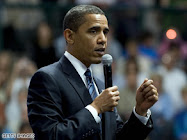
SAN JUAN, Puerto Rico, May 24 -- Sen. Barack Obama swept across this island commonwealth Saturday, a visit that had the markings of a coda to a grueling primary campaign.
"Hóla, Puerto Rico! How's everybody doing today?" Obama shouted to a crowd gathered in Old San Juan, before he led dancing supporters along the seaside battlements for a raucous caminata, the traditional candidate parade. "I am thankful, I am grateful. . . . If we do well in Puerto Rico, there is no reason I will not be announcing that I am the Democratic nominee for president of the United States of America!"
The expected victory by Sen. Hillary Rodham Clinton (N.Y.) in next Sunday's primary here is unlikely to shift the dynamic of the Democratic race. But Puerto Rico is emerging as a field test of what has become one of the first orders of business for the Obama campaign in its transition to general-election mode: redoubling and rethinking its effort to win over Hispanic voters, a demographic it lost to Clinton and will need against Sen. John McCain (R-Ariz.). Last week, Obama courted Puerto Ricans in central Florida and Cuban Americans in Miami, laying down markers in a pivotal state in which the growing Hispanic vote is trending Democratic. This week, he will head to the Hispanic-heavy swing states of New Mexico, Colorado and Nevada.
The challenge: establishing a connection between Obama, a rookie senator from Illinois new to the national scene, and Hispanic voters, a crucial element of the Democratic coalition who have not yet reached the threshold of familiarity that they need to cast their lot with him. That effort is complicated by the diversity of the Hispanic community, in which the interests of predominantly Mexican Americans in the Southwest can be very different from Cuban Americans and Puerto Ricans on the East Coast.
"We recognize we must work very hard . . . to do better with Latino voters in the general election," said Federico Peña, an Obama supporter who served as both transportation and energy secretary in President Bill Clinton's administration. "We're just going to have to do much better. We recognize that. The senator recognizes that."
The plan, discussed in a conference call in the past week among the campaign's top Hispanic supporters, includes immediately ratcheting up Obama's exposure in Spanish-language media; creating a separate fundraising category that contributors can donate to for the purpose of paying for ads in Spanish; registering as many as possible of the 7 million eligible Hispanic Americans not on the rolls; and, in coming weeks, reaching out to Hillary Clinton's major Hispanic backers.
New Mexico Gov. Bill Richardson, the highest-profile Hispanic supporter in a campaign that lacks a Latino in its inner circle, envisions a greater role for surrogates such as himself who can be "validators" of Obama. While campaigning in Puerto Rico recently, Richardson said, he often invoked comparisons to John F. Kennedy -- a hero among many fellow Catholics in Hispanic communities -- to convince voters that Obama is a "young man of enormous potential."
But much of the revamped outreach will be up to Obama. As disparate and far-flung as the Hispanic electorate is, those who study it say Hispanic voters share a tendency to judge politicians as much on how personally comfortable they feel with them as on the issues. ("We know each other" was President Bush's slogan for Hispanic outreach in 2004, a reference to his ties with the community in Texas.) Obama has had little opportunity to do so.
"The majority of Hispanics are at very best confused or uninformed about who he is," said Jorge Mursuli, executive director of Democracia USA, which registers Hispanic voters. "That's not insurmountable. . . . But in the end, any Hispanic who doesn't know him or have a relationship with him in their mind, that is a vulnerable vote that a Republican can nab."
To make up the gap, Obama will engage in more time-intensive retail politicking, which with its undertones of old-style identity politics has not always come naturally to him. "This huge stage [for big rallies] that has allowed so many thousands to feel the excitement has not allowed us to know him," said Rep. Luis V. Gutierrez (D-Ill.), an Obama backer. "We have to bring him down off the pedestal, bring him down to the living room and see him."
And, advisers say, he must find a way to tell the story of his life and campaign in a way that reflects commonalities with Hispanic voters: that he was born to a foreigner who came to America seeking a better life, that he was raised partly by grandparents -- on an island, like many Americans of Caribbean descent -- that he has experienced some of the same hurdles as part of a racial minority, and has overcome them by excelling in his education.
"Hispanics are big proponents of improving your life and advancing yourself through education, and that's his life story," said Freddy Balsera, a Florida political consultant who is helping lead Obama's Hispanic outreach in the state. "When he starts explaining that to
Hispanic voters, they're going to connect to him."
This is where Puerto Rico comes in, although its residents cannot vote in November. So strong are the links between the island and mainland that reports of Obama's visit here -- whether via relatives or Spanish-language media -- will only help the campaign build a bond that it realizes has been lacking.
"What happens on this island 2,000 miles from New York and Chicago, we all find out about," said Gutierrez, whose family hails from Puerto Rico.
The stakes are great. In the 2006 midterm elections, Hispanics made up 6 percent of voters, according to estimates by the Pew Hispanic Center, with higher rates in key swing states such as New Mexico (27 percent), Florida (10 percent) and Nevada and Colorado (9 percent). In 2004, Hispanic voters favored Democratic Sen. John F. Kerry (Mass.) in all major states except Florida, where Cuban Americans have tilted the Hispanic vote Republican.
But there are signs Hispanic participation could be much higher this year, in reaction against the recent anti-illegal-immigrant movement, which has unnerved many citizens of Latin American descent, and out of discontent with the war in Iraq and the economy. Mursuli noted that Hispanic turnout in the Democratic primaries had in several states matched general-election turnout in 2004 and said that his group is racing ahead with new registrations.
In the primaries, Obama prevailed among Hispanic voters in a few states, such as Virginia and Connecticut, but Clinton won them easily in most other states. In California, analysts speculated that Obama faced resistance because of "black-brown" tension between African Americans and Latinos there.
The Obama campaign noted Hispanics' greater familiarity with Clinton and her husband and is confident that it will fare better against McCain. Obama's advisers say that although McCain supported an overhaul of the immigration system last year, they will highlight the tougher line he took in the primaries and his party's overall tone on the issue. "There are differences, and they can be clarified and magnified," Peña said.
Florida is looming as the biggest battleground. In the last week, McCain was in Miami to speak to Cuban Americans and harshly criticized Obama for his call to normalize relations with Cuba.
On Friday, Obama ventured before a Cuban American audience to deliver a speech on Latin America, and the numbers suggest he may make inroads. Democrats recently surpassed Republicans among registered Hispanic voters in the state, a combination of a leftward movement among younger Cubans and of the growing numbers of Puerto Ricans (migrating from the island and from the Northeast) and other Latin Americans. In 1988, Cubans made up an estimated 90 percent of Hispanic voters in the state; now they are fewer than half, according to the Florida polling firm Bendixen & Associates.
Such considerations seemed far off Saturday as Obama marched through Old San Juan in barely controlled chaos. "Obama la esperanza y el futuro . . . Y un amigo presidente porque respeta nuestra gente," blasted the song on the sound truck ("Obama the hope and the future/And a friend president because he respects our people").
Here and there, the candidate broke into a few dance steps. "We have great support here in Puerto Rico," he declared at the end. "The most important support is not the support from the elected officials or support from the powerful -- it's the support from the people, and that is what we have shown here today."
Sunday, May 25, 2008


Breaking Two Ceilings: Race and Gender in One Fell Swoop!!!
In the piece below, Applegate is suggesting a "making of history" that the nation does not need. On the other hand, her essay is instructive when it comes to the ofttimes "collision course" between the feminism of white women and black advancement. Applegate reviews the unity then schism between the black abolitionist Frederick Douglas and women's rights advocate Elizabeth Cady Staten over the 15th Admendment that granted former slaves, black men, the right to vote but not women.
This tension between issues of racism and sexism was tested by opponents of the 1964 Civil Rights bill. Opposition to the bill, which was intended to provide equal rights for African Americans, introduced what they were sure to be a poison pill into the legislation, women's rights. The strategy of southern legislators was that the inclusion of women would kill the bill. They got surprised. Civil rights became inclusive of women rights.
Then there's affirmative action from which white women on the whole are supportive. They have been been the policies' biggest beneficiaries. Yet, there is a segment of white women who have been the faces of its opposition (e.g., Jennifer Gratz, Barbara Grutter, Linda Hopwood).
What began as a political campaign has taken on appearances of competing political movements: Obama's is a movement for change in America's politics vs. Hillary's campaign began as a run for Commander-in-Chief but has morphed into white women's identity politics. "Feminists for Peace and Obama" and a large segment of white women are not to be counted among that group.
But for the general populace, particularly many white and black women who want to see a woman president in their lifetime, their support for Hillary to be the nominee, no matter the odds, is taking on movement qualities. Assuming the failure of that bid, they will demand nothing less than a Vice President spot on the "dream ticket." They see this as a gesture for its symbolic importance of having not just a woman but Hillary on the ticket. That is not going to happen.
No less than David Gergen has noted that if Hillary was Obama's Vice President, "he'd better get a food taster." The question is how many women, white or black, will vote for McCain rather than vote for Obama? The reality is that in all likelihood, Barack will lose a portion Hillary's supporters. Not taking her is going to be a real test of the party unity. Whether or not there will be unity is up to Hillary Clinton, her acceptance of a role other than that of V. P. These are points that Applegate misses when she writes of "making history" based primarily on identity politics.
RGN
Op-Ed Contributor
Two Can Make History
By DEBBY APPLEGATE
New Haven
May 25, 2008
OVER the last few months, the contest between Senators Hillary Clinton and Barack Obama for the Democratic presidential nomination has been compared to the bitter feud between Elizabeth Cady Stanton and Frederick Douglass, two of the most famous progressive reformers of the 19th century.
They had been colleagues and friends through two decades of public service — Douglass, the former slave who gained international fame as a writer, editor and activist, and Stanton, who began her career by organizing the first women’s rights convention in Seneca Falls in 1848. They had worked closely together on a variety of social reform issues, particularly abolition.
But in 1869, Douglass and Stanton were torn apart by the 15th Amendment of the Constitution, which stipulated that the right to vote cannot be denied on the basis of race, color or previous condition of servitude. Gender remained a perfectly legal reason to keep someone off the voter rolls.
During the Civil War, many women, including Stanton, had willingly put aside the fight for women’s rights to campaign for the emancipation of the slaves. After the war, they had even stood by patiently when, in 1866, Congress passed the 14th Amendment, defining citizens specifically and solely as “male” — the first use of the word “male” in the Constitution. The politicians soothed the women’s rights advocates by assuring them their turn would come soon.
But in 1869, when outraged women demanded to know why they were not included in the right to vote, they were informed by their allies in Congress that public opinion left room for just one minority group to make it through the door of suffrage and that this was “the Negro’s hour.”
Stanton felt shocked and betrayed that, once again, women were being left behind while black men advanced. When Douglass reluctantly supported the 15th Amendment as written, Stanton responded with a series of furious attacks, ridiculing the idea of giving the vote to the “lower orders” of men, including blacks, Irish, Germans and Chinese, while native white women were denied it. Her campaign to reject the amendment created a bitter schism in the long alliance of abolitionists and suffragists, and within the suffrage movement.
Now that Senator Obama has nearly clinched the nomination, this historical analogy is being used to support a variety of points: that in the “oppression sweepstakes” women always “lose” to blacks, that when thwarted in their ambitions, white women will resort to angry racism, that liberal coalitions are mere screens for self-interested identity politics that fracture whenever real power is at stake. But the analogy is flawed and so are the lessons we’ve been drawing from it.
The most obvious difference between the quarrels of 1869 and 2008 is that a presidential candidate is not the same thing as a huge swath of the American population. There’s only one president, but there was no intrinsic reason both blacks and women couldn’t attain the rights of citizenship or suffrage at the same time.
Of course, it wasn’t black men or white women who decided that there wasn’t room for them both to enter. After all, neither group could vote in the ratification process. Stanton and Douglass may have had a lot to say to each other and the press, but neither of them had any say in the wording of the amendment.
Instead, this was decided by a coalition of Republican politicians in Washington who supported black suffrage — and thus the creation of a sure new population of black Republican voters — as a way to shore up their precarious majority in Congress. (There were nobler motives as well, but the timing of the amendment was all politics.)
The exclusion of women was also a partisan decision, since enfranchising white women would run the risk of creating as many new Democratic voters as Republicans. The Republicans’ public line, however, was that the amendment would have no chance of ratification if it were so bold as to offer universal suffrage.
Not everyone bought this argument. As the famous Republican preacher and reformer Henry Ward Beecher said to the women of the American Equal Rights Association in 1867: “If you have any radical principle to urge, any higher wisdom to make known, don’t wait until quiet times come, until the public mind shuts up altogether. We are in the favored hour; and if you have great principles to make known, this is the time to advocate them.”
Beecher turned out to be right. The 15th Amendment marked the end of the public’s commitment to major social change. Within the decade, the Republican Party had shed its progressive activism to become the party of big business and laissez-faire policy. For women, five decades would pass before the 19th Amendment gave them the vote in 1920. For blacks, the spread of Jim Crow laws would prevent many from exercising their Constitutional rights until the passage of the Voting Rights Act of 1965, almost a century later.
But history is not destiny. The Douglass-Stanton brouhaha need not be precedent, need not incite Mrs. Clinton’s female supporters to turn against Mr. Obama in anger or, as a vocal minority has already threatened, to cast protest votes for Senator John McCain.
Perhaps it is even possible to correct the mistakes of 1869: Senator Obama may have claimed the “historic first” entry point to the White House, but couldn’t Senator Clinton receive the vice presidential nomination, allowing both black and white, male and female, to enter that door together? After all, we’ll all have a say this time around.
Of course, we again are hearing the old discouraging response: No, Mrs. Clinton cannot share the ticket because history shows that “the public mind” is too conservative to accept both a black man and a white woman in the seat of power.
But if history offers a lesson here, it is not that Americans cannot handle too much change at one time or that we must inch our way, one by one, through the door of equality. Rather, it is that opportunities for genuine change are rare and when they occur we must kick the door off the hinges while we can. It is much harder to pry open the public mind once it has shut itself up again.
Debby Applegate is the author of “The Most Famous Man in America: The Biography of Henry Ward Beecher.”
http://www.nytimes.com/2008/05/25/opinion/25applegate.html?ref=opinion
This tension between issues of racism and sexism was tested by opponents of the 1964 Civil Rights bill. Opposition to the bill, which was intended to provide equal rights for African Americans, introduced what they were sure to be a poison pill into the legislation, women's rights. The strategy of southern legislators was that the inclusion of women would kill the bill. They got surprised. Civil rights became inclusive of women rights.
Then there's affirmative action from which white women on the whole are supportive. They have been been the policies' biggest beneficiaries. Yet, there is a segment of white women who have been the faces of its opposition (e.g., Jennifer Gratz, Barbara Grutter, Linda Hopwood).
What began as a political campaign has taken on appearances of competing political movements: Obama's is a movement for change in America's politics vs. Hillary's campaign began as a run for Commander-in-Chief but has morphed into white women's identity politics. "Feminists for Peace and Obama" and a large segment of white women are not to be counted among that group.
But for the general populace, particularly many white and black women who want to see a woman president in their lifetime, their support for Hillary to be the nominee, no matter the odds, is taking on movement qualities. Assuming the failure of that bid, they will demand nothing less than a Vice President spot on the "dream ticket." They see this as a gesture for its symbolic importance of having not just a woman but Hillary on the ticket. That is not going to happen.
No less than David Gergen has noted that if Hillary was Obama's Vice President, "he'd better get a food taster." The question is how many women, white or black, will vote for McCain rather than vote for Obama? The reality is that in all likelihood, Barack will lose a portion Hillary's supporters. Not taking her is going to be a real test of the party unity. Whether or not there will be unity is up to Hillary Clinton, her acceptance of a role other than that of V. P. These are points that Applegate misses when she writes of "making history" based primarily on identity politics.
RGN
Op-Ed Contributor
Two Can Make History
By DEBBY APPLEGATE
New Haven
May 25, 2008
OVER the last few months, the contest between Senators Hillary Clinton and Barack Obama for the Democratic presidential nomination has been compared to the bitter feud between Elizabeth Cady Stanton and Frederick Douglass, two of the most famous progressive reformers of the 19th century.
They had been colleagues and friends through two decades of public service — Douglass, the former slave who gained international fame as a writer, editor and activist, and Stanton, who began her career by organizing the first women’s rights convention in Seneca Falls in 1848. They had worked closely together on a variety of social reform issues, particularly abolition.
But in 1869, Douglass and Stanton were torn apart by the 15th Amendment of the Constitution, which stipulated that the right to vote cannot be denied on the basis of race, color or previous condition of servitude. Gender remained a perfectly legal reason to keep someone off the voter rolls.
During the Civil War, many women, including Stanton, had willingly put aside the fight for women’s rights to campaign for the emancipation of the slaves. After the war, they had even stood by patiently when, in 1866, Congress passed the 14th Amendment, defining citizens specifically and solely as “male” — the first use of the word “male” in the Constitution. The politicians soothed the women’s rights advocates by assuring them their turn would come soon.
But in 1869, when outraged women demanded to know why they were not included in the right to vote, they were informed by their allies in Congress that public opinion left room for just one minority group to make it through the door of suffrage and that this was “the Negro’s hour.”
Stanton felt shocked and betrayed that, once again, women were being left behind while black men advanced. When Douglass reluctantly supported the 15th Amendment as written, Stanton responded with a series of furious attacks, ridiculing the idea of giving the vote to the “lower orders” of men, including blacks, Irish, Germans and Chinese, while native white women were denied it. Her campaign to reject the amendment created a bitter schism in the long alliance of abolitionists and suffragists, and within the suffrage movement.
Now that Senator Obama has nearly clinched the nomination, this historical analogy is being used to support a variety of points: that in the “oppression sweepstakes” women always “lose” to blacks, that when thwarted in their ambitions, white women will resort to angry racism, that liberal coalitions are mere screens for self-interested identity politics that fracture whenever real power is at stake. But the analogy is flawed and so are the lessons we’ve been drawing from it.
The most obvious difference between the quarrels of 1869 and 2008 is that a presidential candidate is not the same thing as a huge swath of the American population. There’s only one president, but there was no intrinsic reason both blacks and women couldn’t attain the rights of citizenship or suffrage at the same time.
Of course, it wasn’t black men or white women who decided that there wasn’t room for them both to enter. After all, neither group could vote in the ratification process. Stanton and Douglass may have had a lot to say to each other and the press, but neither of them had any say in the wording of the amendment.
Instead, this was decided by a coalition of Republican politicians in Washington who supported black suffrage — and thus the creation of a sure new population of black Republican voters — as a way to shore up their precarious majority in Congress. (There were nobler motives as well, but the timing of the amendment was all politics.)
The exclusion of women was also a partisan decision, since enfranchising white women would run the risk of creating as many new Democratic voters as Republicans. The Republicans’ public line, however, was that the amendment would have no chance of ratification if it were so bold as to offer universal suffrage.
Not everyone bought this argument. As the famous Republican preacher and reformer Henry Ward Beecher said to the women of the American Equal Rights Association in 1867: “If you have any radical principle to urge, any higher wisdom to make known, don’t wait until quiet times come, until the public mind shuts up altogether. We are in the favored hour; and if you have great principles to make known, this is the time to advocate them.”
Beecher turned out to be right. The 15th Amendment marked the end of the public’s commitment to major social change. Within the decade, the Republican Party had shed its progressive activism to become the party of big business and laissez-faire policy. For women, five decades would pass before the 19th Amendment gave them the vote in 1920. For blacks, the spread of Jim Crow laws would prevent many from exercising their Constitutional rights until the passage of the Voting Rights Act of 1965, almost a century later.
But history is not destiny. The Douglass-Stanton brouhaha need not be precedent, need not incite Mrs. Clinton’s female supporters to turn against Mr. Obama in anger or, as a vocal minority has already threatened, to cast protest votes for Senator John McCain.
Perhaps it is even possible to correct the mistakes of 1869: Senator Obama may have claimed the “historic first” entry point to the White House, but couldn’t Senator Clinton receive the vice presidential nomination, allowing both black and white, male and female, to enter that door together? After all, we’ll all have a say this time around.
Of course, we again are hearing the old discouraging response: No, Mrs. Clinton cannot share the ticket because history shows that “the public mind” is too conservative to accept both a black man and a white woman in the seat of power.
But if history offers a lesson here, it is not that Americans cannot handle too much change at one time or that we must inch our way, one by one, through the door of equality. Rather, it is that opportunities for genuine change are rare and when they occur we must kick the door off the hinges while we can. It is much harder to pry open the public mind once it has shut itself up again.
Debby Applegate is the author of “The Most Famous Man in America: The Biography of Henry Ward Beecher.”
http://www.nytimes.com/2008/05/25/opinion/25applegate.html?ref=opinion
New York Post: "She Said What???"
 Maureen Dowd's analysis is very perceptive. Regardless of how "those words" came out of Hillary's mouth, she did Obama and all of us a favor, he will not have to accept her in the V.P. slot. That means his message of "change" will not be shackled by a return to the past.
RGN
May 25, 2008
Op-Ed Columnist
All About Eve
By MAUREEN DOWD
WASHINGTON
Maybe it was the proximity of Mount Rushmore and Deadwood, but something caused Hillary’s inner Eve Harrington to leap out in South Dakota.
Venturing into Daschle-Obama territory, she inadvertently and inelegantly illuminated her thinking on why she wants to keep running as long as she can: stuff happens.
In politics, there are many unpredictable and unsavory twists and turns. That’s why she’s hanging around, and that’s why she and Bill want to force Barack Obama to take her as his vice president, even if he doesn’t want her, even if Michelle can’t stand her, even if she has to stir the sexist pot, and even if she tarnishes his silvery change message.
In an interview with The Argus Leader in Sioux Falls, Hillary disagreed that she’s hurting party unity: “My husband did not wrap up the nomination in 1992 until he won the California primary somewhere in the middle of June, right? We all remember Bobby Kennedy was assassinated in June in California.”
She was talking about the timeline for June, not wishing physical harm upon her rival. But many Democrats were upset. Congressman James Clyburn of South Carolina called her words “beyond the pale.”
Maybe a tired, stressed Hillary was giving an unfiltered version of a blunt conversation that she’s had with her husband and advisers about staying in the race, using R.F.K. as an anything-can-happen example, in the same way she fantasizes about Sean Hannity breaking a story that would demolish Obama.
She’s made the tasteless assassination comment before, including in a March interview with Time.
But coming right after the anniversary of the King assassination, right before the anniversary of the Bobby Kennedy assassination, right in the midst of the wrenching news about Teddy Kennedy’s brain tumor, and right in the middle of Billary’s hostile takeover attempt on the vice president’s mansion, the image was jarring.
Senator Clinton apologized and, in a fairly inspired reach, suggested that it was the awful diagnosis for Teddy that had put the dark thought in her head.
Standing incongruously in front of the salad-dressing section of a Sunshine Foods, she said, “The Kennedys have been much on my mind the last days because of Senator Kennedy” and pointed out that she holds Bobby Kennedy’s Senate seat.
Teddy Kennedy decided to endorse Obama in part because he was upset that Hillary sat silently when Francine Torge introduced the New York senator at a New Hampshire event saying: “Some people compare one of the other candidates to John F. Kennedy. But he was assassinated. And Lyndon Baines Johnson was the one who actually” signed the civil rights bill into law.
Hillary knows that in politics, bimbos erupt. Tapes leak. Husbands disappoint. Friends commit suicide. Rivals get sick. Her Senate race against Rudy Giuliani suddenly turned in her favor when he got prostate cancer and dropped out.
The macabre story of 2008 is that the vice presidential picks are important. On the Republican side, it’s because of John McCain’s age and history of skin cancer, and that’s openly discussed.
But on the Democratic side, it is, as The Times’s Obama reporter Jeff Zeleny has written, a “hushed worry.” Barack Obama has fused two of the most powerful narratives in American history — those of Martin Luther King Jr. and Camelot — and that makes him both magical and vulnerable.
He was only 6 years old in the spring of 1968, when Dr. King and Bobby Kennedy were assassinated. But the unspoken fear that he is in some danger as their spiritual heir hovers over his race. He got a Secret Service cordon last May, the earliest a candidate has ever been given it.
Alma Powell’s worries about assassination helped influence Colin Powell not to run. Michelle Obama expressed concern before her husband’s election to the Senate but said on “60 Minutes,” “I don’t lose sleep over it, because the realities are that, you know, as a black man, you know, Barack can get shot going to the gas station.”
Mike Huckabee had to apologize after making a joke at the National Rifle Association convention about a noise, saying it was Obama tripping off a chair when “somebody aimed a gun at him and he dove for the floor.”
Obama now has the perfect excuse not to pick Hillary as his running mate. She has been too unseemly in her desire to be on the scene if he trips, or gets hit with a devastating story. She may want to take a cue from the Miss America contest: make a graceful, magnanimous exit and wait in the wings.
That’s where the runners-up can be found, prettily lurking, in case it turns out the girl with the crown has some naked pictures in her past.
http://www.nytimes.com/2008/05/25/opinion/25dowd.html?th&emc=th
Saturday, May 24, 2008
A Skeptic: Doesn't He Know There is A Movement Going On?
This piece by Sean Wilentz makes some excellent points for the politics of the past. He sounds like Pat Buchanan. Gloom and doom for Obama if Appalchia does not vote him. Who knows, Wilentz might be right. If he his, America is a lot more racist than one would think for 2008. On the other hand, Barack's campaign is not the politics of the past. 75,000 people attending rally is unheard of -- the crowd was overwhelmingly white. The campaign is movement for something new, an alternative to the bankrupt mean-spirited policies of conservatism. Thomas Frank asked the question "What's the matter with Kansas?" If recent trends are any indication, white working class voters outside Kentucky, Pennsylvania, West Virgina, and Ohio have gotten the message. For example, it was largely white voters who have turned out three Republican candidates for the Congress, even in Mississippi. Democratic party registrations are at record levels. Democratic party fundrasing is through the roof. Over 80% of the American people say the country is going in the wrong direction. Wilentz notwithstanding, it is likely that what WAS the matter with Kansas is no longer "the matter" and the American people look for a transendant change. As for remaking the Democratic party, with an overwhelming victory in November, the party will have been remade.
RGN
Barack Obama and the Unmaking of the Democratic Party
Sean Wilentz
Posted May 23, 2008 06:40 PM (EST)
With her overwhelming victory in Kentucky on May 20, Senator Hillary Rodham Clinton has completed her sweep of the crucial primary states adjoining the Ohio River -- and the fight for the Democratic nomination has entered its final phases. Having picked up a net gain of nearly 140,000 votes between Kentucky and Oregon, Clinton is now well poised to win the Puerto Rico primary on June 1 - and clinch a majority in this year's popular vote, even if the disputed returns from Michigan are discounted. Under those pressures, the Barack Obama campaign and its sympathizers have begun to articulate much more clearly what they mean by their vague slogan of "change" - nothing less than usurping the historic Democratic Party, dating back to the age of Andrew Jackson, by rejecting its historic electoral core: white workers and rural dwellers in the Middle Atlantic and border states.
Without a majority of those voters, the Democrats have, since the party's inception in the 1820s, been incapable of winning the presidency. The Obama advocates declare, though, that we have entered an entirely new political era. It is not only possible but also desirable, they say, for Democrats to win by turning away from those whom "progressive" pundits and bloggers disdain variously as "Nascar man," "uneducated," "low information" whites, "rubes, fools, and hate-mongers" who live in the nation's "shitholes."
Having attempted, with the aid of a complicit news media, to brand Hillary Clinton as a racist -- by flinging charges that, as the historian Michael Lind has shown, belong "in black helicopter/grassy knoll territory," Obama's supporters now fiercely claim that Clinton's white working class following is also essentially racist. Favoring the buzzword language of the academic left, tinged by persistent, discredited New Left and black nationalist theories about working-class "white skin privilege," a vote against Obama has become, according to his fervent followers, "a vote for whiteness."Talk about transformative post-racial politics.
In fact, all of the evidence demonstrates that white racism has not been a principal or even secondary motivation in any of this year's Democratic primaries. Every poll shows that economics, health care, and national security are the leading issues for white working class voters - and for Latino working class voters as well. These constituencies have cast positive ballots for Hillary Clinton not because she is white, but because they regard her as better on these issues. Obama's campaign and its passionate supporters refuse to acknowledge that these voters consider him weaker -- and that Clinton's positions, different from his, as well as her experience actually attract support. Instead they impute racism to working class Democrats who, the polls also show, happen to be liberal on every leading issue. The effort to taint anyone who does not support Obama as motivated by racism has now become a major factor in alienating core Democrats from Obama's campaign. Out with the Democratic Party of Jefferson, Jackson, F.D.R., Truman, Kennedy and Johnson, and in with the bright, shiny party of Obama - or what the formally "undeclared" Donna Brazile, a member of the Democratic National Committee and of the party's rules committee, has hailed as a "new Democratic coalition" swelled by affluent white leftists and liberals, college students, and African-Americans.
The Democratic Party, as a modern political party, dates back to 1828, when Andrew Jackson crushed John Quincy Adams to win the presidency. Yet without the votes of workers and small farmers in Pennsylvania and Ohio, as well as a strong Democratic turnout in New York City, Jackson would have lost the Electoral College in a landslide. Over the 180 years since then, only one Democrat has gained the presidency without winning either Ohio or Pennsylvania, with their large white working-class vote. (The exception, Grover Cleveland, managed the feat in 1892, and only barely lost Ohio - but he was dependent on the post-Reconstruction solid South.) Beginning in 1964, when the Democratic solid South dissolved, every successful Democratic presidential candidate has had to carry both Ohio and Pennsylvania, even when Jimmy Carter and Bill Clinton picked up southern states.
Northern white working-class defections to the Republicans grew steadily in the late 1960s and early 1970s. The Republican's Watergate debacle temporarily halted the trend, but the disasters of the Carter presidency, especially its mishandling of economic woes and foreign policy, accelerated the defections in 1980. In his two successful races, Ronald Reagan won the support, on average, of 61 percent of white working class voters, compared to 35 percent for his opponents, Carter and Walter Mondale. (Both times, Reagan carried Ohio and Pennsylvania handily.) As the caricature of "Reagan Democrats" as racist militarists hardened among "new politics" advocates, they strove to make up the difference by creating an expanded base among African-Americans, college-age, and college educated voters. The result was yet another humiliating defeat for the Democrats in 1988.
Bill Clinton's shift to a centrist liberalism stressing lunch-pail issues--"Putting People First"--won back a large number of Reagan Democrats in 1992, enough so that, by the time Clinton won his second term in 1996, Democrats could claim parity with Republicans by winning a slim plurality among non-college educated working class white voters. But the perceived elitists Al Gore and John Kerry lost what Clinton had gained, as George W. Bush carried the white working-class vote by a margin of 17 percent in 2000 and a whopping 23 percent in 2004.
This year's primary results show no sign that Obama will reverse this trend should he win the nomination. In West Virginia and Kentucky, as well as Ohio and Pennsylvania, blue collar white voters sent him down to defeat by overwhelming margins. A recent Gallup poll report has argued that claims about Obama's weaknesses among white voters and blue collar voters have been exaggerated - yet its indisputable figures showed Obama running four percentage points below Kerry's anemic support among whites four years ago.
Given that Obama's vote in the primaries, apart from African-Americans, has generally come from affluent white suburbs and university towns, the Gallup figures presage a Democratic disaster among working-class white voters in November should Obama be the nominee.
Yet Obama's handlers profess indifference - and, at times, even pride -- about these trends. Asked about the white working-class vote following Obama's ten-point loss in Pennsylvania, chief campaign strategist David Axelrod confidently told an National Public Radio interviewer that, after all, "the white working class has gone to the Republican nominee for many elections going back even to the Clinton years" and that Obama's winning strength lay in his ability to offset that trend and "attract independent voters... younger voters" and "expand the Democratic base."
Apart from its basic inaccuracy about Clinton's blue-collar support in 1992 and 1996, Axelrod's statement was a virtual reprise of the Democratic doomed strategy from the 1972 McGovern campaign that the party revamped in 1988. The main difference between now and then is the openness of the condescension with which many of Obama's supporters - and, apparently, the candidate himself - hold the crude "low information" types whom they believe dominate the white working class. The sympathetic media coverage of Obama's efforts to explain away his remarks in San Francisco about "bitter," economically-strapped voters who, clinging to their guns, religion, and racism, misdirect their rage and do not see the light, only reinforced his campaign's dismissive attitude. Obama's efforts at rectification were reluctant and half-hearted at best - and he undercut them completely a few days later when he referred derisively, on the stump in Indiana, to a sudden "political flare-up because I said something that everybody knows is true."
Culturally as well as politically, Obama's dismissal of white working people represents a sea-change in the Democrats' basic identity as the workingman's party - one that has been coming since the late 1960s, when large portions of the Left began regarding white workers as hopeless and hateful reactionaries. Faced with the revolt of the "Reagan Democrats" - whose politics they interpreted in the narrowest of racial terms - "new politics" Democrats dreamed of a coalition built around an alliance of right-thinking affluent liberals and downtrodden minorities, especially African-Americans. It all came to nothing. But after Bill Clinton failed to consolidate a new version of the old Democratic coalition in the 1990s, the dreaming began again - first, with disastrous results, in the schismatic Ralph Nader campaign of 2000 and now (with the support of vehement ex-Naderites including Barbara Ehrenreich and Cornel West) in the Obama campaign.
Obama must assume that the demographics of American politics have changed dramatically in recent years so that the electorate as a whole is little more than a larger version of the combined Democratic primary constituencies of Oregon and South Carolina. While recent studies purport to show that the white working class has, indeed, shrunk over the past fifty years, as a political matter its significance remains salient, especially in the battleground and swing states--states like Ohio and West Virginia where Obama currently trails Senator John McCain in the polls. One of the studies that affirms the diminishing proportion of blue collar whites in the electorate, written for the Brookings Institution by Ruy Teixeira and Alan Abamowitz, concludes [pdf], nevertheless, that "the voting proclivities of the white working class will make a huge difference and could well determine who the next president will be."
Teixeira and Abramowitz estimate that the Democratic candidate will need to cut Kerry's deficit of 23 percent in 2004 to around 10 percent if he or she is "to achieve a solid popular vote victory." By those lights, Obama, if nominated, is almost certainly destined to lose unless he can suddenly reverse the trend that his own dismissive language and his supporters' contemptuous tone has accelerated during the primaries.
In every presidential election they have won, the Democrats have solidified their historic link to white workers, not dismissed them. Obama and the champions of a new party coalition appear to think that everything has suddenly changed, simply because of the force of their own desires. In any event, Obama had shown no ability thus far to attract the one constituency that has always spelled the difference between victory and defeat for the Democratic Party. The party must now decide whether to go along with Obama and renounce its own heritage -- and tempt the political fates.
Sean Wilentz Huffington Post
RGN
Barack Obama and the Unmaking of the Democratic Party
Sean Wilentz
Posted May 23, 2008 06:40 PM (EST)
With her overwhelming victory in Kentucky on May 20, Senator Hillary Rodham Clinton has completed her sweep of the crucial primary states adjoining the Ohio River -- and the fight for the Democratic nomination has entered its final phases. Having picked up a net gain of nearly 140,000 votes between Kentucky and Oregon, Clinton is now well poised to win the Puerto Rico primary on June 1 - and clinch a majority in this year's popular vote, even if the disputed returns from Michigan are discounted. Under those pressures, the Barack Obama campaign and its sympathizers have begun to articulate much more clearly what they mean by their vague slogan of "change" - nothing less than usurping the historic Democratic Party, dating back to the age of Andrew Jackson, by rejecting its historic electoral core: white workers and rural dwellers in the Middle Atlantic and border states.
Without a majority of those voters, the Democrats have, since the party's inception in the 1820s, been incapable of winning the presidency. The Obama advocates declare, though, that we have entered an entirely new political era. It is not only possible but also desirable, they say, for Democrats to win by turning away from those whom "progressive" pundits and bloggers disdain variously as "Nascar man," "uneducated," "low information" whites, "rubes, fools, and hate-mongers" who live in the nation's "shitholes."
Having attempted, with the aid of a complicit news media, to brand Hillary Clinton as a racist -- by flinging charges that, as the historian Michael Lind has shown, belong "in black helicopter/grassy knoll territory," Obama's supporters now fiercely claim that Clinton's white working class following is also essentially racist. Favoring the buzzword language of the academic left, tinged by persistent, discredited New Left and black nationalist theories about working-class "white skin privilege," a vote against Obama has become, according to his fervent followers, "a vote for whiteness."Talk about transformative post-racial politics.
In fact, all of the evidence demonstrates that white racism has not been a principal or even secondary motivation in any of this year's Democratic primaries. Every poll shows that economics, health care, and national security are the leading issues for white working class voters - and for Latino working class voters as well. These constituencies have cast positive ballots for Hillary Clinton not because she is white, but because they regard her as better on these issues. Obama's campaign and its passionate supporters refuse to acknowledge that these voters consider him weaker -- and that Clinton's positions, different from his, as well as her experience actually attract support. Instead they impute racism to working class Democrats who, the polls also show, happen to be liberal on every leading issue. The effort to taint anyone who does not support Obama as motivated by racism has now become a major factor in alienating core Democrats from Obama's campaign. Out with the Democratic Party of Jefferson, Jackson, F.D.R., Truman, Kennedy and Johnson, and in with the bright, shiny party of Obama - or what the formally "undeclared" Donna Brazile, a member of the Democratic National Committee and of the party's rules committee, has hailed as a "new Democratic coalition" swelled by affluent white leftists and liberals, college students, and African-Americans.
The Democratic Party, as a modern political party, dates back to 1828, when Andrew Jackson crushed John Quincy Adams to win the presidency. Yet without the votes of workers and small farmers in Pennsylvania and Ohio, as well as a strong Democratic turnout in New York City, Jackson would have lost the Electoral College in a landslide. Over the 180 years since then, only one Democrat has gained the presidency without winning either Ohio or Pennsylvania, with their large white working-class vote. (The exception, Grover Cleveland, managed the feat in 1892, and only barely lost Ohio - but he was dependent on the post-Reconstruction solid South.) Beginning in 1964, when the Democratic solid South dissolved, every successful Democratic presidential candidate has had to carry both Ohio and Pennsylvania, even when Jimmy Carter and Bill Clinton picked up southern states.
Northern white working-class defections to the Republicans grew steadily in the late 1960s and early 1970s. The Republican's Watergate debacle temporarily halted the trend, but the disasters of the Carter presidency, especially its mishandling of economic woes and foreign policy, accelerated the defections in 1980. In his two successful races, Ronald Reagan won the support, on average, of 61 percent of white working class voters, compared to 35 percent for his opponents, Carter and Walter Mondale. (Both times, Reagan carried Ohio and Pennsylvania handily.) As the caricature of "Reagan Democrats" as racist militarists hardened among "new politics" advocates, they strove to make up the difference by creating an expanded base among African-Americans, college-age, and college educated voters. The result was yet another humiliating defeat for the Democrats in 1988.
Bill Clinton's shift to a centrist liberalism stressing lunch-pail issues--"Putting People First"--won back a large number of Reagan Democrats in 1992, enough so that, by the time Clinton won his second term in 1996, Democrats could claim parity with Republicans by winning a slim plurality among non-college educated working class white voters. But the perceived elitists Al Gore and John Kerry lost what Clinton had gained, as George W. Bush carried the white working-class vote by a margin of 17 percent in 2000 and a whopping 23 percent in 2004.
This year's primary results show no sign that Obama will reverse this trend should he win the nomination. In West Virginia and Kentucky, as well as Ohio and Pennsylvania, blue collar white voters sent him down to defeat by overwhelming margins. A recent Gallup poll report has argued that claims about Obama's weaknesses among white voters and blue collar voters have been exaggerated - yet its indisputable figures showed Obama running four percentage points below Kerry's anemic support among whites four years ago.
Given that Obama's vote in the primaries, apart from African-Americans, has generally come from affluent white suburbs and university towns, the Gallup figures presage a Democratic disaster among working-class white voters in November should Obama be the nominee.
Yet Obama's handlers profess indifference - and, at times, even pride -- about these trends. Asked about the white working-class vote following Obama's ten-point loss in Pennsylvania, chief campaign strategist David Axelrod confidently told an National Public Radio interviewer that, after all, "the white working class has gone to the Republican nominee for many elections going back even to the Clinton years" and that Obama's winning strength lay in his ability to offset that trend and "attract independent voters... younger voters" and "expand the Democratic base."
Apart from its basic inaccuracy about Clinton's blue-collar support in 1992 and 1996, Axelrod's statement was a virtual reprise of the Democratic doomed strategy from the 1972 McGovern campaign that the party revamped in 1988. The main difference between now and then is the openness of the condescension with which many of Obama's supporters - and, apparently, the candidate himself - hold the crude "low information" types whom they believe dominate the white working class. The sympathetic media coverage of Obama's efforts to explain away his remarks in San Francisco about "bitter," economically-strapped voters who, clinging to their guns, religion, and racism, misdirect their rage and do not see the light, only reinforced his campaign's dismissive attitude. Obama's efforts at rectification were reluctant and half-hearted at best - and he undercut them completely a few days later when he referred derisively, on the stump in Indiana, to a sudden "political flare-up because I said something that everybody knows is true."
Culturally as well as politically, Obama's dismissal of white working people represents a sea-change in the Democrats' basic identity as the workingman's party - one that has been coming since the late 1960s, when large portions of the Left began regarding white workers as hopeless and hateful reactionaries. Faced with the revolt of the "Reagan Democrats" - whose politics they interpreted in the narrowest of racial terms - "new politics" Democrats dreamed of a coalition built around an alliance of right-thinking affluent liberals and downtrodden minorities, especially African-Americans. It all came to nothing. But after Bill Clinton failed to consolidate a new version of the old Democratic coalition in the 1990s, the dreaming began again - first, with disastrous results, in the schismatic Ralph Nader campaign of 2000 and now (with the support of vehement ex-Naderites including Barbara Ehrenreich and Cornel West) in the Obama campaign.
Obama must assume that the demographics of American politics have changed dramatically in recent years so that the electorate as a whole is little more than a larger version of the combined Democratic primary constituencies of Oregon and South Carolina. While recent studies purport to show that the white working class has, indeed, shrunk over the past fifty years, as a political matter its significance remains salient, especially in the battleground and swing states--states like Ohio and West Virginia where Obama currently trails Senator John McCain in the polls. One of the studies that affirms the diminishing proportion of blue collar whites in the electorate, written for the Brookings Institution by Ruy Teixeira and Alan Abamowitz, concludes [pdf], nevertheless, that "the voting proclivities of the white working class will make a huge difference and could well determine who the next president will be."
Teixeira and Abramowitz estimate that the Democratic candidate will need to cut Kerry's deficit of 23 percent in 2004 to around 10 percent if he or she is "to achieve a solid popular vote victory." By those lights, Obama, if nominated, is almost certainly destined to lose unless he can suddenly reverse the trend that his own dismissive language and his supporters' contemptuous tone has accelerated during the primaries.
In every presidential election they have won, the Democrats have solidified their historic link to white workers, not dismissed them. Obama and the champions of a new party coalition appear to think that everything has suddenly changed, simply because of the force of their own desires. In any event, Obama had shown no ability thus far to attract the one constituency that has always spelled the difference between victory and defeat for the Democratic Party. The party must now decide whether to go along with Obama and renounce its own heritage -- and tempt the political fates.
Sean Wilentz Huffington Post
On Hillary's Unfortunate Comments
May 24, 2008
Clinton Remark on Kennedy’s Killing Stirs Uproar
By KATHARINE Q. SEELYE
BRANDON, S.D. — Senator Hillary Rodham Clinton defended staying in the Democratic nominating contest on Friday by pointing out that her husband had not wrapped up the nomination until June 1992, adding, “We all remember Bobby Kennedy was assassinated in June in California.”
Her remarks were met with quick criticism from the campaign of Senator Barack Obama, and within hours of making them Mrs. Clinton expressed regret, saying, “The Kennedys have been much on my mind the last days because of Senator Kennedy,” referring to the recent diagnosis of Senator Edward M. Kennedy’s brain tumor. She added, “And I regret that if my referencing that moment of trauma for our entire nation and in particular the Kennedy family was in any way offensive.”
Still, the comments touched on one of the most sensitive aspects of the current presidential campaign — concern for Mr. Obama’s safety. And they come as Democrats have been talking increasingly of an Obama/Clinton ticket, with friends of the Clintons saying that Bill Clinton is musing about the possibility that the vice presidency might be his wife’s best path to the presidency if she loses the nomination.
It was in the context of discussions about her political future that Mrs. Clinton made the remarks on Friday to the editorial board of The Sioux Falls Argus Leader. She had said that some people whom she did not name were trying to push her out of the race, but she noted that historically many races had gone on longer than hers.
“My husband did not wrap up the nomination in 1992 until he won the California primary somewhere in the middle of June, right?” she said. “We all remember Bobby Kennedy was assassinated in June in California.”
Bill Burton, a spokesman for the Obama campaign, which has refrained from engaging Mrs. Clinton in recent days, said her statement “was unfortunate and has no place in this campaign.”
Privately, aides to Mr. Obama were furious about the remark.
Concerns about Mr. Obama’s safety led the Secret Service to give him protection last May, before it was afforded to any other presidential candidate, although Mrs. Clinton had protection, too, in her capacity as a former first lady. Mr. Obama’s wife, Michelle, voiced concerns about his safety before he was elected to the Senate, and some black voters have even said such fears weighed on their decision of whether to vote for him.
It was against that backdrop that Mrs. Clinton’s mentioning the Kennedy assassination in the same breath as her own political fate struck some as going too far. Representative James E. Clyburn of South Carolina, an uncommitted superdelegate, said through a spokeswoman that the comments were “beyond the pale.”
The speed at which the remarks were transmitted and reacted to illustrated the new reality candidates are grappling with in this year’s campaign, in which Mr. Obama’s own remarks about “bitter” small-town voters ricocheted around the Internet.
Mrs. Clinton’s remarks were initially reported online by The New York Post, whose reporters were not traveling with the Clinton campaign but were instead watching a live video feed of the meeting with newspaper editors. Its report quickly jumped to the Drudge Report, then whipped around the Internet and on television, with outraged comments piling up on Web sites.
Campaign aides were taken aback by the quick reaction to her remarks, but then quickly realized that Mrs. Clinton had to backpedal. She then spoke to the traveling press corps for the first time in more than a week, at a supermarket here.
“Earlier today I was discussing the Democratic primary history and in the course of that discussion mentioned the campaigns that both my husband and Senator Kennedy waged in California in June, in 1992 and 1968,” she said. “And I was referencing those to make the point that we have had nomination primary contests that go into June. That’s a historic fact.”
The remarks overshadowed a campaign trip to South Dakota in which Mrs. Clinton has increasingly been dealing with a new thematic landscape: a campaign that is more consumed by questions about its own future, rather than by Mrs. Clinton talking about issues like health care.
During the editorial board meeting Friday, Mrs. Clinton also denied reports of any contact with the Obama camp regarding an exit strategy for her. “It’s flatly, completely untrue,” she said.
Mrs. Clinton has cited her husband’s 1992 nominating battle in discussing her decision to stay in the race. While she said that he only wrapped up the nomination in June of that year, he was viewed as having secured it in March, when his last serious opponent dropped out.
Friday was not the first time Mrs. Clinton referred to the assassination of Robert F. Kennedy in such a context. In March, she told Time magazine: “Primary contests used to last a lot longer. We all remember the great tragedy of Bobby Kennedy being assassinated in June in L.A. My husband didn’t wrap up the nomination in 1992 until June. Having a primary contest go through June is nothing particularly unusual.”
Robert F. Kennedy Jr., who has endorsed Mrs. Clinton, defended her remarks in a telephone interview on Friday evening.
“I’ve heard her make that argument before,” Mr. Kennedy said, speaking on his cellphone as he drove to the family compound in Hyannis Port, Mass. “It sounds like she was invoking a familiar historical circumstance in support of her argument for continuing her campaign.”
Julie Bosman contributed reporting from New York, and Jeff Zeleny from Miami.
Clinton Remark on Kennedy’s Killing Stirs Uproar
By KATHARINE Q. SEELYE
BRANDON, S.D. — Senator Hillary Rodham Clinton defended staying in the Democratic nominating contest on Friday by pointing out that her husband had not wrapped up the nomination until June 1992, adding, “We all remember Bobby Kennedy was assassinated in June in California.”
Her remarks were met with quick criticism from the campaign of Senator Barack Obama, and within hours of making them Mrs. Clinton expressed regret, saying, “The Kennedys have been much on my mind the last days because of Senator Kennedy,” referring to the recent diagnosis of Senator Edward M. Kennedy’s brain tumor. She added, “And I regret that if my referencing that moment of trauma for our entire nation and in particular the Kennedy family was in any way offensive.”
Still, the comments touched on one of the most sensitive aspects of the current presidential campaign — concern for Mr. Obama’s safety. And they come as Democrats have been talking increasingly of an Obama/Clinton ticket, with friends of the Clintons saying that Bill Clinton is musing about the possibility that the vice presidency might be his wife’s best path to the presidency if she loses the nomination.
It was in the context of discussions about her political future that Mrs. Clinton made the remarks on Friday to the editorial board of The Sioux Falls Argus Leader. She had said that some people whom she did not name were trying to push her out of the race, but she noted that historically many races had gone on longer than hers.
“My husband did not wrap up the nomination in 1992 until he won the California primary somewhere in the middle of June, right?” she said. “We all remember Bobby Kennedy was assassinated in June in California.”
Bill Burton, a spokesman for the Obama campaign, which has refrained from engaging Mrs. Clinton in recent days, said her statement “was unfortunate and has no place in this campaign.”
Privately, aides to Mr. Obama were furious about the remark.
Concerns about Mr. Obama’s safety led the Secret Service to give him protection last May, before it was afforded to any other presidential candidate, although Mrs. Clinton had protection, too, in her capacity as a former first lady. Mr. Obama’s wife, Michelle, voiced concerns about his safety before he was elected to the Senate, and some black voters have even said such fears weighed on their decision of whether to vote for him.
It was against that backdrop that Mrs. Clinton’s mentioning the Kennedy assassination in the same breath as her own political fate struck some as going too far. Representative James E. Clyburn of South Carolina, an uncommitted superdelegate, said through a spokeswoman that the comments were “beyond the pale.”
The speed at which the remarks were transmitted and reacted to illustrated the new reality candidates are grappling with in this year’s campaign, in which Mr. Obama’s own remarks about “bitter” small-town voters ricocheted around the Internet.
Mrs. Clinton’s remarks were initially reported online by The New York Post, whose reporters were not traveling with the Clinton campaign but were instead watching a live video feed of the meeting with newspaper editors. Its report quickly jumped to the Drudge Report, then whipped around the Internet and on television, with outraged comments piling up on Web sites.
Campaign aides were taken aback by the quick reaction to her remarks, but then quickly realized that Mrs. Clinton had to backpedal. She then spoke to the traveling press corps for the first time in more than a week, at a supermarket here.
“Earlier today I was discussing the Democratic primary history and in the course of that discussion mentioned the campaigns that both my husband and Senator Kennedy waged in California in June, in 1992 and 1968,” she said. “And I was referencing those to make the point that we have had nomination primary contests that go into June. That’s a historic fact.”
The remarks overshadowed a campaign trip to South Dakota in which Mrs. Clinton has increasingly been dealing with a new thematic landscape: a campaign that is more consumed by questions about its own future, rather than by Mrs. Clinton talking about issues like health care.
During the editorial board meeting Friday, Mrs. Clinton also denied reports of any contact with the Obama camp regarding an exit strategy for her. “It’s flatly, completely untrue,” she said.
Mrs. Clinton has cited her husband’s 1992 nominating battle in discussing her decision to stay in the race. While she said that he only wrapped up the nomination in June of that year, he was viewed as having secured it in March, when his last serious opponent dropped out.
Friday was not the first time Mrs. Clinton referred to the assassination of Robert F. Kennedy in such a context. In March, she told Time magazine: “Primary contests used to last a lot longer. We all remember the great tragedy of Bobby Kennedy being assassinated in June in L.A. My husband didn’t wrap up the nomination in 1992 until June. Having a primary contest go through June is nothing particularly unusual.”
Robert F. Kennedy Jr., who has endorsed Mrs. Clinton, defended her remarks in a telephone interview on Friday evening.
“I’ve heard her make that argument before,” Mr. Kennedy said, speaking on his cellphone as he drove to the family compound in Hyannis Port, Mass. “It sounds like she was invoking a familiar historical circumstance in support of her argument for continuing her campaign.”
Julie Bosman contributed reporting from New York, and Jeff Zeleny from Miami.
Thursday, May 22, 2008
IRS: Trinty Cleared
IRS Clears Obama's Church
Today the United Church of Christ, the national church to which presidential candidate Senator Barack Obama belongs, announced that the Internal Revenue Service has found “that the activity about which we had concern did not constitute …a violation of the requirements of the requirements of section 501(c)(3)."
The "concern" that apparently launched the investigation stemmed from a speech Senator Obama gave to the UCC General Synod, the all-church gathering held every two years, during the church's fiftieth anniversary celebration.
In other words, the UCC received a complete and clean review.
General Minister and President Rev. John Thomas said, “While I was never really concerned that any violations would be noted, I am gratified both with the speed of the review and the endorsement of the way in which we carried out Senator Obama’s visit.”
Despite the fact that the church had invited Obama to speak before he became a candidate for President, and despite the fact that UCC Nationwide Special Counsel Donald C. Clark, Esq., had carefully prepared the church leadership with the legal guidelines they needed to follow, the IRS launched an investigation. “We were confident that once the IRS was aware of all of the facts surrounding the Senator’s appearance, it would conclude that the UCC was in compliance with the governing Revenue Ruling,” Clark said.
“IRS regulations require that a senior official form a reasonable belief that a religious organization no longer qualifies for exemption from taxation before initiating such a church tax inquiry. In order for such a determination to be reasonable, Congress should require that the service communicate with the church before an inquiry, with its attendant costs and chilling effect on constitutionally protected associational rights, is launched. However, that currently is neither a Congressional mandate nor IRS practice, and was not done in this case,” Clark added.
In addition, the IRS waited more than six months, until Senator Obama was emerging as a possible front-runner, to investigate.
In this election year, church and politics have come a little too close for comfort for many Americans, liberal and evangelical alike. Yet, it is one thing when political parties try to use religion as a “wedge issue” or in an attack ad or even in email chains, and quite another when it is a government agency itself that is, to all appearances, using its power to create distractions or negative publicity for a religious body because of their faith stances or their members.
This fall, All Saints Church, Pasadena, Calif., received a letter from the IRS that closed a dormant investigation into the church’s tax-exempt status after nearly two years and without the audit actually ever taking place. This final IRS letter did not alter the Church’s tax-exempt status. This investigation was launched in response to a sermon previous Rector Rev. George Regas had preached, prior to the 2004 Presidential election, against the Iraq War in which Jesus debated both candidates for President. In the All Saints case, however and unlike the UCC situation, the IRS also concluded without explanation that the sermon in question “constituted intervention in the 2004 President election.”
All Saints Church has announced that it has formally referred the numerous procedural and legal errors of the exam to the Commissioner of the Internal Revenue Service and demanded correction and an apology. The current Rector, the Rev. J. Edwin Bacon, Jr. has expressed “great concern about the IRS closing letter and its implications for freedom of the pulpit at All Saints Church.”
Americans clearly believe that their many faith voices need to be raised in the public square. We need an Internal Revenue Service that is clear in its guidelines for tax-exempt religious organizations and we need the IRS to follow those guidelines. Otherwise, we are only left to conclude that there is either an organized or even a disorganized effort to repress certain faith voices while giving others a free pass.
Please e-mail On Faith if you'd like to receive an email notification when On Faith sends out a new question.
Email Me | Del.icio.us | Digg | Facebook
Wednesday, May 21, 2008
Barack Obama: A Member of the Crow Nation

By Matthew Mosk
CROW AGENCY, Mont. -- Sen. Barack Obama became the first American presidential candidate to visit the reservation of the Crow Nation and in doing so was adopted into the nation under the Crow name "One Who Helps People Throughout the Land."
Drums pounded and the crowd cheered as Obama was escorted to the podium by his "new parents," Hartford and Mary Black Eagle, in the manner of a groom being walked down the aisle. Obama beamed.
His adoptive parents gave Obama hugs as he stepped onto a riser to speak. "I want to thank my new parents," he said. "The nicest parents you could ever want to know. I like my new name. Barack Black Eagle. That is a good name!"
For all the symbolism -- members of the tribe wore colorful traditional clothing and feathered head-dresses -- Obama addressed some issues of serious concern not only to the 12,100-member Crow Nation but to many Native American tribes around the country.
Obama told those gathered that he intended to acknowledge the "tragic history" of Native Americans over the past three centuries.
They "never asked for much, only what was promised by the treaty obligations of their forebears," he said, promising to honor those treaties.
Moreover, he pledged to bring sorely needed "quality affordable health care and a world-class education to reservations all across America. That will be a priority when I'm president."
The visit was meaningful, said Darrin Old Coyote, a member of the tribe who wore an elaborate headdress.
"To have us left out all these years, and then for him to come here, it shows respect, and it makes us optimistic," Old Coyote said.
The visit also had political value for Obama.
The members of the Crow Nation vote as "a close-knit bloc," Old Coyote said.
"Now that Senator Obama is part of the family, that is where we will go."
From the Washington Post
Posted at 6:04 PM ET on May 19, 2008
Pat Buchanan on Hillary and the Black Vote
On Morning Joe, Pat Buchanan asked Howard Wolfson, Hillary's media spokesperson, this critical question:
"Why is it your candidate is getting as many black votes as George Wallace?"
RGN
"Why is it your candidate is getting as many black votes as George Wallace?"
RGN
Tuesday, May 20, 2008
Tim Wise on Racism and White Voters
This essay by Tim Wise raises a lot of important issues about racism in America, particularly given in the likelihood that Barack will be the next president. Wise makes the case that much of Barack's success among white voters is that he does not make them feel "uncomfortable" about race. He makes the point that there are many people who are in fact "racists" who will be voting for Obama. His essay reminds me of a quote from Maulana Karenga before there was Black Studies and black students were being judged by white professors based upon the status quo assumptions of those professors. When faced with this dilemma, black students who wanted to take a "black perspective" often raised the question about what they should do? Karenga advised them that they had to write two papers: one paper to get an "A" and another paper to "get away." In this campaign, recognizing how fundamentally racist America is, Obama's campaign is about getting an "A," elected. Once he is the nation's Chief Executive Officer, his "getting away" will be implemented as a part of his politics of "change." A "united" America is obviously wanted by a large segment of America. His politics are "transformative." The political alignments promise to be different. The Democratic Party will be a new party. The Republican party will be largely "obliterated" in this election, thanks to Bush-Cheney. The election of Obama does promise a new America. Recognizing the validity of Wise's observation, there is every reason to think that Nell Painter's observation will have validity. When asked the question about the importance of an Obama presidency, after stating how dumbfounded she was at the possibility, her response was: "If Obama is elected president, we will talk about race relations in terms of 'Before Obama and after Obama'."
RGN
RGN
Uh-Obama:
Racism, White Voters and the Myth of Color-Blindness
By Tim Wise
March 6, 2008
Here's a sentence I never thought I'd write, at least not as soon as I am now compelled to write it: It may well be the case that the United States is on its way to electing a person of color as President. Make no mistake, I realize the way that any number of factors, racism prominently among them, could derail such a thing from coming to fruition. Indeed, results from the Ohio Democratic primary suggest that an awful lot of white folks, especially rural and working-class whites, are still mightily uncomfortable with voting for such a candidate, at least partly because of race: One-fifth of voters in the state said race was important to their decision, and roughly six in ten of these voted for Hillary Clinton, which totals would then represent her approximate margin of victory over Barack Obama.
But having said all that--and I think anyone who is being honest would have to acknowledge this as factual--we are far closer to the election of a person of color in a Presidential race than probably any of us expected. Obama's meteoric rise, from community organizer, to law professor, to Illinois state senator, to the U.S. Senate, and now, possibly, the highest office in the land, is something that could have been foreseen by few if any just a few years ago. Obama's undeniable charisma, savvy political instincts, passion for his work, and ability to connect with young voters (and not a few older ones as well) is the kind of thing you just don't see all that often. The fact that as a black man (or, as some may prefer, a man of biracial background) he has been able to catapult to the position in which he now finds himself makes the accomplishment even more significant. It does indeed mean something.
But this is where things become considerably more complicated; the point at which one is forced to determine what, exactly, his success means (and doesn't mean) when it comes to the state of race, race relations, and racism in the United States. And it is at this point that so-called mainstream commentary has, once again, dropped the ball.
On the one hand, many a voice has suggested that Obama's success signifies something akin to the end of racism in the U.S., if not entirely, then surely as a potent political or social force. After all, if a black man actually stands a better-than-decent shot at becoming President, then how much of a barrier could racism really be? But of course, the success of individual persons of color, while it certainly suggests that overt bigotry has diminished substantially, hardly speaks to the larger social reality faced by millions of others: a subject to which we will return. Just as sexism no doubt remained an issue in Pakistan, even after Benazir Bhutto became Prime Minister in the 1980s and again in the 90s (or in India or Israel after both nations had female Premiers, or in Great Britain after the election of Margaret Thatcher), so too can racism exist in abundance, in spite of the electoral success of one person of color, even one who could be elevated to the highest office in the world's most powerful nation.
More importantly, to the extent Obama's success has been largely contingent on his studious avoidance of the issue of race--such that he rarely ever mentions discrimination and certainly not in front of white audiences--one has to wonder just how seriously we should take the notion that racism is a thing of the past, at least as supposedly evidenced by his ability to attract white votes? To the extent those whites are rewarding him in large measure for not talking about race, and to the extent they would abandon him in droves were he to begin talking much about racism--for he would be seen at that point as playing the race card, or appealing to "special interests" and suffer the consequences--we should view Obama's success, given what has been required to make it possible, as confirmation of the ongoing salience of race in American life. Were race really something we had moved beyond, whites would be open to hearing a candidate share factual information about housing discrimination, racial profiling, or race-based inequities in health care. But we don't want to be reminded of those things. We prefer to ignore them, and many are glad that Obama has downplayed them too, whether by choice, or necessity.
Erasing Race and Making White Folks Happy
The extent to which Obama's white support has been directly related to his downplaying of race issues simply cannot be overstated, as evidenced by the kinds of things many of these supporters openly admit, possessing no sense of apparent irony or misgiving. So, consider the chant offered by his supporters at a recent rally--and frankly, a chant in which whites appeared to be joining with far greater enthusiasm than folks of color--to the effect that "Race Doesn't Matter, Race Doesn't Matter," a concept so utterly absurd, given the way in which race most certainly still matters to the opportunity structure in this country, that one has to almost wretch at the repeated offering of it. Or consider the statements of support put forth by Obama supporters in a November 2007 Wall Street Journal article, to the effect that Obama makes whites "feel good" about ourselves (presumably by not bothering us with all that race talk), and that Obama, by virtue of his race-averse approach has "emancipated" whites to finally vote for a black candidate (because goodness knows we were previously chained and enslaved to a position of rejectionism). Worst of all, consider the words of one white Obama supporter, an ardent political blogger in
What does it say about the nation's political culture--and what does it suggest about the extent to which we have moved "beyond race"--that candidate Obama, though he surely knows it, has been unable to mention the fact that 2006 saw the largest number of race-based housing discrimination complaints on record, and according to government and private studies, there are between two and three million cases of housing discrimination each year against people of color?
What does it say that he has failed to note with any regularity that according to over a hundred studies, health disparities between whites and blacks are due not merely to health care costs and economic differences between the two groups (a subject he does address) but also due to the provision of discriminatory care by providers, even to blacks with upper incomes, and black experiences with racism itself, which are directly related to hypertension and other maladies?
What does it say that Obama apparently can't bring himself to mention, for fear of likely white backlash, that whites are over seventy percent of drug users, but only about ten percent of persons incarcerated for a drug possession offense, while blacks and Latinos combined are about twenty-five percent of users, but comprise roughly ninety percent of persons locked up for a possession offense?
Why no mention of the massive national study by legal scholars Alfred and Ruth Blumrosen, which found that at least a third of all businesses in the nation engage in substantial discrimination against people of color--hiring such folks at rates that are well below their availability in the local and qualified labor pool, and well below the rates at which they are to be found in non-discriminating companies in the same locales and industries? Indeed, according to the Blumrosen study, at least 1.3 million qualified people of color will face job discrimination in a given year. Or what of the study of temporary agencies in
As Obama talks about change and making the "American Dream" real for all, why is he unable to mention the fact--let alone propose specific remedies for it--that thanks to a history of unequal access to property and the inability to accumulate assets on par with whites, young black couples with college degrees and good incomes still start out at a significant disadvantage (around $20,000) relative to their white counterparts? In fact, the wealth gap between whites and blacks--with the average white family now having about eleven times the net worth of the average black family--continues to grow, even as income gaps for similarly educated families with similar background characteristics have shrunk.
And why such muted discussion about the way that, in the wake of Hurricane Katrina, government at all levels and across party lines has engaged in ethnic cleansing in New Orleans, failing to provide rental assistance to the mostly black tenant base for over a year, plotting to tear down 5000 perfectly usable units of public housing, failing to restart the city's public health care infrastructure, and even ordering the Red Cross not to provide relief in the first few days after the city flooded in September 2005, so as to force evacuation and empty out the city? While Obama has spoken much about the failures of the Bush Administration during Katrina, openly discussing the deliberate acts of cruelty that go well beyond incompetence, and which amount to the forced depopulation of New Orleans-area blacks, has been something about which he cannot speak for fear of prompting a backlash from whites, most of whom, according to polls, don't think the events of Katrina have any lessons at all to teach us about race in America.
Surely, that Obama is constrained in his ability to focus any real attention on these matters, suggests that whatever his success may say about
Transcending Blackness, Reinforcing White Racism: The Trouble With Exceptions
Obama's rise has owed almost everything to his ability--and this, again, coming from people who support him and are willing to speak candidly--to "transcend" race, which is really a way of saying, his ability to carve out an exception for himself in the minds of whites. But this notion of Obama "transcending race" (by which we really mean transcending his blackness) is a patently offensive and even racist notion in that it serves to reinforce generally negative feelings about blacks as a whole; feelings that the presence of exceptions cannot cancel out, and which they can even serve to reinforce. To the extent Obama has become the Cliff Huxtable of politics--a black man with whom millions of whites can identity and to whom they can relate--he has leapt one hurdle, only to watch his white co-countrymen and women erect a still higher one in the path of the black masses. If whites view Obama as having transcended his blackness, and if this is why we like him so much, we are saying, in effect, that the millions of blacks who haven't transcended theirs will remain a problem. To praise the transcending of blackness, after all, is to imply that blackness is something negative, something from which one who might otherwise qualify for membership ought to seek escape, and quickly.
Note, never has a white politician been confronted with questions about his or her ability to transcend race, or specifically, their whiteness. And this is true, even as many white politicians continue to pull almost all of their support from whites, and have almost no luck at convincing people of color to vote for them. In the Democratic primaries this year, Obama has regularly received about half the white vote, while Hillary Clinton has managed to pull down only about one-quarter of the black vote, yet the question has always been whether he could transcend race. The only rational conclusion to which this points is, again, that it is not race per se that needs to be overcome, but blackness. Whiteness is not seen as negative, as something to be conquered or transcended. Indeed, whereas blacks are being asked to rise above their racial identity, for whites, the burden is exactly the opposite: the worst thing for a white person is to fail to live up to the ostensibly high standards set by whiteness; it is to be considered white trash, which is to say, to be viewed as someone who has let down whiteness and fallen short of its pinnacle. For blacks, the worst thing it seems (at least in the minds of whites) is to be seen as black, which is no doubt why so many whites think it's a compliment to say things to black folks like, "I don't even think of you as black," not realizing that the subtext of such a comment is that it's a damned good thing they don't, for if they did, the person so thought of would be up the proverbial creek for sure.
In what must prove among the greatest ironies of all time, for Barack Obama to become President, which he well may accomplish, he will have to succeed in convincing a lot of racist white people to vote for him. Without the support of racists he simply can't win. While this may seem counterintuitive--that is, after all, what makes it ironic--it is really inarguable. After all, according to many an opinion survey in the past decade, large numbers of whites (often as high as one-half to three-quarters) harbor at least one negative and racist stereotype about African Americans, whether regarding their intelligence, law-abidingness, work ethic, or value systems. Without the votes of at least some of those whites (and keep in mind, that's how many whites are willing to admit to racist beliefs, which is likely far fewer than actually hold them), Obama's candidacy would be sunk. So long as whites can vote for a black man only to the extent that he doesn't remind them of other black people, it is fair to say that white people remain mired in a racism quite profound. To the extent we view the larger black community in terms far more hostile than those reserved for Obama, Oprah, Tiger, Colin, Condoleezza, Denzel and Bill (meaning Cosby, not Clinton, whose blackness is believed to be authentic only by himself nowadays), whites have proven how creative we can be, and how resourceful, when it comes to the maintenance of racial inequality.
By granting exemptions from blackness, even to those black folks who did not ask for such exemptions (and nothing I have said here should be taken as a critique of Obama himself by the way, for whom I did indeed vote last month), we have taken racism to an entirely new and disturbing level, one that bypasses the old and all-encompassing hostilities of the past, and replaces them with a new, seemingly ecumenical acceptance in the present. But make no mistake, it is an ecumenism that depends upon our being made to feel good, and on our ability to glom onto folks of color who won't challenge our denial let alone our privileges, even if they might like to.
In short, the success of Barack Obama has proven, perhaps more so than any other single thing could, just how powerful race remains in
http://www.lipmagazine.org/~timwise/Obama.html
Sexism?: Clinton's Power of Protection...
Clinton's 'sexism' dodge
LET'S SAY Hillary Clinton's remaining primary rival were not Barack Obama but a white male. Suppose she were ahead in pledged delegates, led in the popular vote in DNC-approved contests, had raised the most money, and had attracted the most contributors.
Let's further suppose that her rival had responded to her success by suggesting he might pick her as his vice-presidential nominee. And that, as she gained more momentum, he asserted that superdelegates should nevertheless make him the nominee because he could attract the working-class voters the party needed to win in the fall.
Clinton supporters would likely find those suggestions sexist.
And yet Clinton and her camp have made the same suggestions in this campaign. Clinton's political arguments have found a broad acceptance among her backers - an acceptance that's hard to imagine if a similar case were made by a lagging rival in a race Clinton led.
And even as those arguments are offered, some of Clinton's backers, as well as some commentators, seem convinced that sexism and double standards are among the principal reasons she has fallen dauntingly behind Obama.
Now, I wouldn't assert for a second that sexism is extinct. It, like racism, is real, and one would have to be purposely oblivious not to notice it in our culture. Further, there are plenty of unhinged Hillary haters out there. And whatever the motivation, we've also seen some exceedingly silly media stories about Clinton. High among them rank the deconstruction of her laugh and the attention focused on a Clinton outfit that showed a bit of cleavage on the Senate floor. (How that must have shocked the chaste and ascetic monks who have long inhabited that storied chamber!)
People are right to decry boorish anti-Clinton comments, offensive jokes, and the bilge, bile, and billings-gate of the talk-radio blowhards, as well as occasional over-the-top utterances from cable commentators.
But let's not mistake the Bruegelian sideshow for the political mainstream. Even allowing for all that stupidity, the notion that sexism is primarily to blame for Clinton's woes doesn't pass logical muster.
Consider: Last fall, Clinton was widely judged the prohibitive front-runner for the Democratic presidential nomination. In early October, she led Obama by a staggering 53 percent to 20 percent in the Washington Post/ABC News poll. At that point, her average lead in national polls was 20 percentage points.
Therefore, if gender bias really were the cause of her primary problem, one would have to posit that a epidemic of resurgent sexism suddenly infected the country late last year.
Further, as Clinton herself has pointed out, she has emerged as the favorite of working-class white men, a cohort sometimes viewed as resistant to women politicians.
A better explanation of her misfortune? Running against a candidate whose talents they underestimated, Clinton and her campaign simply missed the boat. They badly misconceptualized the race, casting her as the prohibitive front-runner and inevitable winner. (Remember when CBS's Katie Couric asked Clinton how disappointed she would be if she didn't become the nominee, only to have Clinton insist, "Well, it will be me"?) Running that way creates a predictable backlash. Convinced she would prevail, Clinton ran a cautious, calculating campaign, emphasizing her Washington experience and attempting to finesse difficult issues, at a time when Democrats were hungry for change and eager for something bolder.
Team Clinton's other failings are well documented. They didn't pay enough attention to the caucus states. Expecting to wrap the nomination up on Super Tuesday, they failed to plan adequately for the contests beyond. While Obama used the Internet to build a huge base of smaller donors, Clinton's team relied for too long on big contributors. Meanwhile, Bill Clinton's finger-wagging outbursts and his dismissive comments about Obama's South Carolina victory thrust him into the forefront, sparking renewed Clinton fatigue and alienating black voters.
Bluntly put, it wasn't sexism that has brought Clinton to her current plight. Rather, Obama and his team have out-thought, out-sought, and out-fought Clinton and hers. As a candidate, Clinton is smart and tough - but Obama has proved the one who better met the moment.
Scot Lehigh can be reached at lehigh@globe.com. 

Monday, May 19, 2008
Hillary Uses Her Gender As A Cover For Her Whiteness
HILLARY IS WHITE
Zillah Eisenstein
Ithaca New York
May 18, 2008
It seems clear that Barack Obama will be the Democratic nominee forpresident this fall. Nevertheless, it is crucial to clarify how wrong-headed Hillary Clinton’s campaign has been so that the legacy she leaves does no more damage to a multi-racial, multi-class basedfeminism/womanism both here and abroad.
None of the pundits and journalists appears to be wondering and worrying about black women in this post-Indiana-North-Carolina-West-Virginia moment. Instead, all eyes, and especially Hillary and Bill’s are on the so-called “white-hard-working working class”. Hillary’s pre-occupation with white voters is a dead give-a-way of how she thinks about gender, and being a woman. Gender is white to her, like race is black. Bill and Hillary Clinton have thrown African-Americans to the wind because they thought they could play the gender card with its history of whiteness and win.
And here lies the rub. Hillary Clinton presents herself to the electorate as a woman. She argues that she wants to break the glass ceiling of/for gender. But the truth is that she is not simply a woman but both a woman and also white. The very fact that she ignores her own race, in a way that Obama cannot, is proof of the normalized privileging of whiteness. In this instance white is not a color, but the color, the standard, by which others are judged. So she silently, inadvertently but knowingly, uses her color to write her meanings of gender and mobilize older white women and angry white men by doing so. She presents herself as a woman but her real power here is as white. Misogyny—the fear, hatred, punishment, and discrimination towards women—ensures that Hillary’s privilege is her whiteness.
Most often the term white is not spoken alongside the term woman; there is no need. One only specifies color when it is not white. Women area ssumed to be white if not specified otherwise, especially if you about gender or women’s rights, or feminism. Forget the fact that it was a group of black women that initially challenged the Supreme Court in the first sex discrimination case in this country years ago.
Hillary speaks of herself as a woman, and then speaks separately about race, as though she does not embody both at the same time. She has as much `race’ as Barack, but her race is not a problem for her. It is for him, even though it may not be as much as a problem as she is trying to make it. As such, Hillary, as a (white) woman pits herself against Barack (as black) with a race so to speak. So Hillary (as a woman) is falsely, wrongly, pitted against Barack (as black). Her whiteness privileges and pits gender against race. She encodes her whiteness asthough it is central to her gender, and to her kind of feminism withoutsaying a word. She re-awakens and rewrites the history of 19th century U.S. feminism that pitted black men getting the vote before white women had that right. More recently, women’s rights rhetoric was used to justify the bombing of the Taliban and brown people in Afghanistan and Iraq. Feminism has a history of being bankrupt on this issue so this is nothing new. What is forgotten here is that women’s rights come, or should come, in all colors.
Barack Obama has said he wants to embrace the new notions of race and the racial progress that has occurred. He is not post-racist, but recognizes the newly raced relations as they exist at present. Nevertheless, he must give a speech on race although he says he does not want to be a racial candidate. He recognizes that the country has new-old racial hierarchies with complex identities and that he himself represents white and African blackness, whatever this might mean for him. Meanwhile Hillary says she is running as a woman, and never gives a speech on gender because white angry men and women, would not be pleased by this. So patriarchy, or sexual discrimination, or the structural hierarchy of masculinity with its racialized and class aspects is never mentioned in her campaign. She uses whiteness as her weapon and pretends to be speaking about gender. But shenever once mentions the unacceptable misogyny of this country, or the sexual hierarchy of the labor force, or any of the great racial and class inequities that define women’s lives today. This is a misuse and abuse ofher gender.
Feminisms of all sorts have moved beyond the idea that feminism is a white woman’s thing; or that feminisms should be particularly beholden tot he white mainstreamed part of the U.S. women’s movement. Large numbersof women, especially women of color, but many white women as well, know that race and gender are inseparable and that is why most of these women, whatever their color, are voting for Barack Obama. Hillary should not be allowed to push feminism backwards for her own political ambition. It is not surprising that it is older white women who disproportionately support her. They identify with old notions of womanhood—a homogenized notion that all females share an identity, and race and class are not connected issues to be named and spoken. This is why younger women and progressive women from the civil rights and women’s movements, some of whom are older, disproportionately support Obama.
My thoughts about Hillary Clinton have their own history, which also coincide with her history. I have not been a fan of hers. I have written critically of her for more than a decade now. She has never spoken on behalf of women or as a candidate with a woman’s agenda, let alone as a feminist when she was in the White House. Many of us who are her contemporaries were active in the Civil Rights Movement and Women’s Movements and Anti-Vietnam War movement—while she chose not to be. Her one speech addressing the exploitation of women was delivered in Beijing,China, as though it is women outside, but not inside the U.S. who face untold discrimination. Now she runs for president and has become agun-toting, war mongering white woman who asks for your vote if you are an angry white Reagan Democrat. Maybe she thinks manly gender is the answer for breaking glass ceilings for women.
I would argue that she is not breaking gender boundaries but rather has embraced and extended masculine/misogyny for females. And misogyny always comes in racialized form. She remains female in body and hence parades as a decoy for feminist claims. And her white self is central to thisdecoy status. Susan Faludi wrote in the New York Times that Hillary is having a success with white male support because she is willing to battle, and engage in rough play like one of the boys. She is supposedly willing to “join the brawl” and as such has won their confidence. She has “broke through the glass floor and got down with the boys” opening the way for women to finally make it “through the glass ceiling and into the White house.” Barbara Ehrenreich in The Nation hesitantly embraces this assessment and then more forcefully criticizes Clinton for her ruthlessness. Ehrenreich writes that Clinton has “smashed the myth of innate female moral superiority in the worst possible way…demonstrating female moral inferiority.”
Hillary has proven that sometimes the best man for the job may be a female posing to be a man. In other words, Hillary has simply clothed herself in men’s tactics and strategies. She can nuke with the best of them. Hillary not only authorized the war in Iraq but she repeatedly continued to do so for several more years—up until the time she began running for president. She allowed, along with Bill Clinton, the egregious trade blockade against Iraq as hundreds of thousands of children starved to death after the `91 war. She more recently has supported Israel’s terror bombing of Lebanon and has newly endorsed “the total obliteration” ofIran.
But this is just part of the sad story. Hillary’s embrace of amasculinist machismo embraces the very misogyny that most feminists wantto dismantle. Instead of challenging the gender divide Hillary simply slides over to the other side of it. Instead of offering a new vision of what it might mean to have a female president she offers us old versionsof white privilege and war mongering. But the structural privilege of patriarchy is ignored and obfuscated with Hillary’s race card. Nevertheless many (white) women write, like Marie Cocco in the Washington Post (May 15, ‘08) that she won’t miss the misogyny of the campaign when its over—she lists the sexist T-shirts, and array of commercial goods circulating at present. While I abhor any form of degradation of girls and women, or any human being for that matter, I am also hesitant to see this as a sufficient critique of the problem.
Hillary Clinton should never be demeaned for being a woman. But being a woman comes in all colors and classes. Hillary has done the unforgivable. She has used race—the whiteness card—on behalf of gender. We, the big`we”—the huge diversely defined feminisms in this country and across the globe—are better than this. Black feminists in this country, during the1970’s and `80’s women’s movement made sure to break open the race/gender divide and clarify that gender is always racialized and race is always gendered. No person ever experiences one with out the other. Only when whiteness parades as an invisible standard can you think that gender andrace can be separate. As such Hillary is white and a female and Barackis black and male. They are each both. Everyone is.
Hillary’s manipulation and misrepresentation of her gender reveals her sexual decoy status. Being female is not enough to allow one to claim their gender as a political tactic. Such claims must be rooted in a commitment to end gender discrimination and their racial and class formulations; not pit races and classes against each other in the hopes of being the first woman president. Clinton does not share a political identity with women of all classes and colors and nations simply because she has a female body. She first needs to claim that body and demand rights for it—reproductive, day care, health, education, etc. She has no multi-racial woman’s agenda because she has no anti-racist agenda. Meanwhile she is thrilled that she won big in West Virginia. WestVirginia is “almost heaven” to Hillary. She says it shows the countrythat she can win the “hard working white Americans” in November. But West Virginia is not heaven, nor is it like much of the rest of the country. It may look like what the U.S. used to be, but that is exactly the point. It does not have the diversity of color, age, culture that defines the U.S. today. Neither does Hillary’s vision.
Hillary is a sexual decoy. She looks like a woman but is not a feminist nor does she speak for or on behalf of most women. She speaks for white people while identifying with her gender, as a woman. But she has trumped herself here. If a female prepares to bully the rest of the world withwar and white privilege hopefully we—the big `we’—the `we’ that spans across our differences will defeat the political forces she represents. And this means building a coalition for the November elections that makes sure that a non-misogynist agenda is part of the anti-racist politics ofthe Obama campaign.
Zillah Eisenstein is professor of politics at Ithaca College, a feminist anti-racist activist, and author of ten books in feminisms and feministtheories across the globe. Her most recent book is SEXUAL DECOYS, GENDERRACE AND WAR IN IMPERIAL DEMOCRACY, (London: Zed Books, 2007).Thanks to Beverly Guy-Sheftall, Chandra Talpade Mohanty, Carla Golden,Rosalind Petchesky, and Richard Stumbar for reading an earlier draft ofthis discussion. This essay is a part of a forthcoming book by Professor Eisenstein.
Zillah Eisenstein
Ithaca New York
May 18, 2008
It seems clear that Barack Obama will be the Democratic nominee forpresident this fall. Nevertheless, it is crucial to clarify how wrong-headed Hillary Clinton’s campaign has been so that the legacy she leaves does no more damage to a multi-racial, multi-class basedfeminism/womanism both here and abroad.
None of the pundits and journalists appears to be wondering and worrying about black women in this post-Indiana-North-Carolina-West-Virginia moment. Instead, all eyes, and especially Hillary and Bill’s are on the so-called “white-hard-working working class”. Hillary’s pre-occupation with white voters is a dead give-a-way of how she thinks about gender, and being a woman. Gender is white to her, like race is black. Bill and Hillary Clinton have thrown African-Americans to the wind because they thought they could play the gender card with its history of whiteness and win.
And here lies the rub. Hillary Clinton presents herself to the electorate as a woman. She argues that she wants to break the glass ceiling of/for gender. But the truth is that she is not simply a woman but both a woman and also white. The very fact that she ignores her own race, in a way that Obama cannot, is proof of the normalized privileging of whiteness. In this instance white is not a color, but the color, the standard, by which others are judged. So she silently, inadvertently but knowingly, uses her color to write her meanings of gender and mobilize older white women and angry white men by doing so. She presents herself as a woman but her real power here is as white. Misogyny—the fear, hatred, punishment, and discrimination towards women—ensures that Hillary’s privilege is her whiteness.
Most often the term white is not spoken alongside the term woman; there is no need. One only specifies color when it is not white. Women area ssumed to be white if not specified otherwise, especially if you about gender or women’s rights, or feminism. Forget the fact that it was a group of black women that initially challenged the Supreme Court in the first sex discrimination case in this country years ago.
Hillary speaks of herself as a woman, and then speaks separately about race, as though she does not embody both at the same time. She has as much `race’ as Barack, but her race is not a problem for her. It is for him, even though it may not be as much as a problem as she is trying to make it. As such, Hillary, as a (white) woman pits herself against Barack (as black) with a race so to speak. So Hillary (as a woman) is falsely, wrongly, pitted against Barack (as black). Her whiteness privileges and pits gender against race. She encodes her whiteness asthough it is central to her gender, and to her kind of feminism withoutsaying a word. She re-awakens and rewrites the history of 19th century U.S. feminism that pitted black men getting the vote before white women had that right. More recently, women’s rights rhetoric was used to justify the bombing of the Taliban and brown people in Afghanistan and Iraq. Feminism has a history of being bankrupt on this issue so this is nothing new. What is forgotten here is that women’s rights come, or should come, in all colors.
Barack Obama has said he wants to embrace the new notions of race and the racial progress that has occurred. He is not post-racist, but recognizes the newly raced relations as they exist at present. Nevertheless, he must give a speech on race although he says he does not want to be a racial candidate. He recognizes that the country has new-old racial hierarchies with complex identities and that he himself represents white and African blackness, whatever this might mean for him. Meanwhile Hillary says she is running as a woman, and never gives a speech on gender because white angry men and women, would not be pleased by this. So patriarchy, or sexual discrimination, or the structural hierarchy of masculinity with its racialized and class aspects is never mentioned in her campaign. She uses whiteness as her weapon and pretends to be speaking about gender. But shenever once mentions the unacceptable misogyny of this country, or the sexual hierarchy of the labor force, or any of the great racial and class inequities that define women’s lives today. This is a misuse and abuse ofher gender.
Feminisms of all sorts have moved beyond the idea that feminism is a white woman’s thing; or that feminisms should be particularly beholden tot he white mainstreamed part of the U.S. women’s movement. Large numbersof women, especially women of color, but many white women as well, know that race and gender are inseparable and that is why most of these women, whatever their color, are voting for Barack Obama. Hillary should not be allowed to push feminism backwards for her own political ambition. It is not surprising that it is older white women who disproportionately support her. They identify with old notions of womanhood—a homogenized notion that all females share an identity, and race and class are not connected issues to be named and spoken. This is why younger women and progressive women from the civil rights and women’s movements, some of whom are older, disproportionately support Obama.
My thoughts about Hillary Clinton have their own history, which also coincide with her history. I have not been a fan of hers. I have written critically of her for more than a decade now. She has never spoken on behalf of women or as a candidate with a woman’s agenda, let alone as a feminist when she was in the White House. Many of us who are her contemporaries were active in the Civil Rights Movement and Women’s Movements and Anti-Vietnam War movement—while she chose not to be. Her one speech addressing the exploitation of women was delivered in Beijing,China, as though it is women outside, but not inside the U.S. who face untold discrimination. Now she runs for president and has become agun-toting, war mongering white woman who asks for your vote if you are an angry white Reagan Democrat. Maybe she thinks manly gender is the answer for breaking glass ceilings for women.
I would argue that she is not breaking gender boundaries but rather has embraced and extended masculine/misogyny for females. And misogyny always comes in racialized form. She remains female in body and hence parades as a decoy for feminist claims. And her white self is central to thisdecoy status. Susan Faludi wrote in the New York Times that Hillary is having a success with white male support because she is willing to battle, and engage in rough play like one of the boys. She is supposedly willing to “join the brawl” and as such has won their confidence. She has “broke through the glass floor and got down with the boys” opening the way for women to finally make it “through the glass ceiling and into the White house.” Barbara Ehrenreich in The Nation hesitantly embraces this assessment and then more forcefully criticizes Clinton for her ruthlessness. Ehrenreich writes that Clinton has “smashed the myth of innate female moral superiority in the worst possible way…demonstrating female moral inferiority.”
Hillary has proven that sometimes the best man for the job may be a female posing to be a man. In other words, Hillary has simply clothed herself in men’s tactics and strategies. She can nuke with the best of them. Hillary not only authorized the war in Iraq but she repeatedly continued to do so for several more years—up until the time she began running for president. She allowed, along with Bill Clinton, the egregious trade blockade against Iraq as hundreds of thousands of children starved to death after the `91 war. She more recently has supported Israel’s terror bombing of Lebanon and has newly endorsed “the total obliteration” ofIran.
But this is just part of the sad story. Hillary’s embrace of amasculinist machismo embraces the very misogyny that most feminists wantto dismantle. Instead of challenging the gender divide Hillary simply slides over to the other side of it. Instead of offering a new vision of what it might mean to have a female president she offers us old versionsof white privilege and war mongering. But the structural privilege of patriarchy is ignored and obfuscated with Hillary’s race card. Nevertheless many (white) women write, like Marie Cocco in the Washington Post (May 15, ‘08) that she won’t miss the misogyny of the campaign when its over—she lists the sexist T-shirts, and array of commercial goods circulating at present. While I abhor any form of degradation of girls and women, or any human being for that matter, I am also hesitant to see this as a sufficient critique of the problem.
Hillary Clinton should never be demeaned for being a woman. But being a woman comes in all colors and classes. Hillary has done the unforgivable. She has used race—the whiteness card—on behalf of gender. We, the big`we”—the huge diversely defined feminisms in this country and across the globe—are better than this. Black feminists in this country, during the1970’s and `80’s women’s movement made sure to break open the race/gender divide and clarify that gender is always racialized and race is always gendered. No person ever experiences one with out the other. Only when whiteness parades as an invisible standard can you think that gender andrace can be separate. As such Hillary is white and a female and Barackis black and male. They are each both. Everyone is.
Hillary’s manipulation and misrepresentation of her gender reveals her sexual decoy status. Being female is not enough to allow one to claim their gender as a political tactic. Such claims must be rooted in a commitment to end gender discrimination and their racial and class formulations; not pit races and classes against each other in the hopes of being the first woman president. Clinton does not share a political identity with women of all classes and colors and nations simply because she has a female body. She first needs to claim that body and demand rights for it—reproductive, day care, health, education, etc. She has no multi-racial woman’s agenda because she has no anti-racist agenda. Meanwhile she is thrilled that she won big in West Virginia. WestVirginia is “almost heaven” to Hillary. She says it shows the countrythat she can win the “hard working white Americans” in November. But West Virginia is not heaven, nor is it like much of the rest of the country. It may look like what the U.S. used to be, but that is exactly the point. It does not have the diversity of color, age, culture that defines the U.S. today. Neither does Hillary’s vision.
Hillary is a sexual decoy. She looks like a woman but is not a feminist nor does she speak for or on behalf of most women. She speaks for white people while identifying with her gender, as a woman. But she has trumped herself here. If a female prepares to bully the rest of the world withwar and white privilege hopefully we—the big `we’—the `we’ that spans across our differences will defeat the political forces she represents. And this means building a coalition for the November elections that makes sure that a non-misogynist agenda is part of the anti-racist politics ofthe Obama campaign.
Zillah Eisenstein is professor of politics at Ithaca College, a feminist anti-racist activist, and author of ten books in feminisms and feministtheories across the globe. Her most recent book is SEXUAL DECOYS, GENDERRACE AND WAR IN IMPERIAL DEMOCRACY, (London: Zed Books, 2007).Thanks to Beverly Guy-Sheftall, Chandra Talpade Mohanty, Carla Golden,Rosalind Petchesky, and Richard Stumbar for reading an earlier draft ofthis discussion. This essay is a part of a forthcoming book by Professor Eisenstein.
Sunday, May 18, 2008
75,000!!!!! at Portland Rally: Yes We Can!


Rally for Barack Obama draws more than 50,000 to Waterfront Park
Democratic presidential hopeful, Sen. Barack Obama, D-Ill., speaks to people at Waterfront Park in Portland, Ore., Sunday, May 18, 2008.
Story Published: May 18, 2008 at 1:42 PM PDT Story Updated: May 18, 2008 at 4:25 PM PDT By MIKE GLOVER Associated Press Writer
PORTLAND, Ore. (AP) - Democrat Barack Obama held a spectacular outdoor rally at a sun-splashed scene on the banks of the Willamette River in Portland Sunday, with more than 50,000 cheering backers.
Organizers said 10,000 more were unable to get in, and dozens of boaters floated and listened from the river.
"In this whole campaign I don't think I've seen a scene so spectacular," said Obama. "We are tired of business as usual and we are going to change America."
Earlier in the day he told seniors at an assisted living facility in Gresham that Republican John McCain would threaten the Social Security that they and millions like them depend on because he supports privatizing the program.
It was a significant attempt to tie the GOP's presidential nominee-in-waiting to an unpopular President Bush on a pocket book issue that motivates seniors - and also concerns younger generations worried about their own future retirement.
"Let me be clear, privatizing Social Security was a bad idea when George W. Bush proposed it, it's a bad idea today," Obama said. "That's why I stood up against this plan in the Senate and that's why I won't stand for it as president."
Bush proposed a Social Security plan in 2005 that focused on creating private accounts for younger workers, but it never came up for a vote in Congress. Democrats strongly opposed the idea and few Republicans embraced it.
Obama said McCain would push to raise the retirement age for collecting Social Security benefits or trim annual cost-of-living increases. Obama has rejected both ideas as solutions to the funding crisis projected for Social Security in favor of making higher-income workers pay more into the system.
"We have to protect Social Security for future generations without pushing the burden onto seniors who have earned the right to retire in dignity," he said.
McCain spokesman Tucker Bounds accused Obama of making "misinformed partisan attacks."
"John McCain has been clear about his belief that we must fix Social Security for future generations and keep our promises to today's retirees, but raising taxes should not be the answer to every problem," Bound said.
It was a day of coastal campaigning for the two Democrats still competing for the party's presidential nomination.
Obama was in Oregon, where he is favored to win the state's presidential primary on Tuesday. Hillary Rodham Clinton spent a second straight day in Kentucky, where she is favored to win when its voters head to the polls the same day.
She attended worship services at a Methodist church in Bowling Green, and happily sang hymns and joined in Bible readings. But her smile faded when the pastor launched into a sermon about adultery, asking his congregants whether the devil had ever whispered over their shoulders in their marriages.
Her mood appeared to brighten by the time she arrived for a rally at West Kentucky University.
"Now, my opponent said the other day he wasn't coming back, so I've got the whole state to myself," Clinton said, sounding happy not to be sharing the Kentucky spotlight. "What a treat." Obama, the front-runner for the nomination, has begun casting himself as the inevitable nominee and using his time to distinguish himself from McCain as he pivots toward the fall campaign. He has scheduled appearances later this week in Iowa and Florida, two key swing states.
He underscored that speaking with reporters in the Portland suburb of Milwaukie, saying he'll use the Iowa visit as another way to focus on November.
"We thought it was a terrific way to kind of bring things full circle," said Obama. "We still have some contests left but if Kentucky and Oregon go as we hope, then we think we will have a majority of pledged delegates at that point and that's a pretty significant mark, that means that after contests in every state, or almost every state and the territories, that we have received a majority of the delegates that are assigned by voters."
He declined to declare victory.
"It doesn't mean we've declared victory because I won't be the nominee until we have a combination of both pledged delegates and super delegates to hit the mark," said Obama. "What it does mean is the voters have given us a majority of delegates. Obviously that's what this primary and caucus process is all about."
During the meeting with seniors, Obama was asked why McCain seems to have avoided the enormous press scrutiny the Democrats have gotten.
Obama said McCain has benefited from a Republican nomination process that ended early while the Democratic race continues. He said the attention both candidates receive will grow more intense as the race settles into an Obama-McCain contest.
"It's very understandable that the press has focused on myself and Senator Clinton because it's been a pretty exciting race," Obama said. "The fact is that the press will submit him to the same scrutiny they are giving to me."
"People will lift the hood and kick the tires with John McCain, just like they do with me," he said, who traveled Sunday with his wife, Michelle.
--- Associated Press writer Sara Kugler in Bowling Green, Ky., contributed to this report. (Copyright 2008 by The Associated Press. All Rights Reserved.)
Subscribe to:
Posts (Atom)