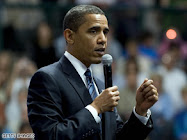
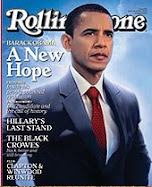
Ron Walters in the Black Commentator makes plain that the "blame Obama game of the right" is a bit out of place. It is as if the President should have known in advance that the oil gusher was going to happen and make it stop immediately. James "Ragin' Cajun" Carville is all over the tube castigating the President, arguing that "we are dying down here!" But the real point that he makes is that "the right" is into their game, "blame Obama all the time." RGN
Blame Obama all of the Time
Ron Walters
I couldn’t believe the headlines in a recent issue of the Los Angeles Times which asked whether President Obama had responsibility for the oil spill on the Louisiana, Mississippi coastline. Of course, as President, he has a responsibility to see that it is cleaned up, first by the resources of BP, the company that made the mess, but ultimately by the US Government. But at this stage of the crisis, the article felt decidedly like there was some culpability of Obama for not having had his Minerals Management Service regulate oil drilling more vigorously. This doesn’t wash, because it’s like blaming the Obama administration for not being able to see into the future, but it is consistent with the way in which he has been viewed increasingly.
The Obama administration has increasingly found it difficult to claim that it inherited a mammoth set of problems that they have tried to fix by applying federal resources to them. That is the issue about oil drilling. Remember the Republican mantra, “drill baby drill” and oil executives being secretly shifted into the White House to help Vice President Chaney set energy policy?
This was especially evident in the attempt to characterize the recent elections as a referendum on the Obama administration, but it was thwarted because the Republicans failed to nationalize the election sufficiently, so that it turned out to be a referendum on the Tea Party instead. Nevertheless, Obama was referred to nearly as a pariah, someone whom candidates should have been reluctant to campaign with because of the faulty view that the Health Care act was unpopular with the American people. Strikingly, in this way, they made an incorrect parallel to similar feelings many Republican candidates had toward George Bush in the last year of his administration.
But is it was not realistic for Democrats to respond to the pariah painting of Obama when he has passed historic legislation with Democratic majorities in both Houses of Congress that will benefit millions of people. What happened is that the media overplayed the Tea Party phenomenon, blowing up the anti-Obama sentiments of a relatively small segment of the electorate and proposing that Obama’s association with Democratic candidates would have a negative effect. In a May 23rd article, the dean of political journalists, David Broder of The Washington Post characterized the Obama administration this way: “…the fundamental tension in the political system is becoming clear. A liberal government is struggling to impose its agenda on an electorate increasingly responsive to an activist conservative movement operating inside the Republican party.” He should know better; maybe he does.
The problem with being President of the United States is that ultimately the big problems will land in your lap and so, whether or not Obama inherited a horrendous set of problems, they eventually will become his the longer they go unresolved. The difficulty here is trying determine whether this happens naturally or whether people are placing things in his lap in a blame circus designed to complicate his governance and eventually bring him down. The degree of the Obama blame game is indeed withering, almost everything is found to have been related to some fault of the manner in which it was handled by his administration.
One of the most amazing things is the references – by people who should know better -- to Obama as almost a singular decision maker who is inexperienced and mistake prone, ignoring the fact that he deliberately brought into his own close company in the White House and into Cabinet agencies experienced people who have a major role in running the government.
The Obama administration must now know as a result of the fight over health care is that it is not enough to do something good for the American people and have it speak for itself. Why the Republican minority has been able, time and again, to define the actions of the administration is not a puzzle, the Obama administration – and the Democratic party in general -- is horrible at message discipline. Republicans all sing from the same hymn book while Democrats are all over the map and even supporters are often left confused about what the various spokespersons are attempting to communicate and how what they say attacks their opponents successfully.
Democrats have to get better at message competition because I don’t expect the blame game to let up any time soon.
BlackCommentator.com Editorial Board member, Dr. Ron Walters, PhD is a Political Analyst, Author and Professor Emeritus of the University of Maryland, College Park. His latest book is: The Price of Racial Reconciliation (The Politics of Race and Ethnicity) (University of Michigan Press). Click here to contact Dr. Walters.
Thursday, May 27, 2010


Thursday, May 20, 2010
Rachel Maddow demolishes Rand Paul
Normally, introductory comments are offered here. No need for that. The interview (Rachel and Paul) speaks for itself and says it all. RGN
The Tea Party favorite says he'd have marched with Martin Luther King Jr., but he opposes the law that forced businesses to serve him Video
By Joan Walsh
Kentucky GOP Senate nominee Rand Paul is squirming under the bright lights of national media attention since he toppled Mitch McConnell's handpicked candidate Trey Grayson Tuesday night. On Wednesday, an interview he gave to the Louisville Courier-Journal, in which he seemed to say he would have opposed the Civil Rights Act of 1964, hit the Internet and cable television. Wednesday night MSNBC's Rachel Maddow interviewed him and tried to get him to clarify his remarks, and Paul tried to talk his way out of siding with the terrible folks who wouldn't let black students sit at those Southern lunch counters in 1960.
But Paul basically sided with the terrible folks. The Tea Party hero said he thought the Civil Rights Act was fine when it came to desegregating public institutions, but not private businesses. He called the issue of desegregating lunch counters "obscure," and implied the First Amendment gave business owners the right to be racist.
You've got to watch the whole interview. At the end, Paul seemed to understand that he's going to be explaining his benighted civil rights views for a long, long time – but he seemed to blame Maddow. "You bring up something that is really not an issue…a red herring, it's a political ploy…and that's the way it will be used," he complained at the end of the interview. Whether the Civil Rights Act should have applied to private businesses – "not really an issue," says Tea Party hero Rand Paul.
It's going to become increasingly clear that the Tea Party movement wants to revoke the Great Society, the New Deal and the laws that were the result of the civil rights movement. Paul may be right that his views are "not really an issue" with his Tea Party supporters, although I have to think some of them won't enjoy watching him look like a slippery politician as he fails, over and over, to answer Maddow's questions directly. It's a long way to November, but I'd be pretty happy to be Kentucky Democrat Jack Conway right about now.
Here's the interview. Don't watch if you can't stand to see a politician sweat.
The Tea Party favorite says he'd have marched with Martin Luther King Jr., but he opposes the law that forced businesses to serve him Video
By Joan Walsh
Kentucky GOP Senate nominee Rand Paul is squirming under the bright lights of national media attention since he toppled Mitch McConnell's handpicked candidate Trey Grayson Tuesday night. On Wednesday, an interview he gave to the Louisville Courier-Journal, in which he seemed to say he would have opposed the Civil Rights Act of 1964, hit the Internet and cable television. Wednesday night MSNBC's Rachel Maddow interviewed him and tried to get him to clarify his remarks, and Paul tried to talk his way out of siding with the terrible folks who wouldn't let black students sit at those Southern lunch counters in 1960.
But Paul basically sided with the terrible folks. The Tea Party hero said he thought the Civil Rights Act was fine when it came to desegregating public institutions, but not private businesses. He called the issue of desegregating lunch counters "obscure," and implied the First Amendment gave business owners the right to be racist.
You've got to watch the whole interview. At the end, Paul seemed to understand that he's going to be explaining his benighted civil rights views for a long, long time – but he seemed to blame Maddow. "You bring up something that is really not an issue…a red herring, it's a political ploy…and that's the way it will be used," he complained at the end of the interview. Whether the Civil Rights Act should have applied to private businesses – "not really an issue," says Tea Party hero Rand Paul.
It's going to become increasingly clear that the Tea Party movement wants to revoke the Great Society, the New Deal and the laws that were the result of the civil rights movement. Paul may be right that his views are "not really an issue" with his Tea Party supporters, although I have to think some of them won't enjoy watching him look like a slippery politician as he fails, over and over, to answer Maddow's questions directly. It's a long way to November, but I'd be pretty happy to be Kentucky Democrat Jack Conway right about now.
Here's the interview. Don't watch if you can't stand to see a politician sweat.
Wednesday, May 12, 2010
Next Court Nominee and African American Woman??
Sophia Nelson for "The Root" has raised the right question: When will there be a black woman on the Supreme Court? This is a great question and one I assume will be taken care of when it comes to President Obama's next Supreme Court appointment. Certainly Obama will nominate an African American woman to the Court during his tenure as President. That will be an HISTORIC appointment, big time.
Since the current African American on the Court was a cynical appointment with President George H. W. Bush playing the "race card" and satisfying the desires of the ideological white nationalist right wing. Immediately coming to mind for his next appointment, particularly with the need for a progressive balance on the Court, would be Harvard Professor Charles Ogletree, Obama's mentor. With more considerations there would be several problems with his nomination: 1) Ogletree if appointed would not be on the bench for another 30 or even 40 years, he's too old; 2) an Ogletree nomination WOULD get a filibuster from the Republicans, he's broken too many barriers and he makes a great case for reparations; and 3) in the spirit of a Court that is representative of the people, the void is the absence of an African American woman.
With the confirmation of Elena Kagan, the Court will have three women, two of whom are Jewish. Sotomayor of course is Latina and Catholic. Not counting Stevens, who is retiring and Kagan is nominated to replce, the four men remaining are all conservative Catholics, including anti-black brotherman, Associate Justice Clarence Thomas. There is a serious need to counter-balance Thomas -- the justice who has never asked a question in oral argument.
With that being the case, I am reminded of a scene in which Jeffrey Toobin was being interviewed about his book, "The Nine." In that interview one thing becomes obvious, to many Associate Justice Clarence Thomas, is a joke, literally. Even though the program is more than an hour long the laughter evoked by the mention of Thomas' name occurs in the first 5 minutes. It is worth the look. That being the case it is even more urgent that the absence of an African American female. It is inconceivable that the next appointment will not be a black woman. RGN
A Supreme Snub by Obama
By: Sophia Nelson
Posted: May 12, 2010 at 10:07 AM
His nominee for the high court is qualified, but why weren't more black women considered?
President Barack Obama needed only to look across his dinner table each evening or in the bed next to him each night to see a well-educated and well-qualified black female attorney who could have made a great U.S. Supreme Court nominee.
For reasons surpassing my understanding, however, the president apparently did not include a black female jurist on his so-called "short list" of choices to replace retiring Justice John Paul Stevens, even though no black woman has ever served on the high court.
There's no doubt that Solicitor Gen. Elena Kagan, a white woman who is a former Harvard Law School dean and Ivy League graduate, is well-qualified. Yet, of those jurists considered seriously by the president (Washington, D.C., Appeals Court Judge Merrick B. Garland, a white male; U.S. Appeals Court Judge Diane Wood of Chicago, a white female; and a spate of others leaked to the media since April) only one black judge, Leah Sears Ward, was a contender.
A few of the women who should have been in contention are Marian Wright Edelman, longtime president of the Children's Defense Fund and the first black woman admitted to practice in the state of Mississippi in the 1960s; Judge Janice Rogers Brown, who sits on the U.S. Court of Appeals, D.C. Circuit, and who Obama supported while he was a senator; Harvard Law professor Lani Guinier, who, despite the controversy when she was nominated by President Bill Clinton to be an assistant U.S. attorney general, is an excellent legal scholar; and Elaine R. Jones, formerly of the NAACP Legal Defense Fund, who has three decades of experience as a litigator and civil rights activist.
The question many in the black female legal community (of which I am a part) are asking is why did the sisters get passed over once again?
As I write about extensively in my forthcoming book, Black. Female. Accomplished. Redefined., (Smiley Books, A Hay House Publishing Partner, October 2010) black women in the legal profession have had a difficult time making it to partner status in big firms, attaining high positions as general counsel of the nation's top corporations and landing jobs as deans of top law schools. These achievements can be stepping stones to becoming a high-profile jurist, which, in turn, can lead down the path to top judicial appointments. Yet, despite law firms' diversity efforts over the past two decades, they still have problems retaining and promoting black women. This is a great mystery, considering the fact that more than 50 percent of law school students are female and that white women have made great strides into the upper echelons of the profession. Not so for black women and women of color in general, which is the reason I vigorously supported Justice Sonia Sotomayor's nomination.
The reasons black women have been passed over once again for the nation's high court is simple. As the American Bar Association wrote in its 2007 report, titled "Visible Invisibility: Women of Color in Law Firms":
Women of color experience a double whammy of gender and race, unlike white women or even men of color, who share at least one of these characteristics (gender or race) with those in the upper strata of management. Women of color may face exclusion from informal networks, inadequate institutional support, and challenges to their authority and credibility. They often feel isolated and alienated, sometimes even from other women. Women of color in law firms have been consistently invisible and often ignored in spite of many of the diversity efforts under way in law firms. Our progress on diversity generally has been slow, but our progress with women of color has been even slower.
We need to do a better job of making sure that the black female talent we do have in the United States is better groomed, and that the "bench" is filled with some heavy hitters who can step up and easily fill the nation's top law firms, courtrooms and courts. It bothers me that since the first black woman, Charlotte E. Ray, was admitted to the Bar in 1872, we have not seen fit to elevate a sister to the Supreme Court.
Kagan will make a fine justice if confirmed, and she will be the fourth woman in history to sit on the U.S. Supreme Court. I just can't help wondering how long black women will have to wait until we see someone who looks like us in that position. Until then, I suppose we will remain largely invisible and have to patiently wait our turn.
http://www.theroot.com/views/supreme-snub-obama
Sophia Nelson, Esq., is the author of the forthcoming book, Black. Female. Accomplished. Redefined., and is a regular contributor to The Root.
Since the current African American on the Court was a cynical appointment with President George H. W. Bush playing the "race card" and satisfying the desires of the ideological white nationalist right wing. Immediately coming to mind for his next appointment, particularly with the need for a progressive balance on the Court, would be Harvard Professor Charles Ogletree, Obama's mentor. With more considerations there would be several problems with his nomination: 1) Ogletree if appointed would not be on the bench for another 30 or even 40 years, he's too old; 2) an Ogletree nomination WOULD get a filibuster from the Republicans, he's broken too many barriers and he makes a great case for reparations; and 3) in the spirit of a Court that is representative of the people, the void is the absence of an African American woman.
With the confirmation of Elena Kagan, the Court will have three women, two of whom are Jewish. Sotomayor of course is Latina and Catholic. Not counting Stevens, who is retiring and Kagan is nominated to replce, the four men remaining are all conservative Catholics, including anti-black brotherman, Associate Justice Clarence Thomas. There is a serious need to counter-balance Thomas -- the justice who has never asked a question in oral argument.
With that being the case, I am reminded of a scene in which Jeffrey Toobin was being interviewed about his book, "The Nine." In that interview one thing becomes obvious, to many Associate Justice Clarence Thomas, is a joke, literally. Even though the program is more than an hour long the laughter evoked by the mention of Thomas' name occurs in the first 5 minutes. It is worth the look. That being the case it is even more urgent that the absence of an African American female. It is inconceivable that the next appointment will not be a black woman. RGN
A Supreme Snub by Obama
By: Sophia Nelson
Posted: May 12, 2010 at 10:07 AM
His nominee for the high court is qualified, but why weren't more black women considered?
President Barack Obama needed only to look across his dinner table each evening or in the bed next to him each night to see a well-educated and well-qualified black female attorney who could have made a great U.S. Supreme Court nominee.
For reasons surpassing my understanding, however, the president apparently did not include a black female jurist on his so-called "short list" of choices to replace retiring Justice John Paul Stevens, even though no black woman has ever served on the high court.
There's no doubt that Solicitor Gen. Elena Kagan, a white woman who is a former Harvard Law School dean and Ivy League graduate, is well-qualified. Yet, of those jurists considered seriously by the president (Washington, D.C., Appeals Court Judge Merrick B. Garland, a white male; U.S. Appeals Court Judge Diane Wood of Chicago, a white female; and a spate of others leaked to the media since April) only one black judge, Leah Sears Ward, was a contender.
A few of the women who should have been in contention are Marian Wright Edelman, longtime president of the Children's Defense Fund and the first black woman admitted to practice in the state of Mississippi in the 1960s; Judge Janice Rogers Brown, who sits on the U.S. Court of Appeals, D.C. Circuit, and who Obama supported while he was a senator; Harvard Law professor Lani Guinier, who, despite the controversy when she was nominated by President Bill Clinton to be an assistant U.S. attorney general, is an excellent legal scholar; and Elaine R. Jones, formerly of the NAACP Legal Defense Fund, who has three decades of experience as a litigator and civil rights activist.
The question many in the black female legal community (of which I am a part) are asking is why did the sisters get passed over once again?
As I write about extensively in my forthcoming book, Black. Female. Accomplished. Redefined., (Smiley Books, A Hay House Publishing Partner, October 2010) black women in the legal profession have had a difficult time making it to partner status in big firms, attaining high positions as general counsel of the nation's top corporations and landing jobs as deans of top law schools. These achievements can be stepping stones to becoming a high-profile jurist, which, in turn, can lead down the path to top judicial appointments. Yet, despite law firms' diversity efforts over the past two decades, they still have problems retaining and promoting black women. This is a great mystery, considering the fact that more than 50 percent of law school students are female and that white women have made great strides into the upper echelons of the profession. Not so for black women and women of color in general, which is the reason I vigorously supported Justice Sonia Sotomayor's nomination.
The reasons black women have been passed over once again for the nation's high court is simple. As the American Bar Association wrote in its 2007 report, titled "Visible Invisibility: Women of Color in Law Firms":
Women of color experience a double whammy of gender and race, unlike white women or even men of color, who share at least one of these characteristics (gender or race) with those in the upper strata of management. Women of color may face exclusion from informal networks, inadequate institutional support, and challenges to their authority and credibility. They often feel isolated and alienated, sometimes even from other women. Women of color in law firms have been consistently invisible and often ignored in spite of many of the diversity efforts under way in law firms. Our progress on diversity generally has been slow, but our progress with women of color has been even slower.
We need to do a better job of making sure that the black female talent we do have in the United States is better groomed, and that the "bench" is filled with some heavy hitters who can step up and easily fill the nation's top law firms, courtrooms and courts. It bothers me that since the first black woman, Charlotte E. Ray, was admitted to the Bar in 1872, we have not seen fit to elevate a sister to the Supreme Court.
Kagan will make a fine justice if confirmed, and she will be the fourth woman in history to sit on the U.S. Supreme Court. I just can't help wondering how long black women will have to wait until we see someone who looks like us in that position. Until then, I suppose we will remain largely invisible and have to patiently wait our turn.
http://www.theroot.com/views/supreme-snub-obama
Sophia Nelson, Esq., is the author of the forthcoming book, Black. Female. Accomplished. Redefined., and is a regular contributor to The Root.
Saturday, May 8, 2010
Right Wing Over-Reach: The Limits of Anti-Obama???
Of all ot the Washington insider pundits, Ron Brownstein seems to get it right more than most. His analysis tends to be more sober and less of the "group think" than his mainstream colleagues. All over the tube and beyond, the nation's pundits have the country quaking in its boots about what's going to happen in November with the threat of Tea Party and other right wing conservatives will be the major threat to the Democrats in Washington and Obama's abiliity to govern. Brownstein suggests an alternative narrative: the likelihood that the conservatives will contribute to their own marginalization and isolation. Essentially, Brownstein makes the case that opposition to "everything Obama" has become the litmus test in Republican circles. Not buying the conservative mantra, the populace seems to be more receptive to Obama's policies. Brownstein warns that Tea Party and Club for Growth politics might do well among Republicans, but isolate themselves when it comes to general elections. RGN
POLITICAL CONNECTIONS
The Conservative Tide: A party too narrow for Specter, Crist, and maybe Bennett will face a tough challenge building a majority coalition.
Saturday, May 8, 2010
by Ronald Brownstein
Republicans who say that President Obama's stimulus plan hasn't created any jobs must ignore not only the Congressional Budget Office (whose latest estimate put the total as high as 2.1 million) but also the more immediate examples of Marco Rubio and Pat Toomey.
Florida's Rubio and Pennsylvania's Toomey are gainfully employed through November as Republican Senate candidates. And each has that job largely because his principal GOP rival was ostracized in the party after endorsing Obama's plan. In Pennsylvania, Sen. Arlen Specter switched to the Democratic Party last year after concluding that he couldn't beat the staunchly conservative Toomey in a primary. In Florida, Gov. Charlie Crist last week abandoned the GOP primary for an independent Senate bid after reaching the same judgment about Rubio.
The GOP's rightward march could leave it on shaky ground with voters focused more on results than ideology.
The conservative tide inside the GOP that lifted Rubio and Toomey shows no sign of cresting. On May 8, Sen. Robert Bennett faces a strong risk of being denied renomination by the Utah GOP convention. Bennett is hardly a moderate, but conservative activists have mobilized against him because of his vote for the 2008 financial bailout bill and his authorship of bipartisan health reform legislation that included an individual mandate.
Many analysts doubt that Bennett will attract enough convention support to qualify for the primary. Meanwhile, just across the border, Sen. John McCain of Arizona, the GOP's 2008 presidential nominee, is struggling in his re-election bid against an energetic primary challenge from conservative former Rep. J.D. Hayworth.
In today's hyperpartisan, quasi-parliamentary politics, demands for ideological purity and party loyalty are growing on both sides: Centrist Sen. Blanche Lincoln is facing a serious threat in Arkansas's Democratic primary. But these forces are barking loudest inside the GOP -- as is evident in everything from congressional Republicans' united vote against Obama's health plan to the support that all but one Republican in the Arizona Legislature gave to their state's confrontational new immigration law. The possibility that Republicans might capture U.S. Senate seats in Illinois and Delaware this fall with moderate nominees shades, but doesn't alter, the picture of a party betting that the road to recovery begins with a hard right turn.
So far, there's little evidence that course is hurting the GOP's prospects in the 2010 election. The great political surprise of Obama's presidency is that amid these hard times, the electorate has directed its frustration less against Big Business (though it is hardly popular) than against Big Government, especially as Obama has aggressively expanded Washington's reach in response to the economic crisis.
While racial minorities largely embrace Obama's direction, polls consistently show most whites recoiling. In the latest Allstate/National Journal Heartland Monitor national survey, released on May 7, just 36 percent of white respondents said that Obama's economic agenda prevented an even deeper downturn. A majority, 53 percent, instead said that it bloated the federal debt without doing much good. Former Republican National Committee Chairman Ed Gillespie had it right, at least in terms of the white electorate, when he insisted this week that the public is "very worried that government has grown beyond its responsible limits."
The questions for the GOP, though, are how much of that reaction is a permanent ideological rejection of Obama's agenda, and how much is temporary disappointment that it has not yet produced more results. In the Heartland Monitor poll, just one-third of adults endorsed the conservative notion that government is more the problem than the solution to our economic difficulties; another third backed the liberal conviction that government must play an active role in policing the marketplace. The decisive remainder, about three in 10, said they were open to an activist government but weren't convinced that it could deliver results that improve their lives. Even among white respondents, just two-fifths picked the flatly anti-government option.
Those findings suggest that if the budding economic recovery accelerates, the GOP's rightward march could leave it on shaky ground with voters focused more on results than ideology. It's possible such a dynamic could help Democrats in November (especially in affluent districts), but it's more likely to lift Obama in 2012. The president has almost certainly overestimated the public's tolerance for government activism and will probably need to pivot toward reforming and streamlining Washington. But however well Republicans perform in 2010, a party too narrow for Specter, Crist, and maybe Bennett will face a tough challenge building a presidential majority coalition in 2012, when economic distress could be easing and the electorate swelling with more young people and minorities.
http://www.nationaljournal.com/njmagazine/politicalconnections.php
Copyright ©2010 by National Journal Group Inc. The Watergate 600 New Hampshire Ave., NW Washington, DC 20037
202-739-8400 • fax 202-833-8069 NationalJournal.com is an Atlantic Media publication.
POLITICAL CONNECTIONS
The Conservative Tide: A party too narrow for Specter, Crist, and maybe Bennett will face a tough challenge building a majority coalition.
Saturday, May 8, 2010
by Ronald Brownstein
Republicans who say that President Obama's stimulus plan hasn't created any jobs must ignore not only the Congressional Budget Office (whose latest estimate put the total as high as 2.1 million) but also the more immediate examples of Marco Rubio and Pat Toomey.
Florida's Rubio and Pennsylvania's Toomey are gainfully employed through November as Republican Senate candidates. And each has that job largely because his principal GOP rival was ostracized in the party after endorsing Obama's plan. In Pennsylvania, Sen. Arlen Specter switched to the Democratic Party last year after concluding that he couldn't beat the staunchly conservative Toomey in a primary. In Florida, Gov. Charlie Crist last week abandoned the GOP primary for an independent Senate bid after reaching the same judgment about Rubio.
The GOP's rightward march could leave it on shaky ground with voters focused more on results than ideology.
The conservative tide inside the GOP that lifted Rubio and Toomey shows no sign of cresting. On May 8, Sen. Robert Bennett faces a strong risk of being denied renomination by the Utah GOP convention. Bennett is hardly a moderate, but conservative activists have mobilized against him because of his vote for the 2008 financial bailout bill and his authorship of bipartisan health reform legislation that included an individual mandate.
Many analysts doubt that Bennett will attract enough convention support to qualify for the primary. Meanwhile, just across the border, Sen. John McCain of Arizona, the GOP's 2008 presidential nominee, is struggling in his re-election bid against an energetic primary challenge from conservative former Rep. J.D. Hayworth.
In today's hyperpartisan, quasi-parliamentary politics, demands for ideological purity and party loyalty are growing on both sides: Centrist Sen. Blanche Lincoln is facing a serious threat in Arkansas's Democratic primary. But these forces are barking loudest inside the GOP -- as is evident in everything from congressional Republicans' united vote against Obama's health plan to the support that all but one Republican in the Arizona Legislature gave to their state's confrontational new immigration law. The possibility that Republicans might capture U.S. Senate seats in Illinois and Delaware this fall with moderate nominees shades, but doesn't alter, the picture of a party betting that the road to recovery begins with a hard right turn.
So far, there's little evidence that course is hurting the GOP's prospects in the 2010 election. The great political surprise of Obama's presidency is that amid these hard times, the electorate has directed its frustration less against Big Business (though it is hardly popular) than against Big Government, especially as Obama has aggressively expanded Washington's reach in response to the economic crisis.
While racial minorities largely embrace Obama's direction, polls consistently show most whites recoiling. In the latest Allstate/National Journal Heartland Monitor national survey, released on May 7, just 36 percent of white respondents said that Obama's economic agenda prevented an even deeper downturn. A majority, 53 percent, instead said that it bloated the federal debt without doing much good. Former Republican National Committee Chairman Ed Gillespie had it right, at least in terms of the white electorate, when he insisted this week that the public is "very worried that government has grown beyond its responsible limits."
The questions for the GOP, though, are how much of that reaction is a permanent ideological rejection of Obama's agenda, and how much is temporary disappointment that it has not yet produced more results. In the Heartland Monitor poll, just one-third of adults endorsed the conservative notion that government is more the problem than the solution to our economic difficulties; another third backed the liberal conviction that government must play an active role in policing the marketplace. The decisive remainder, about three in 10, said they were open to an activist government but weren't convinced that it could deliver results that improve their lives. Even among white respondents, just two-fifths picked the flatly anti-government option.
Those findings suggest that if the budding economic recovery accelerates, the GOP's rightward march could leave it on shaky ground with voters focused more on results than ideology. It's possible such a dynamic could help Democrats in November (especially in affluent districts), but it's more likely to lift Obama in 2012. The president has almost certainly overestimated the public's tolerance for government activism and will probably need to pivot toward reforming and streamlining Washington. But however well Republicans perform in 2010, a party too narrow for Specter, Crist, and maybe Bennett will face a tough challenge building a presidential majority coalition in 2012, when economic distress could be easing and the electorate swelling with more young people and minorities.
http://www.nationaljournal.com/njmagazine/politicalconnections.php
Copyright ©2010 by National Journal Group Inc. The Watergate 600 New Hampshire Ave., NW Washington, DC 20037
202-739-8400 • fax 202-833-8069 NationalJournal.com is an Atlantic Media publication.
Sunday, May 2, 2010
The Threat to White Nationalsim: The Obama Presidency

This post is an abridged version of a presentation made at the recent joint meetings of the North Central Sociological Association (NCSA) and Midwest Sociological Society(MSS)in Chicago. This piece was prepared for publication in the NCSA newsletter. RGN
The Presidency of Barack Obama and the New Faces of America’s White Nationalism
by Robert Newby
Central Michigan University
The presidency of African American Barack Obama after one year has been a case of celebration by his supporters, but one of resentment for many among America’s white majority. His election was epochal in that for over 200 years, all forty-three of his predecessors were white. Beginning in 1790, citizenship was restricted to whites. Until the Brown decision in 1954, the citizenship status of blacks was dubious. Now, a half century later, a person of color, a black man, its 44th President, the nation’s First Citizen.
From the moment of his election, the question became what does his election say about race in America today, a nation that has historically reserved its lowest regard for blacks? Early on the question was asked: “Is America ready for a black president?” In translation, that question meant: “Will whites vote for a black man to be president?” Barack Obama answered that question by saying to his confidants when he decided to run: “America is ready to have a black President.” The Obama campaign was historic for its overwhelming grassroots support, specifically its successful use of the Internet. Essentially his victory in 97% white Iowa paved the way for his Democratic nomination. With a coalition of minorities, 97% of the black vote, 67% of the Latino vote, 62% Asian vote and 43% of the white vote, Obama’s victory over McCain for the presidency was resounding. He was right, “America was ready for a black president.”
The election may have proved him to have been right about the American electorate, but it is now clear that he was not right when it comes to much of white America. A majority of white Americans, fifty-five per cent, voted for McCain. Ninety percent of McCain’s votes were whites. For the first the time in America’s history, the Presidency is in the hands of a man who is not white. Obama’s election represents a major threat to the white nationalist core that has been central to U.S. politics from before its inception as a nation. Until the accommodations made by the white nation as a result of World War II, the Brown decision, the Civil Rights and Black Power Movements, with few exceptions, citizenship was restricted to being white.
As stated at SNCC’s (Student Non-violent Coordinating Committee) 50th anniversary celebration recently, “…African Americans are not in these positions today because a sudden change of heart occurred in this nation.” He went on to say, “There was pressure” mounted against a resistant white nationalist regimes. The 1964 Civil Rights and the 1965 Voting Rights Acts, based upon the principles of Brown, altered the citizenship status of blacks during this period. These advances notwithstanding, it was Reagan who re-legitimized national the white nationalist discourse for the nation. Even so, the failures of the Bush administration and the election of Obama brought the “Reagan revolution” to its end.
It is this defeated “Reagan Revolution” that is resisting acceptance of the democratic outcome of the election that serves as the core of the Tea-Parties. It was Reagan who popularized the saying that the scariest eleven words in the English language are: “I am from the government and I am here to help.” This anti-government sentiment is exacerbated now that the head of government is an African American. A black president is not legitimate in the eyes of the white nationalists. It was this “he is not one of us” sentiment that gave rise to the demands for the President’s birth certificate, or the “birther” movement.
The Republican legislature of Arizona has passed legislation requiring the President to produce a birth certificate in order to be on the ballot in 2012. A similar bill has been introduced in the Georgia legislature. Not only is his American citizenship questioned, among the Tea-Partiers, the President is portrayed as a socialist, a communist, a fascist, a Muslim, even a witch doctor with a bone in his nose. In their eyes he is not “American.” It is this sentiment that leads to call that they “want their country back.”
Armed demonstrators at Tea-Party rallies, accompanied by an inflammatory rhetoric, symbolic of armed revolutionary struggle makes today’s context one that is unsettling. Gun sales have escalated to record levels. According to the Southern Poverty Law Center, the anti-government militias have grown by 250%. The developments are ominous. As reminded by President Clinton in reference to the 15th anniversary of Oklahoma City bombing, a similar anti-government sentiment was extant. The anti-government white nationalists who declare “he’s not one of us” are at war with the changing demographics of America not just an election outcome.
Threatened by this “new majority,” the Tea-Party, “birther,” and militia movements find themselves in association with some very dangerous currents in today’s racial politics that may not bode well for our society’s future. The salient question is to what extent will these forces go in their efforts to maintain white dominance in the face of a changed demography in America?
Arizona and Beyond: Frank Rich on Widespread White Nationalism

Though not by name, Frank Rich reveals the white nationalism that is at the core of the Arizona law on illegal immigrants and the Republican party, more generally. Rich shows the opposition to everything Obama is largely about the racism of these parties. Yet, in an effort to deflect from their own racism, their defense is those who make the observations are the real racists for even raising the issue of racism. See also the Obama Presidency and Its Threat to White Nationalism. RGN
May 2, 2010
If Only Arizona Were the Real Problem
By FRANK RICH
Op-Ed Columnist
DON’T blame it all on Arizona. The Grand Canyon State simply happened to be in the right place at the right time to tilt over to the dark side. Its hysteria is but another symptom of a political virus that can’t be quarantined and whose cure is as yet unknown.
If many of Arizona’s defenders and critics hold one belief in common, it’s that the new “show me your papers” law is sui generis: it’s seen as one angry border state’s response to its outsized share of America’s illegal immigration crisis. But to label this development “Arizona’s folly” trivializes its import and reach. The more you examine the law’s provisions and proponents, the more you realize that it’s the latest and (so far) most vicious battle in a far broader movement that is not just about illegal immigrants — and that is steadily increasing its annexation of one of America’s two major political parties.
Arizonans, like all Americans, have every right to be furious about Washington’s protracted and bipartisan failure to address the immigration stalemate. To be angry about illegal immigration is hardly tantamount to being a bigot. But the Arizona law expressing that anger is bigoted, and in a very particular way. The law dovetails seamlessly with the national “Take Back America” crusade that has attended the rise of Barack Obama and the accelerating demographic shift our first African-American president represents.
The crowd that wants Latinos to show their papers if there’s a “reasonable suspicion” of illegality is often the same crowd still demanding that the president produce a document proving his own citizenship. Lest there be any doubt of that confluence, Rush Limbaugh hammered the point home after Obama criticized Arizona’s action. “I can understand Obama being touchy on the subject of producing your papers,” he said. “Maybe he’s afraid somebody’s going to ask him for his.” Or, as Glenn Beck chimed in about the president last week: “What has he said that sounds like American?”
To the “Take Back America” right, the illegitimate Obama is Illegal Alien No. 1. It’s no surprise that of the 35 members of the Arizona House who voted for the immigration law (the entire Republican caucus), 31 voted soon after for another new law that would require all presidential candidates to produce birth certificates to qualify for inclusion on the state’s 2012 ballot. With the whole country now watching Arizona, that “birther” bill was abruptly yanked Thursday.
The legislators who voted for both it and the immigration law were exclusively Republicans, but what happened in the Arizona G.O.P. is not staying in Arizona. Officials in at least 10 other states are now teeing up their own new immigration legislation. They are doing so even in un-Arizonan places like Ohio, Missouri, Maryland and Nebraska, none of them on the Department of Homeland Security’s 2009 list of the 10 states that contain three-quarters of America’s illegal immigrant population.
Outbreaks of nativist apoplexy are nothing new in American history. The last derailed George W. Bush’s apparently earnest effort to get a bipartisan immigration compromise through the Senate in 2007. At the time, the more egregious expressions of anti-immigrant rage — including Arizona’s self-appointed border-patrol militia, the Minutemen — were stigmatized as a fringe by the White House and much of the G.O.P. establishment. John McCain, though facing a tough fight for the Republican presidential nomination, signed on to the Bush reform effort despite being slimed by those in his party’s base who accused him of supporting “amnesty.”
What a difference the Tea Party makes. This time McCain endorsed his state’s new immigration law as “a good tool” and “a very important step forward,” and propagandized in favor of it with his widely ridiculed televised canard that illegal immigrants were “intentionally causing accidents on the freeway.” McCain, like other mainstream conservative Republicans facing primaries this year, is now fighting for his political life against a Tea Party-supported radical. His opponent, the former congressman and radio shock jock J. D. Hayworth, is an unabashed birther who frames the immigration debate as an opportunity to “stand up for our culture,” presumably against all immigrants, legal and illegal alike. In this political climate, he could well win.
McCain, like Arizona, shouldn’t be singled out for censure: He is far from alone in cowering before his party’s extremists. Neither Mitch McConnell, John Boehner nor Eric Cantor dared say a word against Arizona’s law. Mitt Romney, who was mocked during the 2008 campaign for having employed undocumented Guatemalan immigrants as landscapers on his Massachusetts estate, tried to deflect the issue by vacillating (as usual). So did Mike Huckabee, who told The Dallas Morning News last week that “it’s not my place to agree or disagree” with what happened in Arizona. If it’s not the place of a talk-show host and prospective presidential candidate to take a stand on an issue of this moment, whose place is it? There are few profiles in courage among the leaders in this G.O.P. — only a lot of guys hiding under their desks.
The one group of Republicans that has been forthright in criticizing the Arizona law is the Bush circle: Jeb Bush, the former speechwriter Michael Gerson, the Homeland Security secretary Tom Ridge, the adviser Mark McKinnon and, with somewhat more equivocal language, Karl Rove. McKinnon and Rove know well that Latino-bashing will ultimately prove political suicide in a century when Hispanic Americans are well on their way to becoming the largest minority in the country and are already the swing voters in many critical states.
The Bushies, however, have no power and no juice in the new conservative order. The former president is nearly as reviled in some Tea Party circles as Obama is. Even conservatives as seemingly above reproach as Senator Lindsey Graham of South Carolina now invite the nastiest of blow-back if they fail Tea Party purity tests. When Graham had the gall to work with Chuck Schumer of New York on an immigration reform bill, the hard-line Americans for Legal Immigration punished him by spreading rumors about his private life as loudly as possible. Graham has been backing away from supporting the immigration bill ever since.
It’s harder and harder to cling to the conventional wisdom that the Tea Party is merely an element in the G.O.P., not the party’s controlling force — the tail that’s wagging the snarling dog. It’s also hard to maintain that the Tea Party’s nuttier elements are merely a fringe of a fringe. The first national Tea Party convention, in Nashville in February, chose as its kickoff speaker the former presidential candidate Tom Tancredo, a notorious nativist who surely was enlisted precisely because he runs around saying things like he has “no idea where Obama was born.” The Times/CBS poll of the Tea Party movement found that only 41 percent of its supporters believe that the president was born in the United States.
The angry right and its apologists also keep insisting that race has nothing to do with their political passions. Thus Sarah Palin explained that it’s Obama and the “lamestream media” that are responsible for “perpetuating this myth that racial profiling is a part” of Arizona’s law. So how does that profiling work without race or ethnicity, exactly? Brian Bilbray, a Republican Congressman from California and another supporter of the law, rode to the rescue by suggesting “they will look at the kind of dress you wear.” Wise Latinas better start shopping at Talbots!
In this Alice in Wonderland inversion of reality, it’s politically incorrect to entertain a reasonable suspicion that race may be at least a factor in what drives an action like the Arizona immigration law. Any racism in America, it turns out, is directed at whites. Beck called Obama a “racist.” Newt Gingrich called Sonia Sotomayor a “Latina woman racist.” When Obama put up a routine YouTube video calling for the Democratic base to mobilize last week — which he defined as “young people, African-Americans, Latinos and women” — the Republican National Committee attacked him for playing the race card. Presumably the best defense is a good offense when you’re a party boasting an all-white membership in both the House and the Senate and represented by governors who omit slavery from their proclamations of Confederate History Month.
In a development that can only be described as startling, the G.O.P.’s one visible black leader, the party chairman Michael Steele, went off message when appearing at DePaul University on April 20. He conceded that African-Americans “really don’t have a reason” to vote Republican, citing his party’s pursuit of a race-baiting “Southern strategy” since the Nixon-Agnew era. For this he was attacked by conservatives who denied there had ever been such a strategy. That bit of historical revisionism would require erasing, for starters, Strom Thurmond and Jesse Helms, not to mention the Willie Horton campaign that helped to propel Bush 41 into the White House in 1988.
The rage of 2010 is far more incendiary than anything that went down in 1988, and it will soon leap from illegal immigration to other issues in other states. Boycott the Diamondbacks and Phoenix’s convention hotels if you want to punish Arizona, but don’t for a second believe that it will stop the fire next time.
http://www.nytimes.com/2010/05/02/opinion/02rich.html
Saturday, May 1, 2010
They Have Committed Crimes Against "the People"

The thefts on Wall Street have robbed this nation of much of its wealth. Pension funds were wiped out. Yet the thieves show no remorse. Someones should go to jail. Also, the Republicans who did away with the regulations should be exposed and held accountable. Instead, several have moved on to the private sector to deliver the goods. Major deregulator, former Congressman Dick Armey, is now heading up the Astro-Turf Freedom Works Campaign. Madoff went to jail as have a few others but bay and large, these corporate criminals walk. Likewise, the Gulf of Mexico oil disaster, we are told, was the rsult of the Bush administration deregulation. It is at least rumored that the Cheney secret meeting is what produced the argeement with BP, avoiding the state of art off shore rig installation. Without accountability, criminal accountability there is no deterence for those in power to not betray the public trust. They should be made examples of. RGN
‘God, What a Piece of Crap’By Robert Scheer
Posted on Apr 28, 2010
It was the Perry Mason moment in the unraveling of what was left of Goldman Sachs’ reputation. Only in this case, it involved a grizzled former prosecutor, Sen. Carl Levin, rather than a genial defense attorney. The case was broken and the truth about the depth of Goldman’s corruption revealed in his startling cross-examination of Goldman Chief Financial Officer David Viniar.
The Michigan Democrat, citing the language of the internal e-mails of Goldman traders concerning the deceptive products they were selling, asked: “And when you heard that your own employees in these e-mails are looking at these deals said `God what a shitty deal. God, what a piece of crap,’ when you hear your own employees and read about those e-mails, do you feel anything?”
Viniar’s answer told us all we need to know about the banal but profound immorality of Goldman’s business culture: “I think that’s very unfortunate to have on e-mail.”
A flabbergasted Levin cut in with “On e-mail? How about feeling that way?” and Viniar, apparently moved by jeers of ridicule from the audience, conceded “I think it is very unfortunate for anyone to have said that in any form.” Pressed further by Levin asking, “How about to believe that and sell them?” the CFO finally conceded, “I think that’s unfortunate as well.” To which Levin responded, “That’s what you should have started with.”
But Goldman’s executives didn’t start with any such moral qualms or end with them, as was made clear in the testimony of Goldman Chief Executive Officer Lloyd Blankfein that followed. Blankfein basically pleaded ignorance about the company’s scams, making it clear that offering the details of such products was below his pay scale. That would be $68 million in 2007, the highest in Wall Street history, when Goldman’s bets against its customers paid off so handsomely. What was clear is that his job was to ensure the company’s immense year-end profitability with no questions asked about the methods used. “I did not know” he replied when asked about the details of the company’s trades, and at another point he added, “We’re not that smart.” Then there was “I don’t have any knowledge” on selling short, and finally, “We did not know what subsequently occurred in the housing market.”
What he did know is that the scoundrels in his mortgage betting rooms were, as with that high-flying London operation that got AIG so much loot before it exploded, raking in enormous profits. Such ignorance is bliss for a Goldman CEO who apparently is rewarded in inverse proportion to what he knows of the operation as long as he pays attention to the bottom line.
That was certainly the case for the man whom Blankfein succeeded the year before, Henry Paulson, when Paulson went off to serve as George W. Bush’s treasury secretary. As Paulson admits in his memoir, he was unaware that suspect mortgages were at the heart of the banking meltdown, even though he was head of Goldman when those toxic mortgage securities were developed.
And then there is that other Goldman-honcho-turned-public-servant Robert Rubin, who was a Goldman vice chairman before serving as Bill Clinton’s treasury secretary. In that Cabinet job, Rubin pushed through the Financial Services Modernization Act, which demolished the wall between investment and commercial banking. Ironically, that reversal of the New Deal regulations that had operated successfully for 60 years, the Glass-Steagall Act, was referenced by Blankfein in his Tuesday testimony explaining how Goldman and other firms spun out of control.
When asked by Sen. Ted Kaufman, D-Del., how Goldman had morphed from a traditional investment bank backing sound business ventures to a market gambler in fanciful products, Blankfein attributed it, somewhat forlornly, to “a change in the sociology of the business that took place over the last 15 to 20 years.” He added, “I’m not sure that it was precipitated by the fall of Glass-Steagall or it caused Glass-Steagall to fall. …”
Of course there was nothing inevitable about the fall of Glass-Steagall in 1999, since it was the result of decades of lobbying by the financial industry. That change was followed by the total deregulation of financial derivatives by the Commodity Futures Modernization Act, which Rubin had pushed and which President Clinton signed into law.
Clinton recently conceded that he got bad advice from Rubin on derivatives regulation, but he still holds to the notion that the reversal of Glass-Steagall was not harmful. No one listening carefully to the day of testimony by the various Goldman executives could accept the idea that these folks can function decently without strict boundaries
Monday, April 26, 2010
Obama on a Roll But Not Reported??
In spite of the "birthers," the t-baggers, the Republicans, Fox News and the right wing in general, President Obama is turning this country around. For many not fast enough and for others his very being as president is problematic. These perspectives notwithstanding, it seems the President is governing successfully. In the context of the times, hard times, he is achieving many of his goals, not the least of which is a conception that America has turned the corner in the idea of providing universal health care. Mark Halperin, who seems to be just a part of the "Morning Joe" chorus of critics, writes in "Time Magazine" that Obama's successes have been "underappreciated." That he has accomplished much has gone under-reported in the face of this right wing backlash. Did these people forget where this nation was a year and a half ago? RGN
Monday, Apr. 26, 2010
The Secrets of Obama's Underappreciated Success
By Mark Halperin
Barack Obama's right-wing opponents cast him as a socialist failure. His left-wing hecklers see him as an overcautious hedger. But, critics notwithstanding, the President is on a path to be a huge success by the time of November's midterm elections.
Before the jabberers on the right (What about the huge debt, the broken tax pledge, the paucity of overseas accomplishments?), the yammerers on the left (Guantánamo hasn't been closed, gays aren't serving openly in the military, and too many policies cater to business interests) and the chides in the media (POTUS and party poll numbers are down, and Washington is more partisan than ever), look at the two key metrics that underscore Obama's accomplishments. It is too early to assess the ultimate measure of victory: whether the President's actions have been prudent and beneficial, domestically and internationally. But by Election Day 2010, Obama will have soundly achieved many of his chief campaign promises while running a highly competent, scandal-free government. Not bad for a guy whose opponents (in both parties) for the White House suggested that he was too green in national life to know how to do the job — and whose presidency began in the midst of a worldwide economic crisis that demanded urgent attention and commanded much of his focus.
(See "Obama's Troubled First Year: Grading Him on the Key Issues.")
Let's start with the competence Obama has shown. As he proved in the campaign, he is a master of personnel decisions, choosing people who are excellent at what they do, but also requiring that they play nicely with others. In the two most vital areas, national security and economic policy, all the President's women and men generally get along well with one another, and have had critical roles in advancing the agenda. It is true that the economics team has some rivalries, and the Administration still hasn't figured out how to overcome its collectively weak public-communications skills on the economy. But overall, the White House is populated by hard workers who are rowing in unison to advance the cause and rarely take their disagreements public through damaging leaks.
Obama's two best personnel decisions are probably the two men serving right below him: Vice President Joe Biden and White House chief of staff Rahm Emanuel. Yes, Biden still falls victim to caricature as an irrepressible big mouth and is the butt of late-night jokes. And Emanuel can be overly brash and flutter nerves on Capitol Hill and among Administration allies. But Obama knew what he was getting in both men, and they have performed up to or above his expectations. With their West Wing offices across the hall from each other, Biden and Emanuel often work in tandem, each doing more heavy lifting than is publicly seen or commonly known. Obama — who proved during the campaign that he knows how to maintain control of his operation without micromanaging — sets the tone and overall goals, and then allows his Veep and chief, along with other senior advisers, to execute his plans.
(See who's who in Barack Obama's White House.)
Biden has traveled extensively overseas and across the country and has helped coordinate both national security policy and congressional strategy, all while dealing with governors and mayors on the economy. Politically, he is expected to be an asset in the midterms, as he was in 2008, with white working-class voters who appreciate his homely truths and affable manner, and who still haven't warmed to Obama.
As for Emanuel, Obama was intent on selecting a tough, competitive, savvy chief of staff, one who would be able to use the levers of power to advance an agenda through both legislation and executive action. Emanuel unexpectedly found himself in the spotlight last week when he appeared on Charlie Rose and repeated his oft-expressed interest in one day serving as mayor of Chicago. The press flew into a frenzy, and some pundits deemed the remark an unseemly display of ambition. It was, in fact, a reminder of Emanuel's deep ties to his hometown, his reluctance to leave his job as a member of Congress to join the Administration — part of the House leadership, Emanuel was on a direct path to be the Speaker within a decade — and his willingness to bow to Obama's wishes and jettison his long-term plans in order to manage the White House.
(See "Obama's One-Year Anniversary: A Mixed Scorecard.")
Emanuel's hand (and his six years of experience in the Clinton Administration) can be seen in many facets of the Administration's operational success. The White House controls the Washington and media agenda on most days, carefully coordinating with Capitol Hill and interest-group partners. Bad news is not allowed to fester. And the greatest asset, the President himself, is deployed with strategic planning and tactical nimbleness.
It's easy to forget what circumstances could be like, what problems Obama might have encountered. Think back just a few years ago, to the last time a young Democrat was swept into the White House on a message of change. Unlike Bill Clinton, especially early in his presidency, Obama has largely maintained control of his public image, preserved the majesty of the office (a job that has become harder than ever because of the toxic freak-show nature of our politico-media culture) and maintained good relations, in public and private, with the armed services brass, the intelligence community and law enforcement.
The passage of the health care bill and the pledge to help Democrats wherever possible with fundraising and political assistance has (for now at least) quieted the Capitol Hill voices that until recently were questioning the White House's competence and commitment. Control of Congress makes things easier, for sure, but so does an absence of indicted, disgraced or bungling appointees.
(See what to watch at Obama's health care summit.)
Over the past 16 months, both Biden and Emanuel have expressed concern internally that Obama has been too bold, risking his presidency on big bets. But those disagreements with the President have been fleeting and mostly futile — and, as it happens, unwarranted. So far, most of Obama's big bets have paid off.
The health care bill's passage is, of course, the White House's signal achievement, and was accomplished without revealing the Administration's cognizance (thanks to internal polling and focus groups) of the legislation's stark unpopularity among the public. But beyond health care, Obama acted decisively to stop the world from going into economic depression, after inheriting a mess from his predecessor. Quibble all you wish about the dimensions of the stimulus law or the administration of TARP or the Detroit bailout, but the actions taken were professionally handled, apparently necessary and, so far, constructive. Strikingly underrated by the Washington press corps are Obama's gains on education policy, including a willingness to confront the education establishment on standards for both teachers and students. Overseas, Obama has snagged an arms-reduction deal with Russia, managed the wars in Afghanistan and Iraq exactly as promised, eliminated numerous terrorist leaders through an aggressive targeting operation and laid the groundwork for dealing with Iran and, perhaps, North Korea.
(See the five immediate benefits of health reform.)
In the months ahead, the President will likely pass a financial-regulation overhaul (despite this past weekend's snags), manage the confirmation of a second Supreme Court nominee with relatively little commotion, announce the reduction of the U.S. troop level in Iraq to about 50,000, showcase the undercovered gains on education reform, take advantage of the improving economy to tout his stimulus efforts and sharpen his "Obama-Biden future vs. Bush-Cheney past" argument to help stave off massive Democratic losses in November. He also has a decent chance to pass a small-to-medium-size energy bill. True, some promises, like comprehensive immigration reform, will remain on the sidelines, but most of his major goals will be completed or well under way.
Assuming the President will need a game-changing move in the wake of any significant midterm losses, Emanuel has already played a clever bit of inside-baseball, installing his old friend and Clinton Administration ally Bruce Reid as staff director of the bipartisan deficit-reduction commission that is due to make recommendations in December. If there are big Republican electoral gains, expect the analysis from conservatives and the media to be that the country wanted a check on big spending from Washington. That overriding concern could shape the outcome of the elections more than any of Obama's accomplishments or appreciation for the job he has done thus far. The commission's proposals could then be coordinated with an "I get it" message from Obama, providing a bold opening to the second half of his term, as he sets about tackling another campaign promise: long-term deficit reduction. A difficult pledge to achieve, perhaps, but given the President's track record, it is one that shouldn't be dismissed out of hand.
See a report card on Obama's first year.
See TIME's 2008 Person of the Year: Barack Obama.
Monday, Apr. 26, 2010
The Secrets of Obama's Underappreciated Success
By Mark Halperin
Barack Obama's right-wing opponents cast him as a socialist failure. His left-wing hecklers see him as an overcautious hedger. But, critics notwithstanding, the President is on a path to be a huge success by the time of November's midterm elections.
Before the jabberers on the right (What about the huge debt, the broken tax pledge, the paucity of overseas accomplishments?), the yammerers on the left (Guantánamo hasn't been closed, gays aren't serving openly in the military, and too many policies cater to business interests) and the chides in the media (POTUS and party poll numbers are down, and Washington is more partisan than ever), look at the two key metrics that underscore Obama's accomplishments. It is too early to assess the ultimate measure of victory: whether the President's actions have been prudent and beneficial, domestically and internationally. But by Election Day 2010, Obama will have soundly achieved many of his chief campaign promises while running a highly competent, scandal-free government. Not bad for a guy whose opponents (in both parties) for the White House suggested that he was too green in national life to know how to do the job — and whose presidency began in the midst of a worldwide economic crisis that demanded urgent attention and commanded much of his focus.
(See "Obama's Troubled First Year: Grading Him on the Key Issues.")
Let's start with the competence Obama has shown. As he proved in the campaign, he is a master of personnel decisions, choosing people who are excellent at what they do, but also requiring that they play nicely with others. In the two most vital areas, national security and economic policy, all the President's women and men generally get along well with one another, and have had critical roles in advancing the agenda. It is true that the economics team has some rivalries, and the Administration still hasn't figured out how to overcome its collectively weak public-communications skills on the economy. But overall, the White House is populated by hard workers who are rowing in unison to advance the cause and rarely take their disagreements public through damaging leaks.
Obama's two best personnel decisions are probably the two men serving right below him: Vice President Joe Biden and White House chief of staff Rahm Emanuel. Yes, Biden still falls victim to caricature as an irrepressible big mouth and is the butt of late-night jokes. And Emanuel can be overly brash and flutter nerves on Capitol Hill and among Administration allies. But Obama knew what he was getting in both men, and they have performed up to or above his expectations. With their West Wing offices across the hall from each other, Biden and Emanuel often work in tandem, each doing more heavy lifting than is publicly seen or commonly known. Obama — who proved during the campaign that he knows how to maintain control of his operation without micromanaging — sets the tone and overall goals, and then allows his Veep and chief, along with other senior advisers, to execute his plans.
(See who's who in Barack Obama's White House.)
Biden has traveled extensively overseas and across the country and has helped coordinate both national security policy and congressional strategy, all while dealing with governors and mayors on the economy. Politically, he is expected to be an asset in the midterms, as he was in 2008, with white working-class voters who appreciate his homely truths and affable manner, and who still haven't warmed to Obama.
As for Emanuel, Obama was intent on selecting a tough, competitive, savvy chief of staff, one who would be able to use the levers of power to advance an agenda through both legislation and executive action. Emanuel unexpectedly found himself in the spotlight last week when he appeared on Charlie Rose and repeated his oft-expressed interest in one day serving as mayor of Chicago. The press flew into a frenzy, and some pundits deemed the remark an unseemly display of ambition. It was, in fact, a reminder of Emanuel's deep ties to his hometown, his reluctance to leave his job as a member of Congress to join the Administration — part of the House leadership, Emanuel was on a direct path to be the Speaker within a decade — and his willingness to bow to Obama's wishes and jettison his long-term plans in order to manage the White House.
(See "Obama's One-Year Anniversary: A Mixed Scorecard.")
Emanuel's hand (and his six years of experience in the Clinton Administration) can be seen in many facets of the Administration's operational success. The White House controls the Washington and media agenda on most days, carefully coordinating with Capitol Hill and interest-group partners. Bad news is not allowed to fester. And the greatest asset, the President himself, is deployed with strategic planning and tactical nimbleness.
It's easy to forget what circumstances could be like, what problems Obama might have encountered. Think back just a few years ago, to the last time a young Democrat was swept into the White House on a message of change. Unlike Bill Clinton, especially early in his presidency, Obama has largely maintained control of his public image, preserved the majesty of the office (a job that has become harder than ever because of the toxic freak-show nature of our politico-media culture) and maintained good relations, in public and private, with the armed services brass, the intelligence community and law enforcement.
The passage of the health care bill and the pledge to help Democrats wherever possible with fundraising and political assistance has (for now at least) quieted the Capitol Hill voices that until recently were questioning the White House's competence and commitment. Control of Congress makes things easier, for sure, but so does an absence of indicted, disgraced or bungling appointees.
(See what to watch at Obama's health care summit.)
Over the past 16 months, both Biden and Emanuel have expressed concern internally that Obama has been too bold, risking his presidency on big bets. But those disagreements with the President have been fleeting and mostly futile — and, as it happens, unwarranted. So far, most of Obama's big bets have paid off.
The health care bill's passage is, of course, the White House's signal achievement, and was accomplished without revealing the Administration's cognizance (thanks to internal polling and focus groups) of the legislation's stark unpopularity among the public. But beyond health care, Obama acted decisively to stop the world from going into economic depression, after inheriting a mess from his predecessor. Quibble all you wish about the dimensions of the stimulus law or the administration of TARP or the Detroit bailout, but the actions taken were professionally handled, apparently necessary and, so far, constructive. Strikingly underrated by the Washington press corps are Obama's gains on education policy, including a willingness to confront the education establishment on standards for both teachers and students. Overseas, Obama has snagged an arms-reduction deal with Russia, managed the wars in Afghanistan and Iraq exactly as promised, eliminated numerous terrorist leaders through an aggressive targeting operation and laid the groundwork for dealing with Iran and, perhaps, North Korea.
(See the five immediate benefits of health reform.)
In the months ahead, the President will likely pass a financial-regulation overhaul (despite this past weekend's snags), manage the confirmation of a second Supreme Court nominee with relatively little commotion, announce the reduction of the U.S. troop level in Iraq to about 50,000, showcase the undercovered gains on education reform, take advantage of the improving economy to tout his stimulus efforts and sharpen his "Obama-Biden future vs. Bush-Cheney past" argument to help stave off massive Democratic losses in November. He also has a decent chance to pass a small-to-medium-size energy bill. True, some promises, like comprehensive immigration reform, will remain on the sidelines, but most of his major goals will be completed or well under way.
Assuming the President will need a game-changing move in the wake of any significant midterm losses, Emanuel has already played a clever bit of inside-baseball, installing his old friend and Clinton Administration ally Bruce Reid as staff director of the bipartisan deficit-reduction commission that is due to make recommendations in December. If there are big Republican electoral gains, expect the analysis from conservatives and the media to be that the country wanted a check on big spending from Washington. That overriding concern could shape the outcome of the elections more than any of Obama's accomplishments or appreciation for the job he has done thus far. The commission's proposals could then be coordinated with an "I get it" message from Obama, providing a bold opening to the second half of his term, as he sets about tackling another campaign promise: long-term deficit reduction. A difficult pledge to achieve, perhaps, but given the President's track record, it is one that shouldn't be dismissed out of hand.
See a report card on Obama's first year.
See TIME's 2008 Person of the Year: Barack Obama.
The Obama Presidency and SNCC at 50 years
Having Obama as president is an historical event, particularly in the backdrop of the Student Non-Violent Coordinating Committee's 50th anniversary celebration. It seems as though the Obama presidency presented conflicting perspectives for those in attendance. Congressman John Lewis who supported Clinton early on is a devoted supporter of Obama. He sees Obama as being "the bridge." Julian Bond reminded those gathered how far we have come and the role of SNCC in getting us here. The venerable Harry Belafonte at 83 years of age captivated the gathering by being proud of Obama's election but wondering what about the poor? The importance of SNCC cannot be overstated. They were the courageous souls organizing in government endorsed and government supported Klan country, the Jim Crow South. With them there is so much to celebrate. Without their courage in the face of murderous evil white supremacists, the changes would not have taken place to put Barack Obama in the White House. RGN
We’ll Never Turn Back: SNCC 50th Anniversary Celebrates Vanguard Role In Battles for Democracy
By CCDS Participants
More than 1100 people gathered at Shaw University in Raleigh, North Carolina over the April 15-18 weekend for a 50th Anniversary gathering of the veterans of the Student Nonviolent Coordinating Committee and its close allies. SNCC was an early vanguard force in the Southern Civil Rights Movement of the 1960s, as well as the Black Revolt that spread nationwide in its wake.
The reunion was an outpouring of powerful emotions, living history and inspiring visions of radical democratic change still needed in the politics of today. These were the people, now graying, who had put their bodies and their lives on the line to bring down Jim Crow segregation, gain Black political power and help end an unjust war in Vietnam. In the process, they had won major victories but were also well aware of work still to be done.
People travelled from every corner of the country to attend. They were Black and white, Asian and Chicano, and they came from all walks of life--some arrived in the bib blue jean overalls of the sharecroppers in the Deep South, while others wore dark business suits, colorful dashikis and everything in between. Most of all, their faces beamed with smiles. There were joyful and tearful embraces, many rooted in the pent-up sufferings and memories of those who had fallen, both at the time and over the years since.
"Many went to jail," said Chuck McDew, SNCC chairman from 1960 to 1963. "Many suffered. Many suffered brutalization at the hands of the law. ... While America is a different place because of SNCC, and many who have sacrificed over the years, the struggle continues."
For a gathering centered on 50-year veterans, the events in Raleigh were remarkably intergenerational. Students from Shaw and surrounding schools learned about it and decided to take part. Many of the SNCC veterans themselves brought their children and grandchildren. Most important, a large number of the SNCC activists were still engaged in organizing projects with younger generations, and these new activists attended with them.
Shaw University was important in more ways than providing a comfortable venue. It was truly a return to an historic site and source. For it was on this campus that the legendary Ella Josephine Baker and other civil rights organizers from the 1940s and 1950s called the founding conference of SNCC in 1960, inspiring and planning the events that followed.
“For all of the youthful energy and commitment to challenge and change that erupted in 1960,” said Charlie Cobb, a SNCC Field Secretary, “the reason for SNCC's existence comes down to one person—a then-57-year-old woman—Ella Baker, one of the great figures of 20th-century struggle. In a deep political sense, we are her children and our 50th anniversary conference is dedicated to her.”
The conference was structured over three-and-a-half days with large plenary gatherings alternating with a variety of choices of smaller, but still large sessions. The evenings featured cultural events and time for people to socialize and mix with old friends and new.
Highlights of the first plenaries were speeches by Julian Bond and the Rev. James Lawson. Neither minced any words about the ongoing source of the problem: the capitalist system and its structures of race, gender and class privilege. Julian Bond’s presentation was especially relevant.
"What began 50 years ago is not just history," Bond said. "It was part of a mighty movement that started many, many years before that and continues on to this day -- ordinary women, ordinary men proving they can perform extraordinary tasks in the pursuit of freedom."
“By 1965,” Bond continued, “SNCC fielded the largest staff of any civil rights organization operating in the South. It had organized nonviolent direct action against segregated facilities and voter registration projects in Alabama, Arkansas, Maryland, Missouri, Louisiana, Virginia, Kentucky, Tennessee, Illinois, North and South Carolina, Georgia, Texas, and Mississippi.
“It had built two independent political parties and organized labor unions and agricultural co-operatives. It gave the movement for women's liberation new energy. It inspired and trained the activists who began the 'New Left.' It helped expand the limits of political debate within black America, and broadened the focus of the civil rights movement. Unlike mainstream civil rights groups, which merely sought integration of Blacks into the existing order, SNCC sought structural changes in American society itself…
“SNCC was in the vanguard in demonstrating that independent black politics could be successful. Its early attempts to use black candidates to raise issues in races where victory was unlikely expanded the political horizon. SNCC's development of independent political parties mirrored the philosophy that political form must follow function and that non-hierarchical organizations were essential to counter the growth of personality cults and self-reinforcing leadership.”
In part because of SNCC, Bond added, “Blacks have been elected to run the country, states and cities. And young blacks can go anywhere they choose. We played an important role and that role has never gotten the proper attention. But we did it because it was the right thing to do."
Bond went on to put the onus on imperialism, militarism and its wars. He had spent 20 years as a Georgia legislator, and had to beat back attempts to unseat him for his militant opposition to the Vietnam War. Later he went on to head up the NAACP, developing it in a more youth-oriented and progressive direction.
Lawson spoke later on the same theme, denouncing the ‘plantation capitalism’ that seeks a narrow financial resolution of the current economic crisis while leaving Blacks and lower-income workers generally in the lurch.
Six panels filled out the first day. Themes included the early philosophy of SNCC, how student activists integrated themselves with the rural poor and became field organizers, how SNCC grew as an organization, the societal response to SNCC, and ‘Up South’, the building of SNCC and Friends of SNCC outside of the Deep South. All of them included presenters widely known at the time—Charlie Cobb, Judy Richardson, Larry Rubin, D’Army Bailey, Tamio Wakanama, Betita Martinez, John Doar and many more.
In the panel on the “Impact of SNCC,” historian Taylor Branch spoke about the “broad democratization of politics” and “high emotion with deep thought.” Tom Hayden also declared, “We have to stand with the demonized until the demonizing ends.”
Ira Grupper, currently a CCDS national committee member from Louisville, Kentucky who earlier had served on the staff of SNCC in Georgia, as well as COFO (Council of Federated Organizations) and the MFDP (Mississippi Freedom Democratic Party) in Mississippi, also spoke during the question period. He reminded the audience that it was ordinary people, maids and janitors, who were the base, and that a joint force of the informally and formally educated was what built the movement.
But the talk of the conference was the speech by Harry Belafonte at a standing-room only lunch gathering on the second day. Now 83-years-old, the civil rights warrior and early SNCC supporter was as fiery and sharp as ever. Belafonte talked not only about the achievements of SNCC, but also the conditions of the day and the tasks undone.
"Most of what I'm hearing is about what was, and how well we did it," said Belafonte, challenging and chastising conference attendees in a hoarse, but determined voice of a wise griot. "We all know what was, and how well we did it. The question is, 'Who is talking about what is, and how badly we are doing it now?’ Yes, I'm proud that Barack Obama is president, but I find nothing that speaks to the issue of the poor. I find nothing that speaks to the issue of the disenfranchised. I find a lot of people rushing for cover anytime you criticize Barack Obama."'
Belafonte went on to praise the power and creativity of hip-hop culture, and how it had spread across the world. At the same time he denounced its treatment of women and its derailment by capitalism and the glorifications of ‘bling,’ the trappings of wealth. "Where is our voice?" Belafonte continued. "Why are we so soft? We have become too comfortable in too many ways, and we have to change." His message touched a raw nerve, but it sank in. He received a standing ovation.
One workshop that day put a spotlight on the high quality of the meetings. Entitled “More than a Hamburger,” it was referring to the original Woolworth counter sit-in and an exposition on the revolutionary implications of even the simplest battles for democracy. But the panelists present, all SNCC and Black freedom activists decades ago, also told a story in their own right in their own histories. Eleanor Holmes Norton, now a Member of Congress representing the District of Columbia and a distinguished lawyer, started as a young SNCC activist in the heady days of the Mississippi Summer Project. Gwen Patton, now a distinguished educator and theologian, came from a working-class family in Detroit to work with SNCC and SCLC in Alabama, and then headed up the National Black Antidraft and Antiwar Union.
There were more. Frank Smith, a District of Columbia Council Member, started as a SNCC field organizer in Georgia. Ed Brown, a UCC Minister, took leave from the church to engage in some the organizing work in parts of Mississippi most threatened with violence, where SNCC worker Sammy Younge had been murdered. Leah Wise, an executive director of the Southeast Regional Economic Justice Network and editor of Southern Exposure, started as a SNCC worker and went on to help the National Anti-Klan Network following the KKK killings in North Carolina in the 1970s. Doris Dozier Chrenshaw was a participant in the original Montgomery Bus Boycott sparked by Rosa Parks. Finally, Kathleen Cleaver, now with the Yale Law School, but formerly with the Black Panther Party and the New York City office of SNCC.
Any one of these individuals could have engaged hundreds of people for hours in a consciousness-raising dialogue. But this was only one workshop. Others that day, Thursday, focused on the SNCC projects in Mississippi, the projects in Alabama; where the Lowndes County Freedom Organization put up the Black Panther as its symbol and went on to win the election of a sheriff, the Border States efforts in Maryland and Northern Virginia, and the Southwest Georgia Project, where many tough battles were fought.
One remarkable cultural event later in the evening brought all this history and radical thought into one room. Entitled ‘Meet the Authors,’ it was held in a large banquet room at the Crabtree Marriot with tables lining all four walls. Here some 35 SNCC veterans displayed and autographed their latest books going into every aspect of the struggle—Bob Zellner’s ‘The Wrong Side of Murder Creek: A White Southerner in the Freedom Movement,’ John Dittmer’s ‘Local People: The Struggle for Civil Rights in Mississippi,’ Charlie Cobb’s ‘On the Road to Freedom: A Guided Tour of the Civil Rights Trail,’ and Betita Martinez’s ‘500 Years of Chicana Women's History,’ to name just a few. Hundreds of people stood in the room for hours, greeting old friends and discussing new ideas.
Beyond this room, the Crabtree Marriott served as a wider ‘SNCC Reunion Central’ over four days. Wander into the lobby anytime and you’d run into scenes like that of Kathleen Cleaver plugging away on her laptop while greeting old friends, and Jesse Jackson, walking through the lobby, shaking hands and greeting participants. In another corner of the lobby, there’d be Willie Ricks, the legendary firebrand of the ‘Black Power!’ slogan launched during the 250-mile ‘March Against Fear’ in 1966 Mississippi, holding forth with a circle of his friends, or Georgia State Senator Nan Grogan Orrock hugging old friends from the Southern student movement. Walk into the bar, and there’s Tom Hayden crowded with eight people around a table, having a great time solving the world’s problems. Walk further back, and there’s Kay and Walt Tillow, key organizers with the All-Unions Coalition for Single Payer, cornered with Carl Davidson, the old SDSer and current co-chair of Committees of Correspondence for Democracy and Socialism, arguing economic reforms and the path to socialism, as well as what to do about health care. And so on, night after night--bring this many politically experienced and engaged people together and there’s bound to be a high level of synergy.
The Friday workshops also presented hard choices: Depictions of the Movement in Popular Culture, Black Power/Education/Pan Africanism, The Role of the Mississippi Freedom Democratic Party, Women Leaders and Organizers, The Black Church and the Black Struggle, Highlander, SSOC and Organizing the White Community, and SNCC in the Black Arts Movement. Any one person could only pick two.
Bob Zellner chaired the workshop on whites organizing among whites, which drew nearly 100 people. Introducing himself, Zellner said “I always tell people I was born in a police state, the state of Alabama. I also tell them my Daddy was a Bible thumping, robes-wearing Klansman, and so was my Grandpa. So that makes me born and bred in a police state and raised by fundamentalist terrorists.”
Zellner then reminded the attendees that he has never agreed with organizing whites solely as whites. He understood Blacks and other minority nationalities organizing their own forms, but he always thought it important that even if organizations were mainly made up of whites, that Blacks be included as well. “Otherwise you run into a dynamic that takes you to a bad place you don’t want to go.”
Sue Thrasher got the workshop rolling with her story of moving from being a small-town Southern farm girl to a leader in SNCC and SSOC, the Southern Student Organizing Committee. “I grew up on a farm in a rural West Tennessee county that borders North Mississippi and Alabama. My father was a farmer by choice and a carpenter by necessity. Shortly after I was born, my family moved to Oak Ridge, Tennessee where my father built housing for the defense workers who would ultimately build the atom bomb. My mother became a ‘Rosie’ of sorts, entering the work force for the first time driving an army payroll car.”
“I saw college as a way out. I was lucky. I arrived in Nashville in the fall of 1961, still a major hotbed of civil rights activities. The period from 1961 through 1966 revolutionized the shape of my life. My first tentative step to speak out on campus issues led to involvement in the local SNCC chapter, and eventually the broader southern movement. In the spring of 1964, I helped organize the founding conference of the Southern Students Organizing Committee (SSOC), an organization to grow and support fledgling civil rights activities on predominantly white campuses. I participated in Mississippi Summer as a member of the “white folks project” working in Jackson, Biloxi, and Hattiesburg. That fall, I opened SSOC’s office in Nashville and served as Executive Secretary for the next two years.”
Other panelists added to Thrasher’s account, going into descriptions of the importance of Anne Braden of SCEF and Myles Horton of the Highlander Center, where many future civil rights and labor leaders were schooled in radical methods of teaching and learning. Many stressed the ongoing importance of the Highlander Center, which is still thriving today near Knoxville, Tennessee. Zellner’s work in Mississippi, bringing together Black and white woodcutters in a single organization to fight for their rights and improve their condition, was cited as an example of what could be done.
CCDS’s Carl Davidson spoke from the floor on the current importance of the topic. In addition to working with SNCC in his SDS leadership role in the 1960s, Davidson was also a veteran of the 1966 ‘March against Fear’ in Mississippi.
“Where I work today, in the semi-rural townships of Western Pennsylvania,” Davidson commented, “if you organize at all, it’s among white workers, because that’s about all we have there. But we work closely with the labor movement, and we got a decent orientation from Richard Trumka, now head of the AFL-CIO. He told us to go door-to-door, and to meet any anti-Obama racism head-on, to tell people point blank to cast aside their prejudices or sit on them, and vote their best interests instead. That’s exactly what we did, and Trumka’s approach was picked up by union activists all across the state. Things are far from perfect, but it made a big difference in the election and in strengthening our alliances with African Americans still residing in the mill towns.”
Saturday morning’s main event took place in the sanctuary of the First Baptist Church in downtown Raleigh. Entitled ‘SNCC Veterans Introduce Their Children,’ an activity appropriate to any family gathering, and to many, SNCC was like family.
“While hundreds wept, clapped their hands and sang,” Tom Hayden reported in The Nation, “they came to the pulpit to declare themselves: Maisha Moses (Bob and Janet Moses), her brother Omo, James Forman Jr. (James Forman and Dinky Romilly), Tarik Smith (Frank and Jean Smith), Sabina Varela (Maria Varela and Lorenzo Zuniga), Bakari Sellers (Cleveland and Gwendolyn Sellers), Zora Cobb (Charles Cobb and Ann Chinn), Hollis Watkins Jr. (Hollis Watkins and Nayo Barbara Watkins), Gina Belafonte (Harry and Julie Belafonte).
“Sherry Bevel (James Bevel and Diane Nash) combined humor and compassion for her father, who was convicted of incest in 2008, released on appeal and died shortly afterward: “It would be a shame if his wit and energy was forgotten. We have had great men and women who were caught up in drug or alcohol problems, or were philandering with underage girls. But I for one don't think we should just forget Thomas Jefferson.”
She stated this turning of the tables softly, and with a sweet smile—and it brought down the house with laughter and applause.
The Saturday afternoon main session was a big deal, especially for the press. Attorney General Eric Holder was to speak, and be introduced by Congressman John Lewis, former national leader of SNCC. Lewis paid tribute to those SNCC members who were killed or beaten then in their pursuit of freedom, echoed Belafonte’s earlier concern at the conference, but also gave a rallying cry: "You've gone through the worst. You've been thrown in jail, you've been beaten. What can anyone do to you now? Make some noise.”
Lewis then turned the platform over to the Attorney General.
“On this historic day, as we celebrate the 50th Anniversary of SNCC’s beginnings,” said Holder, “I can’t help but be optimistic. And I can’t help but recall Dr. King’s prophetic reminder that "the arc of the moral universe is long but it bends toward justice." I believe that Dr. King was right, in part because of the progress I’ve witnessed during my own lifetime and the incredible healing I’ve seen.
“As a child in New York, I cheered on the Brooklyn Dodgers and their star second baseman, Jackie Robinson. As a boy, I watched Vivian Malone – a woman who later became my sister-in-law – step past George Wallace to integrate the University of Alabama. As a teenager, I felt the scope of my own dreams expand as I saw Thurgood Marshall take his historic place on our nation’s highest court. As a man, I’ve had the privilege to serve our nation’s first African-American President. And I now have the indescribable honor of leading our nation’s Justice Department as the first African-American Attorney General.
“This progress would not have, and could not have, occurred without SNCC’s work. Let me be very clear: there is a direct line, a direct line, from that lunch counter to the Oval Office and to the fifth floor of the United States Department of Justice where the Attorney General sits. Today, as I stand before leaders who I’ve admired all my life, I fully understand that I also stand on your shoulders. So I am here to simply say ‘thank you’ as much as anything. The path I’ve been so blessed to travel was blazed by your sacrifice, by your courage, by your conviction and most of all--by your action. What seems almost easy looking back at old newsreel coverage from fifty years ago was, I know, unimaginably difficult and frightening. Despite this, SNCC and the movement it inspired persevered and succeeded.”
The appearance of Holder at the SNCC 50th highlighted a tension within the conference and within the country’s political and media establishments more widely. On one hand, nearly everyone here was part of the historic bloc that set back the GOP, unreconstructed neoliberalism and the far right. And in that sense, as well as others, Holder’s appearance was justified. On the other hand, it meant there were contending perspectives within this bloc, reaching back to when John F Kennedy tried to censor John Lewis at the 1962 March of Washington and referred to SNCC as ‘sons of bitches’ to divide them from civil rights activists who stressed a legalistic path. Even today, much media coverage likes to make a distinction between ‘the good SNCC’ that was inter-racial and stressed nonviolence and the later ‘bad SNCC’ that asked whites to leave and organize against racism in the white neighborhoods, promoted Black Power, armed self-defense and an alliance with the Black Panther Party and third world Pan-Africanist trends.
But to their credit, the organizers of the SNCC 50th maintained a welcoming unity to all trends. The three main leaders of SNCC’s latter days couldn’t be there. Kwame Ture (Stokely Carmichael) and James Forman had died. Jamil Al-Amin (H. Rap Brown) remains in prison, convicted of a police killing. But their families and organizations were present, and featured in the workshops. Amiri Baraka also attended, and made a powerful presentation of the Black Arts movement. Willie Ricks was unbowed as ever in his denunciations of capitalism, no matter who was in the Oval Office.
“It should never be forgotten,” said Carl Davidson, “that it was the federal government in the form of J Edgar Hoover and his COINTELPRO secret political police, that formed death squads with local police and other reactionaries, to murder some of the best of the young Black liberation fighters and otherwise sabotage the latter efforts of SNCC and the Black Panthers.”
Saturday Afternoon continued with another round of workshops: “From Cradle to Prison” on the criminalization of youth and the prison-industrial complex, “Let Us Build a New World” on youth organizing with an intergenerational dimension, and “Actions for a New World” featuring upcoming projects. The Shaw Chapel featured a talk by Dick Gregory and a special memorial session for Ella Baker, Howard Zinn and others. Saturday evening was for a “Freedom Concert,” featuring the ‘Freedom Singers’ and many other groups.
"For those of us in the generations that came after the SNCC veterans,” said Zach Robinson, a CCDS national committee member from North Carolina, “these conference workshops, especially those focused on youth, served as a school in the history and methods of grassroots organizing. We learned how movement organizers, from nearby and from afar, went into communities, became part of the day-to-day lives of community members, built organizational structures based on the democratic aspirations of those communities, marched into battle alongside them, and brought about dramatic changes.
“That means those lessons can be learned and applied today,” Robinson continued. “This was pointed out by the young organizers working in settings from urban street gangs (The Gathering), to radical environmental actions (blocking coal shipments), to anti-sweatshop solidarity organizing on college campuses, to the organizing for quality education among K-12 students. One young organizer from Durham, North Carolina spoke out from the floor, challenging participants deeply involved in various communities to seek ways to understand how their struggles are linked. It was a powerful catalyst."
The closing session Sunday morning, “Solidarity of Past , Present and Future,” tied everything together in a hopeful and inspiring way. Bob Moses was the featured speaker. Since he is very modest personally, almost to a fault, and known for powerful and pithy statements more than flowery rhetoric, this promised to be a treat. Moses was a core organizer in some of the hardest days in Mississippi, worked on the Freedom Schools there and helped found the MFDP. He later worked as a teacher in Tanzania, and most recently launched a nationwide innovative school reform movement known as ‘The Algebra Project.’
Moses delivered, in more ways than one. He started with a personal story of being called before a Mississippi judge, and being challenged with the question, “Why are you trying to register illiterates to vote?” The implication was that that judge had no idea of the self-indictment of his query: Why shouldn’t illiterates vote? Why, in this day and age, are there still illiterates? Why do you think they are illiterate anyway, and where might the blame for that condition rest and who did it serve?
Moses went on to introduce the Young People’s Project, an outgrowth of the Algebra Project. He had young people at the tables filling the gymnasium stand up and say where they were from. About a dozen cities from across the country had young people standing up. Now it all became clear why the conference was so inter-generational. In a brilliant effort, Bob Moses had organized it that way. Next he turned the discussion over to the audience. Each table was to spend 15 minutes discussing what ‘quality education’ meant to them, and then the younger people came to the podium, one after another, and reported their findings. It was typical Moses—take the spotlight off yourself, and engage the masses in speaking for themselves.
Moses then introduced Albert Sykes, a young man from Jackson, Mississippi, and a YPP ‘lead organizer.’ Sykes then spoke to the YPP’s overall aim: “We want to make a quality education for all a national constitutional right!” Not only were they engaged in school reform, they were initiating an all-out political battle for the future of young people everywhere, and relying on those where the need was greatest to take the lead.
“These young folks” said Ira Grupper, also a “March Against Fear” veteran, “had much to inform us veterans about how they are progressing today, just as we wanted to let them know our history.”
Moses summed up to effort by asking people to repeat after him all the phrases from the Preamble to the U.S. Constitution. “You don’t have to remind me about the limitations of it s meaning to the founding fathers,” he said, “just look ahead. ‘We, the People,’” he started, “but notice that it doesn’t say, ‘We, the Citizens...’ Phrase by phrase, the response from the hundreds present became louder and louder. The message was clear to all: democracy was still a revolutionary force, especially where it is denied. It is the best part of who we are, and here is a new generation accepting a torch being passed on to it for new battles down the road.
“It fits exactly with the Democracy Charter,” commented James Campbell of CCDS in South Carolina, “the new document by Jack O’Dell that’s launched as a focus for new grassroots organizing around the country.” Campbell is 85 and O’Dell is now in his nineties, making both veterans of struggles going back to the 1940s and earlier. O’Dell’s new book, Climbing Jacob’s Ladder, also includes accounts of his involvement with the Southern Christian Leadership Conference, SNCC and Jesse Jackson’s ‘Rainbow Coalition’ campaigns.
Bernice Johnson Reagon gave the farewell. Her presentation was part history lesson, part sermon and mixed with song throughout. It reflected who she was, an original Freedom Singer and founder of Sweet Honey in the Rock, and she touched everyone deeply. “She showed how SNCC was part of a greater continuity,” said Zach Robinson.
As Reagon was concluding, she sang from ‘Didn’t My Lord Deliver Daniel!,’ about escaping from the lion’s den, she commented, “Don’t you notice that in our Gospel songs, we don’t just listen, we talk back! Our theology is about dialogue, about a vision of freedom still waiting to be born…There are still wars that need to be challenged,” she added, “war has never fixed anything.” And she closed by reminding us all that movements are never just one person’s story or one person’s solo. ”Freedom songs were sung by many voices together.”
[The article was put together from reports by James Campbell, Carl Davidson, Ira Grupper, and Zach Robinson. For more information on CCDS, the Committees of Correspondence for Democracy and Socialism, got to its website at www.cc-ds.org. If you like this article, make use of the Paypal button above or at http://carldavidson.blogspot.com to lend a hand with what it cost to attend and put it together.]
--
Posted By Carl Davidson to Keep On Keepin' On... at 4/25/2010 11:13:00 AM
We’ll Never Turn Back: SNCC 50th Anniversary Celebrates Vanguard Role In Battles for Democracy
By CCDS Participants
More than 1100 people gathered at Shaw University in Raleigh, North Carolina over the April 15-18 weekend for a 50th Anniversary gathering of the veterans of the Student Nonviolent Coordinating Committee and its close allies. SNCC was an early vanguard force in the Southern Civil Rights Movement of the 1960s, as well as the Black Revolt that spread nationwide in its wake.
The reunion was an outpouring of powerful emotions, living history and inspiring visions of radical democratic change still needed in the politics of today. These were the people, now graying, who had put their bodies and their lives on the line to bring down Jim Crow segregation, gain Black political power and help end an unjust war in Vietnam. In the process, they had won major victories but were also well aware of work still to be done.
People travelled from every corner of the country to attend. They were Black and white, Asian and Chicano, and they came from all walks of life--some arrived in the bib blue jean overalls of the sharecroppers in the Deep South, while others wore dark business suits, colorful dashikis and everything in between. Most of all, their faces beamed with smiles. There were joyful and tearful embraces, many rooted in the pent-up sufferings and memories of those who had fallen, both at the time and over the years since.
"Many went to jail," said Chuck McDew, SNCC chairman from 1960 to 1963. "Many suffered. Many suffered brutalization at the hands of the law. ... While America is a different place because of SNCC, and many who have sacrificed over the years, the struggle continues."
For a gathering centered on 50-year veterans, the events in Raleigh were remarkably intergenerational. Students from Shaw and surrounding schools learned about it and decided to take part. Many of the SNCC veterans themselves brought their children and grandchildren. Most important, a large number of the SNCC activists were still engaged in organizing projects with younger generations, and these new activists attended with them.
Shaw University was important in more ways than providing a comfortable venue. It was truly a return to an historic site and source. For it was on this campus that the legendary Ella Josephine Baker and other civil rights organizers from the 1940s and 1950s called the founding conference of SNCC in 1960, inspiring and planning the events that followed.
“For all of the youthful energy and commitment to challenge and change that erupted in 1960,” said Charlie Cobb, a SNCC Field Secretary, “the reason for SNCC's existence comes down to one person—a then-57-year-old woman—Ella Baker, one of the great figures of 20th-century struggle. In a deep political sense, we are her children and our 50th anniversary conference is dedicated to her.”
The conference was structured over three-and-a-half days with large plenary gatherings alternating with a variety of choices of smaller, but still large sessions. The evenings featured cultural events and time for people to socialize and mix with old friends and new.
Highlights of the first plenaries were speeches by Julian Bond and the Rev. James Lawson. Neither minced any words about the ongoing source of the problem: the capitalist system and its structures of race, gender and class privilege. Julian Bond’s presentation was especially relevant.
"What began 50 years ago is not just history," Bond said. "It was part of a mighty movement that started many, many years before that and continues on to this day -- ordinary women, ordinary men proving they can perform extraordinary tasks in the pursuit of freedom."
“By 1965,” Bond continued, “SNCC fielded the largest staff of any civil rights organization operating in the South. It had organized nonviolent direct action against segregated facilities and voter registration projects in Alabama, Arkansas, Maryland, Missouri, Louisiana, Virginia, Kentucky, Tennessee, Illinois, North and South Carolina, Georgia, Texas, and Mississippi.
“It had built two independent political parties and organized labor unions and agricultural co-operatives. It gave the movement for women's liberation new energy. It inspired and trained the activists who began the 'New Left.' It helped expand the limits of political debate within black America, and broadened the focus of the civil rights movement. Unlike mainstream civil rights groups, which merely sought integration of Blacks into the existing order, SNCC sought structural changes in American society itself…
“SNCC was in the vanguard in demonstrating that independent black politics could be successful. Its early attempts to use black candidates to raise issues in races where victory was unlikely expanded the political horizon. SNCC's development of independent political parties mirrored the philosophy that political form must follow function and that non-hierarchical organizations were essential to counter the growth of personality cults and self-reinforcing leadership.”
In part because of SNCC, Bond added, “Blacks have been elected to run the country, states and cities. And young blacks can go anywhere they choose. We played an important role and that role has never gotten the proper attention. But we did it because it was the right thing to do."
Bond went on to put the onus on imperialism, militarism and its wars. He had spent 20 years as a Georgia legislator, and had to beat back attempts to unseat him for his militant opposition to the Vietnam War. Later he went on to head up the NAACP, developing it in a more youth-oriented and progressive direction.
Lawson spoke later on the same theme, denouncing the ‘plantation capitalism’ that seeks a narrow financial resolution of the current economic crisis while leaving Blacks and lower-income workers generally in the lurch.
Six panels filled out the first day. Themes included the early philosophy of SNCC, how student activists integrated themselves with the rural poor and became field organizers, how SNCC grew as an organization, the societal response to SNCC, and ‘Up South’, the building of SNCC and Friends of SNCC outside of the Deep South. All of them included presenters widely known at the time—Charlie Cobb, Judy Richardson, Larry Rubin, D’Army Bailey, Tamio Wakanama, Betita Martinez, John Doar and many more.
In the panel on the “Impact of SNCC,” historian Taylor Branch spoke about the “broad democratization of politics” and “high emotion with deep thought.” Tom Hayden also declared, “We have to stand with the demonized until the demonizing ends.”
Ira Grupper, currently a CCDS national committee member from Louisville, Kentucky who earlier had served on the staff of SNCC in Georgia, as well as COFO (Council of Federated Organizations) and the MFDP (Mississippi Freedom Democratic Party) in Mississippi, also spoke during the question period. He reminded the audience that it was ordinary people, maids and janitors, who were the base, and that a joint force of the informally and formally educated was what built the movement.
But the talk of the conference was the speech by Harry Belafonte at a standing-room only lunch gathering on the second day. Now 83-years-old, the civil rights warrior and early SNCC supporter was as fiery and sharp as ever. Belafonte talked not only about the achievements of SNCC, but also the conditions of the day and the tasks undone.
"Most of what I'm hearing is about what was, and how well we did it," said Belafonte, challenging and chastising conference attendees in a hoarse, but determined voice of a wise griot. "We all know what was, and how well we did it. The question is, 'Who is talking about what is, and how badly we are doing it now?’ Yes, I'm proud that Barack Obama is president, but I find nothing that speaks to the issue of the poor. I find nothing that speaks to the issue of the disenfranchised. I find a lot of people rushing for cover anytime you criticize Barack Obama."'
Belafonte went on to praise the power and creativity of hip-hop culture, and how it had spread across the world. At the same time he denounced its treatment of women and its derailment by capitalism and the glorifications of ‘bling,’ the trappings of wealth. "Where is our voice?" Belafonte continued. "Why are we so soft? We have become too comfortable in too many ways, and we have to change." His message touched a raw nerve, but it sank in. He received a standing ovation.
One workshop that day put a spotlight on the high quality of the meetings. Entitled “More than a Hamburger,” it was referring to the original Woolworth counter sit-in and an exposition on the revolutionary implications of even the simplest battles for democracy. But the panelists present, all SNCC and Black freedom activists decades ago, also told a story in their own right in their own histories. Eleanor Holmes Norton, now a Member of Congress representing the District of Columbia and a distinguished lawyer, started as a young SNCC activist in the heady days of the Mississippi Summer Project. Gwen Patton, now a distinguished educator and theologian, came from a working-class family in Detroit to work with SNCC and SCLC in Alabama, and then headed up the National Black Antidraft and Antiwar Union.
There were more. Frank Smith, a District of Columbia Council Member, started as a SNCC field organizer in Georgia. Ed Brown, a UCC Minister, took leave from the church to engage in some the organizing work in parts of Mississippi most threatened with violence, where SNCC worker Sammy Younge had been murdered. Leah Wise, an executive director of the Southeast Regional Economic Justice Network and editor of Southern Exposure, started as a SNCC worker and went on to help the National Anti-Klan Network following the KKK killings in North Carolina in the 1970s. Doris Dozier Chrenshaw was a participant in the original Montgomery Bus Boycott sparked by Rosa Parks. Finally, Kathleen Cleaver, now with the Yale Law School, but formerly with the Black Panther Party and the New York City office of SNCC.
Any one of these individuals could have engaged hundreds of people for hours in a consciousness-raising dialogue. But this was only one workshop. Others that day, Thursday, focused on the SNCC projects in Mississippi, the projects in Alabama; where the Lowndes County Freedom Organization put up the Black Panther as its symbol and went on to win the election of a sheriff, the Border States efforts in Maryland and Northern Virginia, and the Southwest Georgia Project, where many tough battles were fought.
One remarkable cultural event later in the evening brought all this history and radical thought into one room. Entitled ‘Meet the Authors,’ it was held in a large banquet room at the Crabtree Marriot with tables lining all four walls. Here some 35 SNCC veterans displayed and autographed their latest books going into every aspect of the struggle—Bob Zellner’s ‘The Wrong Side of Murder Creek: A White Southerner in the Freedom Movement,’ John Dittmer’s ‘Local People: The Struggle for Civil Rights in Mississippi,’ Charlie Cobb’s ‘On the Road to Freedom: A Guided Tour of the Civil Rights Trail,’ and Betita Martinez’s ‘500 Years of Chicana Women's History,’ to name just a few. Hundreds of people stood in the room for hours, greeting old friends and discussing new ideas.
Beyond this room, the Crabtree Marriott served as a wider ‘SNCC Reunion Central’ over four days. Wander into the lobby anytime and you’d run into scenes like that of Kathleen Cleaver plugging away on her laptop while greeting old friends, and Jesse Jackson, walking through the lobby, shaking hands and greeting participants. In another corner of the lobby, there’d be Willie Ricks, the legendary firebrand of the ‘Black Power!’ slogan launched during the 250-mile ‘March Against Fear’ in 1966 Mississippi, holding forth with a circle of his friends, or Georgia State Senator Nan Grogan Orrock hugging old friends from the Southern student movement. Walk into the bar, and there’s Tom Hayden crowded with eight people around a table, having a great time solving the world’s problems. Walk further back, and there’s Kay and Walt Tillow, key organizers with the All-Unions Coalition for Single Payer, cornered with Carl Davidson, the old SDSer and current co-chair of Committees of Correspondence for Democracy and Socialism, arguing economic reforms and the path to socialism, as well as what to do about health care. And so on, night after night--bring this many politically experienced and engaged people together and there’s bound to be a high level of synergy.
The Friday workshops also presented hard choices: Depictions of the Movement in Popular Culture, Black Power/Education/Pan Africanism, The Role of the Mississippi Freedom Democratic Party, Women Leaders and Organizers, The Black Church and the Black Struggle, Highlander, SSOC and Organizing the White Community, and SNCC in the Black Arts Movement. Any one person could only pick two.
Bob Zellner chaired the workshop on whites organizing among whites, which drew nearly 100 people. Introducing himself, Zellner said “I always tell people I was born in a police state, the state of Alabama. I also tell them my Daddy was a Bible thumping, robes-wearing Klansman, and so was my Grandpa. So that makes me born and bred in a police state and raised by fundamentalist terrorists.”
Zellner then reminded the attendees that he has never agreed with organizing whites solely as whites. He understood Blacks and other minority nationalities organizing their own forms, but he always thought it important that even if organizations were mainly made up of whites, that Blacks be included as well. “Otherwise you run into a dynamic that takes you to a bad place you don’t want to go.”
Sue Thrasher got the workshop rolling with her story of moving from being a small-town Southern farm girl to a leader in SNCC and SSOC, the Southern Student Organizing Committee. “I grew up on a farm in a rural West Tennessee county that borders North Mississippi and Alabama. My father was a farmer by choice and a carpenter by necessity. Shortly after I was born, my family moved to Oak Ridge, Tennessee where my father built housing for the defense workers who would ultimately build the atom bomb. My mother became a ‘Rosie’ of sorts, entering the work force for the first time driving an army payroll car.”
“I saw college as a way out. I was lucky. I arrived in Nashville in the fall of 1961, still a major hotbed of civil rights activities. The period from 1961 through 1966 revolutionized the shape of my life. My first tentative step to speak out on campus issues led to involvement in the local SNCC chapter, and eventually the broader southern movement. In the spring of 1964, I helped organize the founding conference of the Southern Students Organizing Committee (SSOC), an organization to grow and support fledgling civil rights activities on predominantly white campuses. I participated in Mississippi Summer as a member of the “white folks project” working in Jackson, Biloxi, and Hattiesburg. That fall, I opened SSOC’s office in Nashville and served as Executive Secretary for the next two years.”
Other panelists added to Thrasher’s account, going into descriptions of the importance of Anne Braden of SCEF and Myles Horton of the Highlander Center, where many future civil rights and labor leaders were schooled in radical methods of teaching and learning. Many stressed the ongoing importance of the Highlander Center, which is still thriving today near Knoxville, Tennessee. Zellner’s work in Mississippi, bringing together Black and white woodcutters in a single organization to fight for their rights and improve their condition, was cited as an example of what could be done.
CCDS’s Carl Davidson spoke from the floor on the current importance of the topic. In addition to working with SNCC in his SDS leadership role in the 1960s, Davidson was also a veteran of the 1966 ‘March against Fear’ in Mississippi.
“Where I work today, in the semi-rural townships of Western Pennsylvania,” Davidson commented, “if you organize at all, it’s among white workers, because that’s about all we have there. But we work closely with the labor movement, and we got a decent orientation from Richard Trumka, now head of the AFL-CIO. He told us to go door-to-door, and to meet any anti-Obama racism head-on, to tell people point blank to cast aside their prejudices or sit on them, and vote their best interests instead. That’s exactly what we did, and Trumka’s approach was picked up by union activists all across the state. Things are far from perfect, but it made a big difference in the election and in strengthening our alliances with African Americans still residing in the mill towns.”
Saturday morning’s main event took place in the sanctuary of the First Baptist Church in downtown Raleigh. Entitled ‘SNCC Veterans Introduce Their Children,’ an activity appropriate to any family gathering, and to many, SNCC was like family.
“While hundreds wept, clapped their hands and sang,” Tom Hayden reported in The Nation, “they came to the pulpit to declare themselves: Maisha Moses (Bob and Janet Moses), her brother Omo, James Forman Jr. (James Forman and Dinky Romilly), Tarik Smith (Frank and Jean Smith), Sabina Varela (Maria Varela and Lorenzo Zuniga), Bakari Sellers (Cleveland and Gwendolyn Sellers), Zora Cobb (Charles Cobb and Ann Chinn), Hollis Watkins Jr. (Hollis Watkins and Nayo Barbara Watkins), Gina Belafonte (Harry and Julie Belafonte).
“Sherry Bevel (James Bevel and Diane Nash) combined humor and compassion for her father, who was convicted of incest in 2008, released on appeal and died shortly afterward: “It would be a shame if his wit and energy was forgotten. We have had great men and women who were caught up in drug or alcohol problems, or were philandering with underage girls. But I for one don't think we should just forget Thomas Jefferson.”
She stated this turning of the tables softly, and with a sweet smile—and it brought down the house with laughter and applause.
The Saturday afternoon main session was a big deal, especially for the press. Attorney General Eric Holder was to speak, and be introduced by Congressman John Lewis, former national leader of SNCC. Lewis paid tribute to those SNCC members who were killed or beaten then in their pursuit of freedom, echoed Belafonte’s earlier concern at the conference, but also gave a rallying cry: "You've gone through the worst. You've been thrown in jail, you've been beaten. What can anyone do to you now? Make some noise.”
Lewis then turned the platform over to the Attorney General.
“On this historic day, as we celebrate the 50th Anniversary of SNCC’s beginnings,” said Holder, “I can’t help but be optimistic. And I can’t help but recall Dr. King’s prophetic reminder that "the arc of the moral universe is long but it bends toward justice." I believe that Dr. King was right, in part because of the progress I’ve witnessed during my own lifetime and the incredible healing I’ve seen.
“As a child in New York, I cheered on the Brooklyn Dodgers and their star second baseman, Jackie Robinson. As a boy, I watched Vivian Malone – a woman who later became my sister-in-law – step past George Wallace to integrate the University of Alabama. As a teenager, I felt the scope of my own dreams expand as I saw Thurgood Marshall take his historic place on our nation’s highest court. As a man, I’ve had the privilege to serve our nation’s first African-American President. And I now have the indescribable honor of leading our nation’s Justice Department as the first African-American Attorney General.
“This progress would not have, and could not have, occurred without SNCC’s work. Let me be very clear: there is a direct line, a direct line, from that lunch counter to the Oval Office and to the fifth floor of the United States Department of Justice where the Attorney General sits. Today, as I stand before leaders who I’ve admired all my life, I fully understand that I also stand on your shoulders. So I am here to simply say ‘thank you’ as much as anything. The path I’ve been so blessed to travel was blazed by your sacrifice, by your courage, by your conviction and most of all--by your action. What seems almost easy looking back at old newsreel coverage from fifty years ago was, I know, unimaginably difficult and frightening. Despite this, SNCC and the movement it inspired persevered and succeeded.”
The appearance of Holder at the SNCC 50th highlighted a tension within the conference and within the country’s political and media establishments more widely. On one hand, nearly everyone here was part of the historic bloc that set back the GOP, unreconstructed neoliberalism and the far right. And in that sense, as well as others, Holder’s appearance was justified. On the other hand, it meant there were contending perspectives within this bloc, reaching back to when John F Kennedy tried to censor John Lewis at the 1962 March of Washington and referred to SNCC as ‘sons of bitches’ to divide them from civil rights activists who stressed a legalistic path. Even today, much media coverage likes to make a distinction between ‘the good SNCC’ that was inter-racial and stressed nonviolence and the later ‘bad SNCC’ that asked whites to leave and organize against racism in the white neighborhoods, promoted Black Power, armed self-defense and an alliance with the Black Panther Party and third world Pan-Africanist trends.
But to their credit, the organizers of the SNCC 50th maintained a welcoming unity to all trends. The three main leaders of SNCC’s latter days couldn’t be there. Kwame Ture (Stokely Carmichael) and James Forman had died. Jamil Al-Amin (H. Rap Brown) remains in prison, convicted of a police killing. But their families and organizations were present, and featured in the workshops. Amiri Baraka also attended, and made a powerful presentation of the Black Arts movement. Willie Ricks was unbowed as ever in his denunciations of capitalism, no matter who was in the Oval Office.
“It should never be forgotten,” said Carl Davidson, “that it was the federal government in the form of J Edgar Hoover and his COINTELPRO secret political police, that formed death squads with local police and other reactionaries, to murder some of the best of the young Black liberation fighters and otherwise sabotage the latter efforts of SNCC and the Black Panthers.”
Saturday Afternoon continued with another round of workshops: “From Cradle to Prison” on the criminalization of youth and the prison-industrial complex, “Let Us Build a New World” on youth organizing with an intergenerational dimension, and “Actions for a New World” featuring upcoming projects. The Shaw Chapel featured a talk by Dick Gregory and a special memorial session for Ella Baker, Howard Zinn and others. Saturday evening was for a “Freedom Concert,” featuring the ‘Freedom Singers’ and many other groups.
"For those of us in the generations that came after the SNCC veterans,” said Zach Robinson, a CCDS national committee member from North Carolina, “these conference workshops, especially those focused on youth, served as a school in the history and methods of grassroots organizing. We learned how movement organizers, from nearby and from afar, went into communities, became part of the day-to-day lives of community members, built organizational structures based on the democratic aspirations of those communities, marched into battle alongside them, and brought about dramatic changes.
“That means those lessons can be learned and applied today,” Robinson continued. “This was pointed out by the young organizers working in settings from urban street gangs (The Gathering), to radical environmental actions (blocking coal shipments), to anti-sweatshop solidarity organizing on college campuses, to the organizing for quality education among K-12 students. One young organizer from Durham, North Carolina spoke out from the floor, challenging participants deeply involved in various communities to seek ways to understand how their struggles are linked. It was a powerful catalyst."
The closing session Sunday morning, “Solidarity of Past , Present and Future,” tied everything together in a hopeful and inspiring way. Bob Moses was the featured speaker. Since he is very modest personally, almost to a fault, and known for powerful and pithy statements more than flowery rhetoric, this promised to be a treat. Moses was a core organizer in some of the hardest days in Mississippi, worked on the Freedom Schools there and helped found the MFDP. He later worked as a teacher in Tanzania, and most recently launched a nationwide innovative school reform movement known as ‘The Algebra Project.’
Moses delivered, in more ways than one. He started with a personal story of being called before a Mississippi judge, and being challenged with the question, “Why are you trying to register illiterates to vote?” The implication was that that judge had no idea of the self-indictment of his query: Why shouldn’t illiterates vote? Why, in this day and age, are there still illiterates? Why do you think they are illiterate anyway, and where might the blame for that condition rest and who did it serve?
Moses went on to introduce the Young People’s Project, an outgrowth of the Algebra Project. He had young people at the tables filling the gymnasium stand up and say where they were from. About a dozen cities from across the country had young people standing up. Now it all became clear why the conference was so inter-generational. In a brilliant effort, Bob Moses had organized it that way. Next he turned the discussion over to the audience. Each table was to spend 15 minutes discussing what ‘quality education’ meant to them, and then the younger people came to the podium, one after another, and reported their findings. It was typical Moses—take the spotlight off yourself, and engage the masses in speaking for themselves.
Moses then introduced Albert Sykes, a young man from Jackson, Mississippi, and a YPP ‘lead organizer.’ Sykes then spoke to the YPP’s overall aim: “We want to make a quality education for all a national constitutional right!” Not only were they engaged in school reform, they were initiating an all-out political battle for the future of young people everywhere, and relying on those where the need was greatest to take the lead.
“These young folks” said Ira Grupper, also a “March Against Fear” veteran, “had much to inform us veterans about how they are progressing today, just as we wanted to let them know our history.”
Moses summed up to effort by asking people to repeat after him all the phrases from the Preamble to the U.S. Constitution. “You don’t have to remind me about the limitations of it s meaning to the founding fathers,” he said, “just look ahead. ‘We, the People,’” he started, “but notice that it doesn’t say, ‘We, the Citizens...’ Phrase by phrase, the response from the hundreds present became louder and louder. The message was clear to all: democracy was still a revolutionary force, especially where it is denied. It is the best part of who we are, and here is a new generation accepting a torch being passed on to it for new battles down the road.
“It fits exactly with the Democracy Charter,” commented James Campbell of CCDS in South Carolina, “the new document by Jack O’Dell that’s launched as a focus for new grassroots organizing around the country.” Campbell is 85 and O’Dell is now in his nineties, making both veterans of struggles going back to the 1940s and earlier. O’Dell’s new book, Climbing Jacob’s Ladder, also includes accounts of his involvement with the Southern Christian Leadership Conference, SNCC and Jesse Jackson’s ‘Rainbow Coalition’ campaigns.
Bernice Johnson Reagon gave the farewell. Her presentation was part history lesson, part sermon and mixed with song throughout. It reflected who she was, an original Freedom Singer and founder of Sweet Honey in the Rock, and she touched everyone deeply. “She showed how SNCC was part of a greater continuity,” said Zach Robinson.
As Reagon was concluding, she sang from ‘Didn’t My Lord Deliver Daniel!,’ about escaping from the lion’s den, she commented, “Don’t you notice that in our Gospel songs, we don’t just listen, we talk back! Our theology is about dialogue, about a vision of freedom still waiting to be born…There are still wars that need to be challenged,” she added, “war has never fixed anything.” And she closed by reminding us all that movements are never just one person’s story or one person’s solo. ”Freedom songs were sung by many voices together.”
[The article was put together from reports by James Campbell, Carl Davidson, Ira Grupper, and Zach Robinson. For more information on CCDS, the Committees of Correspondence for Democracy and Socialism, got to its website at www.cc-ds.org. If you like this article, make use of the Paypal button above or at http://carldavidson.blogspot.com to lend a hand with what it cost to attend and put it together.]
--
Posted By Carl Davidson to Keep On Keepin' On... at 4/25/2010 11:13:00 AM
Monday, April 19, 2010
T-Party -- All About Race: Yes or No????.
E. J. Dionne provides an excellent perspective on the T-Parties. He says they are not all about about race, that their issues are many. He is both right and wrong about that. The T-Parties are about white nationalism. While it is true that race is not the only issue, it just so happens that there is a confluence of issues which white nationalist oppose that are interconnected: taxes, crime, welfare, abortion, sexual orientation, and race inspires their their cause. It's not about race but it is about white nationalism. RGN
The Tea Party: Populism of the privileged
By E.J. Dionne Jr.
Monday, April 19, 2010; A15
The Tea Party is nothing new. It represents a relatively small minority of Americans on the right end of politics, and it will not determine the outcome of the 2010 elections.
In fact, both major parties stand to lose if they accept the laughable notion that this media-created protest movement is the voice of true populism. Democrats will spend their time chasing votes they will never win. Republicans will turn their party into an angry and narrow redoubt with no hope of building a durable majority.
The news media's incessant focus on the Tea Party is creating a badly distorted picture of what most Americans think and is warping our policy debates. The New York Times and CBS News thus performed a public service last week with a careful study of just who is in the Tea Party movement.
Their findings suggest that the Tea Party is essentially the reappearance of an old anti-government far right that has always been with us and accounts for about one-fifth of the country. The Times reported that Tea Party supporters "tend to be Republican, white, male, married and older than 45." They are also more affluent and better educated than Americans as a whole. This is the populism of the privileged.
And the poll suggested something that white Americans are reluctant to discuss: Part of the anger at President Obama among Tea Partiers does appear to be driven by racial concerns.
Saying this invites immediate denunciations from defenders of those who bring guns to rallies, threaten violence to "take our country back," and mouth old slogans about states' rights and the Confederacy. So let's be clear: Opposition to the president is driven by many factors that have nothing to do with race. But race is definitely part of what's going on.
The poll asked: "In recent years, do you think too much has been made of the problems facing black people, too little has been made, or is it about right?" Twenty-eight percent of all Americans -- and just 19 percent of those who are not Tea Party loyalists -- answered "too much." But among Tea Party supporters, the figure is 52 percent, almost three times the proportion of the rest of the country. A quarter of Tea Partiers say that the Obama administration's policies favor blacks over whites, compared with only 11 percent in the country as a whole.
So race is part of this picture, as is a tendency of Tea Party enthusiasts to side with the better-off against the poor. This puts them at odds with most Americans. The poll found that while only 38 percent of all Americans said that "providing government benefits to poor people encourages them to remain poor," 73 percent of Tea Party partisans believed this. Among all Americans, 50 percent agreed that "the federal government should spend money to create jobs, even if it means increasing the budget deficit." Only 17 percent of Tea Party supporters took this view.
Asked about raising taxes on households making more than $250,000 a year to provide health care for the uninsured, 54 percent of Americans favored doing so vs. only 17 percent of Tea Party backers.
This must be the first "populist" movement driven by a television network: Sixty-three percent of the Tea Party folks say they most watch Fox News "for information about politics and current events," compared with 23 percent of the country as a whole.
The right-wing fifth of America deserves news coverage like everyone else, and Fox is perfectly free to pander to its viewers. What makes no sense is allowing a sliver of opinion to dominate the media and distort our political discourse.
Democrats face problems not from right-wingers who have never voted for them but from a lack of energy among their own supporters and from dispirited independents and moderates who look to government to solve problems but have little confidence in its ability to deliver.
A Pew Research Center study released Sunday is thus a better guide than the Tea Party's rants to the real nature of this nation's discontent. It found that only 22 percent of Americans say they can trust the government almost always or most of the time, "among the lowest measures in more than half a century." This mistrust extends beyond government to banks, financial institutions and large corporations.
So, yes, there is authentic populist anger out there. But you won't find much of it at the tea parties.
ejdionne@washpost.com
The Tea Party: Populism of the privileged
By E.J. Dionne Jr.
Monday, April 19, 2010; A15
The Tea Party is nothing new. It represents a relatively small minority of Americans on the right end of politics, and it will not determine the outcome of the 2010 elections.
In fact, both major parties stand to lose if they accept the laughable notion that this media-created protest movement is the voice of true populism. Democrats will spend their time chasing votes they will never win. Republicans will turn their party into an angry and narrow redoubt with no hope of building a durable majority.
The news media's incessant focus on the Tea Party is creating a badly distorted picture of what most Americans think and is warping our policy debates. The New York Times and CBS News thus performed a public service last week with a careful study of just who is in the Tea Party movement.
Their findings suggest that the Tea Party is essentially the reappearance of an old anti-government far right that has always been with us and accounts for about one-fifth of the country. The Times reported that Tea Party supporters "tend to be Republican, white, male, married and older than 45." They are also more affluent and better educated than Americans as a whole. This is the populism of the privileged.
And the poll suggested something that white Americans are reluctant to discuss: Part of the anger at President Obama among Tea Partiers does appear to be driven by racial concerns.
Saying this invites immediate denunciations from defenders of those who bring guns to rallies, threaten violence to "take our country back," and mouth old slogans about states' rights and the Confederacy. So let's be clear: Opposition to the president is driven by many factors that have nothing to do with race. But race is definitely part of what's going on.
The poll asked: "In recent years, do you think too much has been made of the problems facing black people, too little has been made, or is it about right?" Twenty-eight percent of all Americans -- and just 19 percent of those who are not Tea Party loyalists -- answered "too much." But among Tea Party supporters, the figure is 52 percent, almost three times the proportion of the rest of the country. A quarter of Tea Partiers say that the Obama administration's policies favor blacks over whites, compared with only 11 percent in the country as a whole.
So race is part of this picture, as is a tendency of Tea Party enthusiasts to side with the better-off against the poor. This puts them at odds with most Americans. The poll found that while only 38 percent of all Americans said that "providing government benefits to poor people encourages them to remain poor," 73 percent of Tea Party partisans believed this. Among all Americans, 50 percent agreed that "the federal government should spend money to create jobs, even if it means increasing the budget deficit." Only 17 percent of Tea Party supporters took this view.
Asked about raising taxes on households making more than $250,000 a year to provide health care for the uninsured, 54 percent of Americans favored doing so vs. only 17 percent of Tea Party backers.
This must be the first "populist" movement driven by a television network: Sixty-three percent of the Tea Party folks say they most watch Fox News "for information about politics and current events," compared with 23 percent of the country as a whole.
The right-wing fifth of America deserves news coverage like everyone else, and Fox is perfectly free to pander to its viewers. What makes no sense is allowing a sliver of opinion to dominate the media and distort our political discourse.
Democrats face problems not from right-wingers who have never voted for them but from a lack of energy among their own supporters and from dispirited independents and moderates who look to government to solve problems but have little confidence in its ability to deliver.
A Pew Research Center study released Sunday is thus a better guide than the Tea Party's rants to the real nature of this nation's discontent. It found that only 22 percent of Americans say they can trust the government almost always or most of the time, "among the lowest measures in more than half a century." This mistrust extends beyond government to banks, financial institutions and large corporations.
So, yes, there is authentic populist anger out there. But you won't find much of it at the tea parties.
ejdionne@washpost.com
Monday, April 12, 2010
Tea-Party White Nationalists: Survey data
As much as they try to deny it, much of the Tea Party Movement has its white nationalist side. This group is more likely to find African Americans to be "less intelligent, hardworking and trustworthy." These notions are fundamental beliefs of white nationalists. RGN
New Data on Tea Party Sympathizers
by Tom Schaller @ 11:30 AM 4/12/2010
Last week, the ongoing debate over what we know about the tea partiers took a new turn, with scores of conservative commentators like The LA Times' Andrew Malcolm and Glenn "Instapundit" Reynolds assuring us that a new Gallup poll proves the TPers are not a "fringe" or "racist" group.
But the Gallup results only confirm that tea partiers are "mainstream" in their demographics, when what really matters are their attitudes. Results released Friday of a new multi-state poll of white voters conducted by the University of Washington's Christopher Parker paint a more complicated picture. The survey asked white respondents about their attitudes toward the tea party movement--and their attitudes toward non-whites, immigrants and homosexuals.
The charts contained herein show the disparity between whites who strongly approve and disapprove of the tea party movement. In a few cases -- attitudes toward Latinos, for instance -- the differences were small. But only in a few cases: tea party sympathizers believe blacks are less intelligent, hardworking and trustworthy. They appear to be particularly wary of immigrants. And they don't much care for gays, either. (Although note that two-thirds of them support gays in the military, an issue on which policy has long lagged public sentiment.)
Again, this is a comparison of white attitudes, not differences between whites and non-whites. Which means that avid white tea party sympathizers do not even hold mainstream attitudes among whites. If we included the attitudes of non-whites, the views of white tea party sympathizers would be even more aberrant.
Some conservatives believe there is a systematic attempt to demonize the tea party movement and their supporters. There is probably some truth to that. But in the same vein, aberrant opinions espoused by tea partiers or their sympathizers should neither be ignored nor papered-over.
Parker's study shows much higher levels of intolerance among whites who sympathize with the tea party movement. To be clear, the splits compare those who strongly disapprove or approve of the tea partiers, so the differences reflect those whites with polarized attitudes toward the movement. And the study might be more instructive if it compared compared the tea-partiers views toward those of white conservatives or white Republicans, or differentiated between those who are merely empathetic toward the tea-party movement and those who have actively participated in it. But it's safe to say that those who are sympathetic to the tea party movement do not hold mainstream views on issues related to race and identity politics.
Original article with graphs
New Data on Tea Party Sympathizers
by Tom Schaller @ 11:30 AM 4/12/2010
Last week, the ongoing debate over what we know about the tea partiers took a new turn, with scores of conservative commentators like The LA Times' Andrew Malcolm and Glenn "Instapundit" Reynolds assuring us that a new Gallup poll proves the TPers are not a "fringe" or "racist" group.
But the Gallup results only confirm that tea partiers are "mainstream" in their demographics, when what really matters are their attitudes. Results released Friday of a new multi-state poll of white voters conducted by the University of Washington's Christopher Parker paint a more complicated picture. The survey asked white respondents about their attitudes toward the tea party movement--and their attitudes toward non-whites, immigrants and homosexuals.
The charts contained herein show the disparity between whites who strongly approve and disapprove of the tea party movement. In a few cases -- attitudes toward Latinos, for instance -- the differences were small. But only in a few cases: tea party sympathizers believe blacks are less intelligent, hardworking and trustworthy. They appear to be particularly wary of immigrants. And they don't much care for gays, either. (Although note that two-thirds of them support gays in the military, an issue on which policy has long lagged public sentiment.)
Again, this is a comparison of white attitudes, not differences between whites and non-whites. Which means that avid white tea party sympathizers do not even hold mainstream attitudes among whites. If we included the attitudes of non-whites, the views of white tea party sympathizers would be even more aberrant.
Some conservatives believe there is a systematic attempt to demonize the tea party movement and their supporters. There is probably some truth to that. But in the same vein, aberrant opinions espoused by tea partiers or their sympathizers should neither be ignored nor papered-over.
Parker's study shows much higher levels of intolerance among whites who sympathize with the tea party movement. To be clear, the splits compare those who strongly disapprove or approve of the tea partiers, so the differences reflect those whites with polarized attitudes toward the movement. And the study might be more instructive if it compared compared the tea-partiers views toward those of white conservatives or white Republicans, or differentiated between those who are merely empathetic toward the tea-party movement and those who have actively participated in it. But it's safe to say that those who are sympathetic to the tea party movement do not hold mainstream views on issues related to race and identity politics.
Original article with graphs
Tuesday, April 6, 2010
Bobo on the Short-sightedness of Progressives
Larry Bobo has just made a great contribution in assessing Obama as President. Particularly, he questions the positions of the left that are critical and dismissive what the President has accomplished over his first 15 months. (See the record) Much of the left, and a number of black intellectuals, do not see Obama as being progressive enough. Where are the "targeted programs?" They ask. Bobo paints a picture of a presidency more successful than even LBJ in getting his policies through Congress. It seems as "the left" is so accustomed to and comfortable with protest it has no sense of what it means to win or how. Rather than seeing Obama as the stepping stone to a changed progressive America, they complain about what Obama is not doing. The message of Bobo's analysis is that they need to get a grip. RGN
Obama and the Great Progressive Disconnect
by Larry Bobo
Whither Change?
Obama did stir up high expectations for a new direction in Washington. It is certainly true that Obama’s campaign for the presidency advanced an even more pointed critique of the Bush administration than did that of his one-time rival Hillary Rodham Clinton. In hindsight, it seems clear that taking the eight years of Bush leadership to task for a failure of “competence,” as Clinton did, was hardly the message of outrage that many Democratic voters, desperate for more fundamental “change,” wanted to hear.
Having captured both the Democratic nomination as well as the presidency with a message of hope and change, has Obama’s first year done enough to deliver on the promises he seemed to make and the high expectations he so ardently fostered during the campaign season? For me, the answer is an unequivocal “Yes!” Indeed, I’m not just surprised by all the carping on the left, but bewildered and disappointed by it.
In arguing that Obama has (to the extent politically possible)delivered on high expectations, I well realize that, with the recent election of Scott Brown as the U.S. Senator from Massachusetts, the chances of major health care reform are now reduced. And there’s no denying that, if health care reform doesn’t happen, the first year loses at least some of its luster. But even if major health care reform doesn’t happen, my argument is that the carping on the left strangely ignores all the successful initiatives on inequality-related issues that Obama has in one short year delivered. I begin, then, with an overview of his general poverty and inequality initiatives and then turn to his one-year legacy as it pertains to issues of race.
For the full article
Obama and the Great Progressive Disconnect
by Larry Bobo
Whither Change?
Obama did stir up high expectations for a new direction in Washington. It is certainly true that Obama’s campaign for the presidency advanced an even more pointed critique of the Bush administration than did that of his one-time rival Hillary Rodham Clinton. In hindsight, it seems clear that taking the eight years of Bush leadership to task for a failure of “competence,” as Clinton did, was hardly the message of outrage that many Democratic voters, desperate for more fundamental “change,” wanted to hear.
Having captured both the Democratic nomination as well as the presidency with a message of hope and change, has Obama’s first year done enough to deliver on the promises he seemed to make and the high expectations he so ardently fostered during the campaign season? For me, the answer is an unequivocal “Yes!” Indeed, I’m not just surprised by all the carping on the left, but bewildered and disappointed by it.
In arguing that Obama has (to the extent politically possible)delivered on high expectations, I well realize that, with the recent election of Scott Brown as the U.S. Senator from Massachusetts, the chances of major health care reform are now reduced. And there’s no denying that, if health care reform doesn’t happen, the first year loses at least some of its luster. But even if major health care reform doesn’t happen, my argument is that the carping on the left strangely ignores all the successful initiatives on inequality-related issues that Obama has in one short year delivered. I begin, then, with an overview of his general poverty and inequality initiatives and then turn to his one-year legacy as it pertains to issues of race.
For the full article
Thursday, April 1, 2010
John Moland Passes....
John Moland was a valued friend and colleague. He passed recently and we are all saddened. John was the recipient of the American Sociological Association's DuBois, Johnson, and Frazier award. RGN
John Moland, Jr. Award Statement
This award, which honors the intellectual traditions of W.E.B. DuBois, Charles S. Johnson, and E. Franklin Frazier, is given annually for either a lifetime of research, teaching, and service to the community, or to an academic institution for its work in assisting the development of scholarly efforts in this tradition. The distinguished recipient of this year’s DuBois-Johnson-Frazier Award is Professor John Moland, Jr.
Before heading to Fisk University where the young Mr. Moland would receive his bachelor’s degree under Charles Johnson, one of the scholarly greats for whom this award is named, John Moland served in the U.S. Army (1945-47) as First Sergeant, Infantry in the Pacific. An honors student at Fisk, Mr. Moland majored in sociology and minored in psychology, and went on to earn his master’s degree at Fisk with a Carnegie Corporation fellowship. A “magnet” for scholarships, Moland earned a sociology doctorate (focusing on social psychology) with a Noyes scholarship at the University of Chicago. An instructor at Florida A&M and then an Associate Professor at Grambling State before he left for Chicago, Dr. Moland returned to the historically Black university and spent the balance of his career first at Southern University, where he was Professor of Sociology and Director of the Center for Social Research from 1969-1988, and then at Alabama State University, where he was professor of Sociology and Director of Social Science Research from 1988-2001. He has been a servant to the ideal of the university in his various capacities as chairperson, assistant to the president, director of development, director of federal relations and grants, and director of international programs.
His work is careful, thoughtful, and always relevant, with research and writing on subjects from mental health to juvenile delinquency, from gang behavior to the culture of adolescent humor, from poverty in rural America to the impact of Alzheimer’s disease, from community relations with law enforcement to the importance of employment programs for African Americans across the South. The author of 30 publications including monographs, book chapters, refereed articles, and book reviews, Moland has just as frequently presented papers to audiences that were in positions to make a difference, whether they were in Mississippi, Nigeria, Shreveport, or his classrooms.
In the very best traditions of W.E.B. DuBois, E. Franklin Frazier, and Charles Johnson, John Moland, Jr., has shown his commitment to historically Black colleges and universities, has shown his commitment to the communities in which he has lived, and has shown everyone with whom he has come into contact that sociology has a purpose that is larger than the boundaries of its own discipline; it provides tools to live more justly and equitably in the world.
John Moland, Jr. Award Statement
This award, which honors the intellectual traditions of W.E.B. DuBois, Charles S. Johnson, and E. Franklin Frazier, is given annually for either a lifetime of research, teaching, and service to the community, or to an academic institution for its work in assisting the development of scholarly efforts in this tradition. The distinguished recipient of this year’s DuBois-Johnson-Frazier Award is Professor John Moland, Jr.
Before heading to Fisk University where the young Mr. Moland would receive his bachelor’s degree under Charles Johnson, one of the scholarly greats for whom this award is named, John Moland served in the U.S. Army (1945-47) as First Sergeant, Infantry in the Pacific. An honors student at Fisk, Mr. Moland majored in sociology and minored in psychology, and went on to earn his master’s degree at Fisk with a Carnegie Corporation fellowship. A “magnet” for scholarships, Moland earned a sociology doctorate (focusing on social psychology) with a Noyes scholarship at the University of Chicago. An instructor at Florida A&M and then an Associate Professor at Grambling State before he left for Chicago, Dr. Moland returned to the historically Black university and spent the balance of his career first at Southern University, where he was Professor of Sociology and Director of the Center for Social Research from 1969-1988, and then at Alabama State University, where he was professor of Sociology and Director of Social Science Research from 1988-2001. He has been a servant to the ideal of the university in his various capacities as chairperson, assistant to the president, director of development, director of federal relations and grants, and director of international programs.
His work is careful, thoughtful, and always relevant, with research and writing on subjects from mental health to juvenile delinquency, from gang behavior to the culture of adolescent humor, from poverty in rural America to the impact of Alzheimer’s disease, from community relations with law enforcement to the importance of employment programs for African Americans across the South. The author of 30 publications including monographs, book chapters, refereed articles, and book reviews, Moland has just as frequently presented papers to audiences that were in positions to make a difference, whether they were in Mississippi, Nigeria, Shreveport, or his classrooms.
In the very best traditions of W.E.B. DuBois, E. Franklin Frazier, and Charles Johnson, John Moland, Jr., has shown his commitment to historically Black colleges and universities, has shown his commitment to the communities in which he has lived, and has shown everyone with whom he has come into contact that sociology has a purpose that is larger than the boundaries of its own discipline; it provides tools to live more justly and equitably in the world.
Subscribe to:
Posts (Atom)