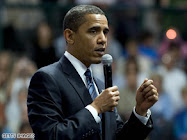
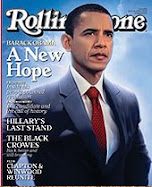
Joe Lieberman has been a problem since he was first elected to the Senate in 1988. He defeated Lowell Weicker, a Republican, who was hated by the right wing because he stood up against Reagan and his war mongering. In Weicker's place the Democrats got a right winger in the person of Joe Lieberman. His conservatism was borne out by his support of Republican John McCain not Democrat Barack Obama for the presidency in 2008. Lieberman, after having been defeated by the Democrats in 2008 primary, was elected as an Independent and he behaves in that manner. After stating that he will filibuster the health care reform, he is now escalating the tragedy at Ft. Hood from a personal act of inexplicable violence to be an act of political terrorism, or as he states Islamic extremism. To make the sad case of Hasan into an act of al-Qeada is disgraceful. Has this man not embarrassed to Democrats enough His own Zionism clouds his judgement at every turn. His religion stands between him and a sense of democracy. It is time he was stripped of his rank in the Democratic caucus. RGN.
Authorities scrutinize links between Fort Hood suspect, imam said to back al-Qaeda
By Spencer S. Hsu and Carrie Johnson
Washington Post Staff Writer
Monday, November 9, 2009
Federal investigators are examining possible links between Fort Hood shooting suspect Maj. Nidal M. Hasan and an American-born imam who U.S. authorities say has become a supporter and leading promoter of al-Qaeda since leaving a Northern Virginia mosque, officials said.
Hasan attended the Dar al-Hijrah mosque in Falls Church in 2001, when its spiritual leader was Anwar al-Aulaqi, a figure who crossed paths with al-Qaeda associates, including two Sept. 11, 2001, hijackers, one senior U.S. official said.
Since Aulaqi left in 2002 and settled in Yemen, his lectures promoting the strategies of an al-Qaeda military leader have shown up in computer files of suspects in terrorism cases in the United States, Canada and Britain, officials said. It is not clear whether Hasan knew the preacher well then or only later through his lectures on the Internet.
A federal law enforcement official said Sunday that investigators' operating theory remains that Hasan acted alone and without provocation or exhortation from an overseas person. However, new leads are being pursued based on information gleaned from a methodical review by investigators of Hasan's computer and his multiple e-mail accounts. Those include visits to Web sites espousing radical Islamist ideas, another senior official said.
A challenge for investigators is sorting out a potential thicket of psychological, ideological or religious motivations behind Hasan's alleged actions. Hasan's possible contact with extremists such as Aulaqi would complicate matters, suggesting that U.S. authorities may have missed chances to prevent the cleric from instigating this incident and others. But if it turns out that Hasan acted in the throes of an emotional breakdown, his questionable ties could be misinterpreted in ways that damage U.S. outreach to the Muslim world or provoke an overreaction that divides Americans.
"There's a massive effort here to look at the Web sites he visited," the law enforcement official said, speaking on the condition of anonymity because of the ongoing probe. "That's part of what's ongoing: what you learn from it, then you've got to figure out what it means." He added: "The important thing is, the jury's still out on motivation."
A former senior U.S. counterterrorism official said that "connections to Aulaqi would be problematic on many levels," calling him "a radicalizer of the first order" with many al-Qaeda ties.
"That said, many people attended that mosque who are not terrorist suspects," the official said. "The question will be whether the shooter kept in contact with Aulaqi and sought spiritual guidance from him. If that is the case, then this changes the complexion of this case a bit."
Shaker Elsayed, the senior imam at Dar al-Hijrah -- a long-established mosque whose thousands of worshipers form one of the largest traditional Muslim congregations on the East Coast -- said Hasan had prayed there since 2008 and sought his help to find a wife. But he could not verify whether Hasan ever met Aulaqi.
However, supporters of the mosque, who have spoken often with law enforcement authorities and reporters, note that Aulaqi spent only a year there, publicly condemned the Sept. 11 attacks and was not known to give radical speeches at the time. "If anybody knows about Aulaqi, it should be the FBI, and I applaud them" for their efforts, Elsayed said.
On Sunday, Army Chief of Staff George W. Casey Jr. cautioned troops against jumping to conclusions about what might have motivated Hasan, an Army psychiatrist, to allegedly shoot and kill 13 people and wound 38 Thursday at the nation's largest Army post.
"I'm concerned that this increased speculation could cause a backlash against some of our Muslim soldiers. And I've asked our Army leaders to be on the lookout for that," Casey told CNN's "State of the Union."
Sen. Joseph I. Lieberman (I-Conn.), chairman of the Senate Homeland Security and Governmental Affairs Committee, said he planned an investigation to determine whether the shootings constituted a terrorist attack and whether the Army missed warning signs about Hasan's ideological views. The House Armed Services and intelligence committees are also likely to investigate, an official said.
Investigators, intelligence analysts and forensic psychologists remain particularly keen on conducting their own psychological assessment of Hasan. A key to understanding his possible motive will be piecing together accounts from co-workers and neighbors, as well as his own writings, to determine the relationship between his emotional state and any attraction to more militant ideologies, even those justifying suicide attacks, officials said.
Hasan, 39, the unmarried child of Palestinian immigrants who was born in Arlington, attended Dar al-Hijrah at the time of his mother's May 2001 death, an event that acquaintances said led to his increased religiosity. In recent years, he worshipped regularly at the Muslim Community Center in Silver Spring, which is regarded as moderate.
People who know him have said that his alleged actions at Fort Hood may have been triggered by a number of factors, including the Sept. 11 attacks and the U.S.-led invasions of Iraq and Afghanistan, Hasan's counseling of returning veterans with psychiatric problems, reported anti-Muslim harassment from Army colleagues and his moral doubts about his upcoming deployment to Afghanistan.
Aulaqi has been identified as a spiritual adviser of 9/11 hijackers Khalid Almihdhar and Nawaf Alhazmi; the 9/11 Commission Report and a subsequent congressional report noted that they met with Aulaqi at a mosque in San Diego in 2000 and after he moved to Dar al-Hijrah in 2001.
The FBI investigated Aulaqi nearly a decade ago, after he briefly served as vice president of the U.S. branch of a Yemeni charity that federal prosecutors later described as a front organization used to support al-Qaeda and Osama bin Laden. The FBI learned that he also may have been contacted by a bin Laden "procurement agent," who served as fundraiser for a charity that the Treasury Department designated a bin Laden financier, and said that Aulaqi's group was its Yemeni partner.
The FBI also learned that Aulaqi was visited in early 2000 by a close associate of Omar Abdel Rahman, the man known as "the blind sheik" who was convicted in connection with the 1993 World Trade Center bombing. But the FBI reported that it did not have reason to prosecute or detain Aulaqi, who left the United States in 2002 and has lived in Yemen since 2004.
Yemeni authorities detained him in mid-2006 at the request of the U.S. government, then released him at the end of 2007. Since then, Britain has barred him from speaking there, and U.S. authorities have called him an al-Qaeda supporter who has worked with its networks in the Persian Gulf and plotted attacks against the United States and its allies.
Aulaqi "targets U.S. Muslims with radical online lectures encouraging terrorist attacks from his new home in Yemen," Charles Allen, then-chief intelligence officer for the Homeland Security Department, said in October 2008, calling him an "example of al-Qaeda reach into" the United States."
Aulaqi "speaks to North Americans better than anybody else" overseas, Allen added in an interview. Aulaqi's listeners include small extremist elements in the United States and Canada, including at least one Somali American youth from Minneapolis who joined al-Shabab, an extremist Islamist insurgent group that has pledged fealty to bin Laden.
Current and former lawmakers, including former Senate intelligence committee chairman Bob Graham, who led the congressional inquiry into the Sept. 11 attacks, have accused the FBI of bungling investigations of Aulaqi before and after the strikes.
But investigators are being cautious and pragmatic. Hasan's contacts a decade ago at a mosque attended by thousands may not prove meaningful. Similarly, people may hear fiery rhetoric or extremist views from a pulpit or online but may not be motivated to act on it.
Still, terrorism experts say they expect future cases of conflicted individuals who become radicalized and take up violence. "I don't see any conspiracy, and I don't see at this stage any real tie to 9/11 per se," Allen said. However, he added, Hasan "seems to me to be very much a self-radicalized or inspired individual. . . . I feel this will be our problem over the next five years."
Staff writers Joby Warrick, Ben Pershing, Mary Beth Sheridan and Ann Scott Tyson contributed to this report.
© 2009 The Washington Post Company
Monday, November 9, 2009


Historic Vote Threatened by Church by Stand on Abortion!!!
The historic vote of the House on health care reform is being threatened by the Catholic Church's stand on abortion. The progressives in the House had to bite their tongues or hold their noses whichever to get the support of the anti-abortion forces within the House. The word is that the Catholic bishops more or less wrote the language to the anti-abortion amendment. Whatever happened to the separation of church and state? The Hyde amendment prohibiting any government funding of abortion, which has been the law of the land for decades, was not strong enough for these "right-to-lifers." Their action and purpose is to outlaw all abortions. They want the government to stand between the woman and her doctor. How hypocritical and how disgraceful? Surely this provision will not stand when health care reform becomes law. RGN
Abortion an obstacle to health-care bill: Some Democrats vow to block final passage if amendment stays
By Alec MacGillis
Washington Post Staff Writer
Monday, November 9, 2009
President Obama and Senate Democrats sought on Sunday to generate momentum from the House's passage of health-care legislation, even as a new hurdle emerged: profound dismay among abortion-rights supporters over antiabortion provisions inserted into the House bill.
The House passed its version of health-care legislation Saturday night by a vote of 220 to 215 after the approval of an amendment that would sharply restrict the availability of coverage for abortions, which many insurance plans now offer. The amendment goes beyond long-standing prohibitions against public funding for abortions, limiting abortion coverage even for women paying for it without government subsidies.
The abortion issue had been rumbling within the House Democratic caucus for weeks, but Saturday's votes revealed the depths of the fault lines. The amendment passed with the support of 64 Democrats, roughly a quarter of the party caucus.
But abortion-rights supporters are vowing to strip the amendment out, as the focus turns to the Senate and the conference committee that would resolve differences between the two bills.
Although House liberals voted for the bill with the amendment to keep the process moving forward, Rep. Diana DeGette (Colo.) said she has collected more than 40 signatures from House Democrats vowing to oppose any final bill that includes the amendment -- enough to block passage.
"There's going to be a firestorm here," DeGette said. "Women are going to realize that a Democratic-controlled House has passed legislation that would prohibit women paying for abortions with their own funds. . . . We're not going to let this into law."
Senate Majority Leader Harry M. Reid (D-Nev.) is waiting for cost estimates of provisions of the bill he is cobbling together, and he hopes to bring it to the Senate floor before Thanksgiving. The battle over abortion has been more muted in the Senate, but Jim Manley, Reid's spokesman, predicted that would change.
"The debate in the House highlighted some of these issues that we're going to have to face here in the Senate, and on this issue in particular, it's something [Reid] is going to have to talk with his caucus about," Manley said.
Obama left the abortion issue unmentioned Sunday when he appeared in the White House Rose Garden to give brief remarks congratulating the House on its "courageous" passage of the bill. "Now it falls on the United States Senate to take the baton and bring this effort to the finish line on behalf of the American people," he said. "And I'm absolutely confident that they will."
Other issues remain unresolved. The House bill's primary new revenue source to pay for the bill is an income tax surcharge on families earning more than $1 million; the Senate bill will probably rely on a proposed new excise tax on costly insurance plans. The House and Senate also differ on a government-run insurance plan to be offered on the new marketplace where small businesses and people without employer-provided coverage -- about 30 million in all -- would buy coverage.
The Senate version would limit this "public option" by allowing states to opt out of it, but even in that form, the bill's prospects are unclear. Sen. Joseph I. Lieberman (I-Conn.), whose vote Democrats will probably need to break a filibuster, warned again Sunday on Fox News that he will withhold his support if the bill includes a public option.
The bills also differ in their requirements for employers to provide coverage -- the House's language is tougher -- and in the subsidies for those who cannot afford coverage, which are larger in the House version. Both bills deny subsidies to illegal immigrants, but the Senate version goes further by also barring them from buying coverage on the new marketplace with their own money.
On CBS's "Face the Nation," Sen. Lindsey O. Graham (R-S.C.) said the fact that more than 30 conservative House Democrats voted against the bill bodes poorly for it in the Senate, where conservative Democrats have more power. "The House bill is dead on arrival in the Senate," he said. "It was a bill written by liberals for liberals."
The abortion debate in the House has centered on how to put the bill in compliance with the ban on taxpayer funding for abortions. Rep. Lois Capps (D-Calif.) proposed that a government-run plan and private plans offered in the new marketplace for people without employer-based coverage could offer abortion coverage but that payments for abortions would come out of premiums, not the government subsidies for those who need help buying coverage.
Antiabortion groups argued that such a segregation of funds would be a mere accounting gimmick. After a compromise foundered, the amendment by Rep. Bart Stupak (D-Mich.) and Joe Pitts (R-Pa.) emerged as the leading alternative, with the strong backing of the U.S. Conference of Catholic Bishops. The amendment would prohibit abortion coverage in the government-run plan and any private plan on the new marketplace that accepts people who are using government subsidies to buy coverage.
Under that language, abortion coverage would be unavailable not only to working-class women buying coverage with government subsidies, but probably also to women buying coverage on the new marketplace without federal assistance. The amendment suggests that women could buy separate "riders" covering abortions, but abortion-rights supporters say it is offensive to require a separate purchase for coverage of a medical procedure that for most women is unexpected.
Charmaine Yoest, president of Americans United for Life Action, hailed the wide margin for the amendment. "I said all along that the inclusion of abortion as health care was going to be a political conflagration," she said.
But Nancy Keenan, president of NARAL-Pro Choice America, said that although the vote was "extremely disappointing and outrageous," the "fight isn't over." DeGette said she remains hopeful that the amendment will be dropped as more Democrats who voted for it -- and their constituents -- realize it goes beyond the status quo of limiting federal funding for abortions. Some of those House Democrats are not against abortion rights, just against federal funding, and she surmised that they may have misunderstood the amendment.
She said her House allies have requested a meeting with Obama, saying they "need him to back us up" after lying low on the issue.
"This would be the greatest restriction on a woman's right to get an abortion with her own money in our lifetime," she said. "The stakes could not be higher."
2009 The Washington Post Company
Monday, November 2, 2009
FDR Economic Bill of Rights
What we should be fighting for. RGN
Franklin D. Roosevelt
“The Economic Bill of Rights”Excerpt from 11 January 1944 message to Congress on the State of the Union
--------------------------------------------------------------------------------
It is our duty now to begin to lay the plans and determine the strategy for the winning of a lasting peace and the establishment of an American standard of living higher than ever before known. We cannot be content, no matter how high that general standard of living may be, if some fraction of our people—whether it be one-third or one-fifth or one-tenth—is ill-fed, ill-clothed, ill-housed, and insecure.
This Republic had its beginning, and grew to its present strength, under the protection of certain inalienable political rights—among them the right of free speech, free press, free worship, trial by jury, freedom from unreasonable searches and seizures. They were our rights to life and liberty.
As our nation has grown in size and stature, however—as our industrial economy expanded—these political rights proved inadequate to assure us equality in the pursuit of happiness.
We have come to a clear realization of the fact that true individual freedom cannot exist without economic security and independence. “Necessitous men are not free men.” People who are hungry and out of a job are the stuff of which dictatorships are made.
In our day these economic truths have become accepted as self-evident. We have accepted, so to speak, a second Bill of Rights under which a new basis of security and prosperity can be established for all—regardless of station, race, or creed.
Among these are:
The right to a useful and remunerative job in the industries or shops or farms or mines of the nation;
The right to earn enough to provide adequate food and clothing and recreation;
The right of every farmer to raise and sell his products at a return which will give him and his family a decent living;
The right of every businessman, large and small, to trade in an atmosphere of freedom from unfair competition and domination by monopolies at home or abroad;
The right of every family to a decent home;
The right to adequate medical care and the opportunity to achieve and enjoy good health;
The right to adequate protection from the economic fears of old age, sickness, accident, and unemployment;
The right to a good education.
All of these rights spell security. And after this war is won we must be prepared to move forward, in the implementation of these rights, to new goals of human happiness and well-being.
America’s own rightful place in the world depends in large part upon how fully these and similar rights have been carried into practice for our citizens.
--------------------------------------------------------------------------------
source: The Public Papers & Addresses of Franklin D. Roosevelt (Samuel Rosenman, ed.), Vol XIII (NY: Harper, 1950), 40-42
Tuesday, October 13, 2009
Obama the Nobel Prize: He Earned IT!!!!!!
In response to a student editorial claiming that President Obama did not deserve the Nobel Peace Prize, I said the following:
I found your editorial (President Obama does not deserve the Nobel Peace Prize, 10/12/2009) to be very shortsighted and "Fox News-ish." We are talking about an honor bestowed upon our president and the United States of America. The Nobel Prize for Peace is about the world!!! He was the recipient because of the impact he has made on the world. Rather than policies of warmongering, aggression, occupation, belligerence and arrogance, President Obama presents a new face for America. He has made a commitment that the U.S. does not torture or break other international laws. He extended a hand to the Muslim world. During his Cairo speech some in the audience yelled out "We love you!" a sentiment that received a thunderous applause. Even before he was elected, 200,000 people turned out to hear him speak in Berlin. Whether it is Europe, Africa, Asia, or Latin America, America is respected again. That has not been the case for many years and certainly not the eight years of Bush-Cheney. Having traveled in Europe, Africa, and Latin America during that time, George Bush, with all due respect for the institution of the presidency, was an embarrassment.
From its inception more than two centuries ago, America has been under the hegemony of white nationalism. The election of Barack Obama changed that. For the first time in American history, a president was elected without the majority of white voters. While 55% of whites voted for McCain, the overwhelming majority of the electorate that elected Obama was a coalition: 45% of whites, including a lot of students and young people, 95% of African Americans, 67% of Latino Americans, 62% of Asian Americans. It was his/our victory over white nationalism that presents a new America to the world. That alone merited him the Nobel prize. Having Barack Hussein Obama elected president of these United States and the "leader of the free world" is a giant step forward for America and the world.
You say: "Students should be critical of their president on what he can do for them, not what he can do for the rest of the world." Talk about being short-sighted? The last time I checked students are and will be a part of the world. The President is setting out to change our energy policy from fossil fuels to green energy. It seems to me that students should be concerned about climate change. The President has begun talks with the Russians to eliminate nuclear weapons. A world without the threat of nuclear annihilation should be of interest to students for their future and the future of their children. Does the editorial board really think his accomplishment, as President, should be about whether or not he is going to provide students money for their books or lower their tuition?
By February the the first, just a few days after his inauguration, the world was witnessing a new way in which America was going to interact with the world. The above are his historic "actions" over the past two years not simply "intentions." Yes, President Obama deserves the recognition for changing America and having the U.S. respected again. [End]
This could apply to the right wing as well. The problem is Obama keeps thrashing them. The more he wins, the more desperate they become. The rabid right is becoming unhinged!!! And Media Matters is exposing them. RGN
Media Matters: Right again makes an anti-American ass of itself following Obama's Nobel win
October 09, 2009 9:50 pm ET
On Friday, the nation awoke to the news that the Nobel Peace Prize had been awarded to President Barack Obama. "I am both surprised and deeply humbled," Obama said that morning. "I do not view it as a recognition of my own accomplishments, but rather as an affirmation of American leadership...I will accept this award as a call to action."
But sadly, Obama's words failed to touch the hearts of some of the world's most esteemed and principled critics and commentators, all of whom have proven their love for America and her values time and again. I'm kidding of course.
After resolutely working to undermine Chicago's bid for the 2016 Olympic Games and then roundly applauding the International Olympic Committee's decision to eliminate the U.S. city from competition, the right-wing media responded with furor to the Nobel Committee's decision. "I did not realize the Nobel Peace Prize had an affirmative action quota," wrote Erick Erickson at the conservative RedState, who just last week had laughed at the idea that Obama had improved America's standing in the world.
The full article
Monday, October 5, 2009
Krugman on Brats!!! The Right Wing Hissy fit about Chicago.
As usual Paul Krugman is right on target. When it was announced that Chicago had lost their bid to host the Olympics, the right wing cheered, and that includes the staff at the Weekly Standard (Bill Krystal and Rupert Murdock's publication that has never made a dime). Like Rush Limbaugh they want Obama ti fail. And in doing so, they wish America to fail. Their instincts are correct, politically. To be sure if Obama succeeds, conservatism might never see the light of day again. When everyone has healthcare, the American people will be thrilled. The lie of conservatism has been exposed for what it is: Rush Limbaugh, Sean Hannity, Lou Dobbs, Bill Krystal, Charles Kruathammer, Bill O'Reilly, Rupert Murdock, liars and sociopaths all. RGN
October 5, 2009
Op-Ed Columnist
The Politics of Spite
By PAUL KRUGMAN
There was what President Obama likes to call a teachable moment last week, when the International Olympic Committee rejected Chicago’s bid to be host of the 2016 Summer Games.
“Cheers erupted” at the headquarters of the conservative Weekly Standard, according to a blog post by a member of the magazine’s staff, with the headline “Obama loses! Obama loses!” Rush Limbaugh declared himself “gleeful.” “World Rejects Obama,” gloated the Drudge Report. And so on.
So what did we learn from this moment? For one thing, we learned that the modern conservative movement, which dominates the modern Republican Party, has the emotional maturity of a bratty 13-year-old.
But more important, the episode illustrated an essential truth about the state of American politics: at this point, the guiding principle of one of our nation’s two great political parties is spite pure and simple. If Republicans think something might be good for the president, they’re against it — whether or not it’s good for America.
To be sure, while celebrating America’s rebuff by the Olympic Committee was puerile, it didn’t do any real harm. But the same principle of spite has determined Republican positions on more serious matters, with potentially serious consequences — in particular, in the debate over health care reform.
Now, it’s understandable that many Republicans oppose Democratic plans to extend insurance coverage — just as most Democrats opposed President Bush’s attempt to convert Social Security into a sort of giant 401(k). The two parties do, after all, have different philosophies about the appropriate role of government.
But the tactics of the two parties have been different. In 2005, when Democrats campaigned against Social Security privatization, their arguments were consistent with their underlying ideology: they argued that replacing guaranteed benefits with private accounts would expose retirees to too much risk.
The Republican campaign against health care reform, by contrast, has shown no such consistency. For the main G.O.P. line of attack is the claim — based mainly on lies about death panels and so on — that reform will undermine Medicare. And this line of attack is utterly at odds both with the party’s traditions and with what conservatives claim to believe.
Think about just how bizarre it is for Republicans to position themselves as the defenders of unrestricted Medicare spending. First of all, the modern G.O.P. considers itself the party of Ronald Reagan — and Reagan was a fierce opponent of Medicare’s creation, warning that it would destroy American freedom. (Honest.) In the 1990s, Newt Gingrich tried to force drastic cuts in Medicare financing. And in recent years, Republicans have repeatedly decried the growth in entitlement spending — growth that is largely driven by rising health care costs.
But the Obama administration’s plan to expand coverage relies in part on savings from Medicare. And since the G.O.P. opposes anything that might be good for Mr. Obama, it has become the passionate defender of ineffective medical procedures and overpayments to insurance companies.
How did one of our great political parties become so ruthless, so willing to embrace scorched-earth tactics even if so doing undermines the ability of any future administration to govern?
The key point is that ever since the Reagan years, the Republican Party has been dominated by radicals — ideologues and/or apparatchiks who, at a fundamental level, do not accept anyone else’s right to govern.
Anyone surprised by the venomous, over-the-top opposition to Mr. Obama must have forgotten the Clinton years. Remember when Rush Limbaugh suggested that Hillary Clinton was a party to murder? When Newt Gingrich shut down the federal government in an attempt to bully Bill Clinton into accepting those Medicare cuts? And let’s not even talk about the impeachment saga.
The only difference now is that the G.O.P. is in a weaker position, having lost control not just of Congress but, to a large extent, of the terms of debate. The public no longer buys conservative ideology the way it used to; the old attacks on Big Government and paeans to the magic of the marketplace have lost their resonance. Yet conservatives retain their belief that they, and only they, should govern.
The result has been a cynical, ends-justify-the-means approach. Hastening the day when the rightful governing party returns to power is all that matters, so the G.O.P. will seize any club at hand with which to beat the current administration.
It’s an ugly picture. But it’s the truth. And it’s a truth anyone trying to find solutions to America’s real problems has to understand.
Sunday, October 4, 2009
Ron Walters: Violence on the Domestic Front and the Obama Administration
Walters addresses the violence in Chicago and what it means for the Obama presidency. The analysis is nuanced in that he recognizes that we are in a transition from 30 years of Republicans ignoring the cities. Even so, the Chicago killing means that there is an urgency to improving the conditions which foment such behavior. Walters calls for the White House to step up its urban policy initiatives. To do otherwise will only condemn other young people to this out of control mob behavior that is such a blight on black communities all across the nation, including mid-sized cities like Saginaw, Flint, and Pontiac in Michgan and their counterparts aroound the nation. RGN
Chicago School Violence and the Urban Crisis
By Ron Walters
It was with some concern that when the 16 year-old student Derrion Albert was killed recently by other youth wielding wooden clubs in Chicago, the White House responded by deciding to send Attorney General Eric Holder and Schools Chief Arne Duncan into the fray. First of all, we should be pleased that this incident attracted action by the White House at all, but my concern is that at base it is really not an issue of policing or one of school administration, since 400 youths have been killed in Chicago in the past year.
The missing piece of this was the White House Office on Urban Affairs. In his latest book, More Than Just Race, Professor William Julius Wilson’ legendary research on Chicago poverty concludes that people behave the way they are socialized and structural racism has had a big role in developing the culture through which blacks view and engage the world. He means by structural racism, segregation – isolation - from other races through systematic patterns of housing placement and discrimination, the lack of productive work and its replacement by illicit activity, intractable poverty and the psychological reinforcement of negative status stereotypes, and other things. These things undercut positive parenting and shape the response of youth to events in their environment.
Where Wilson comes out then is where many behavioral scientist do; environment has a strong influence on behavior and most often, one institution, such as the school is not strong enough to change it. This points back to doing something about the urban environment which has a systemic impact on the behavior of youths and others. With a 50% unemployment rate in most big cities for youth 16-18 years old, most youths now days leave school not headed for jobs, so what about using the Stimulus money to create more jobs for them? With the home foreclosure rate bringing down the price of housing, why not make it more attractive for low-income families to get normal mortgages and get out of apartments? And with the Stimulus grants now emphasizing the greening of public housing and other facilities, why not begin robust job training programs for youths who live in these areas?
This has to do with Urban policy, but when I look at what the new White House Office is doing, it seems from the tour in which Director Adolfo Carrion has been engaged, the emphasis is on fostering regional economic growth or “sustainability.” That is fine in one sense, because it fits in with my emphasis on jobs, but I don’t see robust programs in the tour preparing low-income folks to participate in the new opportunities that have come on stream in cities like Kansas City, Mo; Portland Oregon; and Denver Colorado.
Well, on one hand I get it, Urban policy has been so maligned in the past 30 years by conservatives that it has been ignored because it was problem oriented and peoples of color were pegged as the reason for the problems as opposed to the conditions under which most were forced to live. The Obama Administration is attempting to change the image of cities by connecting them to metro areas and placing them in the role of the engines of growth for the country and for their impact on the global economy.
This fair enough, but I don’t see how it works with Blacks and Hispanics becoming a larger share of the population and constituting populations that experience many of the social problems that drove whites away from cities into the suburbs in the first place. And now that whites are coming back into many cities and Blacks are moving to the suburbs, the problems that were once considered strictly “Urban” are now part of the Metro areas. So, there still needs to be strong programs dealing with poverty elimination, job creation, excellent education in the public schools, and the like. All of the research I have seen suggests when this happens and the environment improves, violence will decrease. Without urgent action, the White House had better get ready for an increase in such violent incidents among youth in other cities as the unemployment rate for Blacks moves from 16% now to over 20% by next year.
So, I would hope that the White House does not make the Chicago situation a “drive-by” event but uses it as a paradigm for its new approach to urban-metro America.
Dr. Ron Walters is Professor of Government and Politics Emeritus at the University of Maryland College Park. His latest book is, The Price of Racial Reconciliation (University of Michigan Press).
Tuesday, September 29, 2009
Ron Walters on "the other" G-20
Ron Walters gives a first hand grassroots view of "the 'hood" in Pittsburgh at the time of the G-20. He points out that among other things the high rates of incarceration present challenging consequences for the future of our cities. He was heartened by the fact that the cities were a high priority at the Congressional Black Caucus Weekend. RGN
The Other Pittsburgh at the G-20 Meeting
By Ron Walters
It was with some concern that when the 16 year-old student Derrion Albert was killed recently by other youth wielding wooden clubs in Chicago, the White House responded by deciding to send Attorney General Eric Holder and Schools Chief Arne Duncan into the fray. First of all, we should be pleased that this incident attracted action by the White House at all, but my concern is that at base it is really not an issue of policing or one of school administration, since 400 youths have been killed in Chicago in the past year.
The missing piece of this was the White House Office on Urban Affairs. In his latest book, More Than Just Race, Professor William Julius Wilson’ legendary research on Chicago poverty concludes that people behave the way they are socialized and structural racism has had a big role in developing the culture through which blacks view and engage the world. He means by structural racism, segregation – isolation - from other races through systematic patterns of housing placement and discrimination, the lack of productive work and its replacement by illicit activity, intractable poverty and the psychological reinforcement of negative status stereotypes, and other things. These things undercut positive parenting and shape the response of youth to events in their environment.
Where Wilson comes out then is where many behavioral scientist do; environment has a strong influence on behavior and most often, one institution, such as the school is not strong enough to change it. This points back to doing something about the urban environment which has a systemic impact on the behavior of youths and others. With a 50% unemployment rate in most big cities for youth 16-18 years old, most youths now days leave school not headed for jobs, so what about using the Stimulus money to create more jobs for them? With the home foreclosure rate bringing down the price of housing, why not make it more attractive for low-income families to get normal mortgages and get out of apartments? And with the Stimulus grants now emphasizing the greening of public housing and other facilities, why not begin robust job training programs for youths who live in these areas?
This has to do with Urban policy, but when I look at what the new White House Office is doing, it seems from the tour in which Director Adolfo Carrion has initiated, stopping in Philadelphia, Denver, Kansas City and Portland, emphases fostering regional economic growth or “sustainability.” That is fine in one sense, because it fits in with my emphasis on jobs, and we should be especially vigilant to see that models such as Kansas City’s “Green Zone” that is designed to transform low-income communities becomes nationalized.
Well, on one hand I get it, Urban policy has been so maligned in the past 30 years by conservatives that it has been ignored because it was problem oriented and peoples of color were pegged as the reason for the problems as opposed to the conditions under which most were forced to live. The Obama Administration is attempting to change the image of cities by connecting them to metro areas and placing them in the role of the engines of growth for the country and for their impact on the global economy.
This fair enough, but I don’t see how it works with Blacks and Hispanics becoming a larger share of the population and constituting populations that experience many of the social problems that drove whites away from cities into the suburbs in the first place. And now that whites are coming back into many cities and Blacks are moving to the suburbs, the problems that were once considered strictly “Urban” are now part of the Metro areas. So, there still needs to be strong programs dealing with poverty elimination, job creation, excellent education in the public schools, and the like. All of the research I have seen suggests when this happens and the environment improves, violence will decrease. Without urgent action, the White House had better get ready for an increase in such violent incidents among youth in other cities as the unemployment rate for Blacks moves from 16% now to over 20% by next year.
So, I would hope that the White House does not make the Chicago situation a “drive-by” event but uses it as a paradigm for its new approach to urban-metro America.
Dr. Ron Walters is Professor of Government and Politics Emeritus at the University of Maryland College Park. His latest book is, The Price of Racial Reconciliation (University of Michigan Press).
Harris-Lacewell on Racism: Jimmy Carter and Bill Clinton
Jimmy Carter told the truth. Thanks to Jimmy Carter!!! It is amazing the manner in which he was demonized for stating the obvious. It took Bill Clinton to round out the poles. But the big news is that it took Melissa Harris-Lacewell to round out Bill Clinton. This is a very important piece on the "first black president" and the misconceptions that there abound. That he played the sax on Arsenio Hall made him black??? There was lot of water under the bridge between then and South Carolina. RGN
I'm Not a Racist...I'm a Democrat.
posted by Melissa Harris-Lacewell on 09/22/2009 @ 9:55pm
For weeks the media have been covering "racism in health care reform opposition." For the most part I've found this political moment to be an interesting opportunity to discuss the meanings of race, the history of racial exclusion and violence, and the ongoing realities of racial inequality in America.
But I have also been a little baffled as to why so many liberal white Americans are shocked about the sometimes explicit, but far more often, simply implied racial bias that has infected some of the opposition to the Obama administration. My scholarship and teaching center on issues of race, blackness, and African American politics, and while I believe "racism" is interesting and important; it is not exactly breaking news. Clarence Page of the Chicago Tribune laughingly suggested that he was telling his white liberal friends who were aghast at the vitriol aimed at President Obama, "welcome to my world."
My surprise that "racism" has dominated the news cycle for so long turned to tangible anxiety when President Clinton appeared on Larry King Live. Former President Clinton made a compelling case for health care reform and when asked about the racial motivations of the opposition he said:
"I don't believe that all the people who oppose him [Obama] on health care -- and all the conservatives -- are racists. And I believe if he were white, every single person who opposes him now would be opposing him then."
I agree with Clinton that the opposition to President Obama's plan is about health care reform, not about race. Any Democratic president who introduced health care reform was going to be met with vicious, organized opposition. No one knows this better than the Clintons whose own health care reform efforts were effectively shut down by organized efforts on the Right.
The opposition is about policy and profits, but the frames, the tone, and the strategies of that opposition are always unique to the opponent. When the Clintons introduced health care reform they were not called Witch Doctors or monkeys. Racialized language and images are used to help frame arguments against Obama in particular.
But the part of the interview that worries me comes next, when President Clinton said,
"While I have devoted my life to getting rid of racism, I think this [health care] is a fight that my president and our party -- this is one we need to win on the merits."
This statement required a double take. President Clinton said that he has devoted his life to getting rid of racism? And no one challenged this assertion?
President Clinton has a very checkered past involving racial innuendo, stereotypes, and racialized political strategies. When he first ran for President in 1992 Bill Clinton attacked hip-hop artist Sister Souljah during his speech to Jesse Jackson's Rainbow Coalition. He likened her to former Klansman David Duke. After the 1984 and 1988 defeats of Democratic candidates, Clinton knew he needed to signal his independence from Jesse Jackson and the racially progressive wing of the Democratic Party. His unprovoked attack on Souljah was part of that active distancing. But, Clinton's strategy was complex. During that same election, he also appeared on the Arsenio Hall show where he played the Saxophone. Clinton has always been masterful at both embracing and pushing away from black communities, black voters, and black interests based on his own political needs at the moment. Some have accused President Obama of using similar tactics.
Clinton used welfare reform and crime legislation to cement his position as a moderate "new" Democrat. Clinton's policies made life substantially more difficult for poor black mothers and led to the incarceration of tens of thousands more black men. Repeatedly during his presidency Clinton found his way to the center by ignoring the material needs of black communities. He refused to fight for his nominee and law school friend Lani Guinier who was viciously and inaccurately labeled a "quota queen." And when his wife was battling Barack Obama for the Democratic nomination last year, President Clinton's own voice sounded shrill in precisely the same ways as some of Obama's current opponents.
Despite his office in Harlem and his efforts in Africa, I am unconvinced by President Clinton's assertion of a lifetime commitment to battling racism.
I recognize that this is where the public conversation falls apart. I am not claiming that President Clinton is a racist who harbors negative racial animus toward black people. I suspect the opposite is true. Clinton has an amazing cultural ease and familiarity with black people. It is one of the reasons he was so wildly popular among black voters despite his often troubling policies. I've seen President Clinton sing, from memory, all the verses to James Weldon Johnson's Lift Every Voice and Sing. I bet that fewer than 50% of the Congressional Black Caucus knows this unofficial black national anthem by heart.
But President Clinton's cultural ease, personal familiarity, and even physical proximity to blackness and black people is not the point, his willingness to deploy racial strategies for political purposes and to create policies with a disparate racial impact is the point.
Somehow our public discourse on racism has devolved to a kind of investigative search of the human heart. We want to figure out if the Tea Party protesters are racist by making guesses about how they feel about black people. In truth, I don't really care how they feel. Maybe they hate Obama because he is black, or because he is a Democrat, or just because they think he dresses oddly. Who cares?
The point is that some members of the GOP, the health care industry, and some people in the crowds are using strategies, language, and images that are meant to stoke racial fear and anxiety. Many have principled opposition to the reforms being proposed by the administration, but that opposition is swimming in a sea of racial ugliness.
But when I heard President Clinton's revision of his own political racial history it struck me that the biggest issue may not be uncovering racism on the Right, it may be that we are providing cover for racism on the Left. If opposing Obama means you are a racist, then supporting Obama must mean you are not a racist. No need to worry with substantive efforts to compensate historic injustices or address contemporary inequalities, just keep wearing your Obama '08 shirt and you can have a free pass on racial politics.
Racism is not the the sole domain of Republicans, Conservatives or Southerners. Not all racists pepper their conversation with the N-word or secretly desire the extermination of black and brown people. Racism is complex, multi-layered, and deeply rooted in the American story. Name calling is not helpful in uprooting racism, but neither is a false sense of moral superiority.
Thursday, September 17, 2009
Naomi Klein: Has Obama Turned His Back on Blacks?

There was an episode at one of the president's press conferences in the summer in which April Ryan of the Urban Radio Network attempted to have President Obama to answer a question on targeting programs to black America. The president ignored her followup after stating that his programs to extend unemployment benefits would be helpful to blacks as would other programs that he was instituting to meet more universalistic economic and social programs. Throughout his candidacy and into his presidency the there are those who question: is he black enough, or is he radical enough? Naomi Klein examines Obama's presidency in the spirit of those queries. While not central to her analysis she disposes the absurdity of "post racialism" in the context of a white nationalist opposition to the president because he is not white. RGN
Obama's big silence: the race question -- Has the president turned his back on black America?
Naomi Klein The Guardian, Saturday 12 September 2009
Americans began the summer still celebrating the dawn of a "post-racial" era. They are ending it under no such illusion. The summer of 2009 was all about race, beginning with Republican claims that Sonia Sotomayor, Barack Obama's nominee to the US Supreme Court, was "racist" against whites. Then, just as that scandal was dying down, up popped "the Gates controversy", the furore over the president's response to the arrest of African American academic Henry Louis Gates Jr in his own home. Obama's remark that the police had acted "stupidly" was evidence, according to massively popular Fox News host Glenn Beck, that the president "has a deep-seated hatred for white people".
Obama's supposed racism gave a jolt of energy to the fringe movement that claims he has been carrying out a lifelong conspiracy to cover up his (fictional) African birth. Then Fox News gleefully discovered Van Jones, White House special adviser on green jobs. After weeks of being denounced as "a black nationalist who is also an avowed communist", Jones resigned last Sunday.
The undercurrent of all these attacks was that Obama, far from being the colour-blind moderate he posed as during the presidential campaign, is actually obsessed with race, in particular with redistributing white wealth into the hands of African Americans and undocumented Mexican workers. At town hall meetings across the US in August, these bizarre claims coalesced into something resembling an uprising to "take our country back". Henry D Rose, chair of Blacks For Social Justice, recently compared the overwhelmingly white, often armed, anti-Obama crowds to the campaign of "massive resistance" launched in the late 50s – a last-ditch attempt by white southerners to block the racial integration of their schools and protect other Jim Crow laws. Today's "new era of 'massive resistance'," writes Rose, "is also a white racial project."
There is at least one significant difference, however. In the late 50s and early 60s, angry white mobs were reacting to life-changing victories won by the civil rights movement. Today's mobs, on the other hand, are reacting to the symbolic victory of an African American winning the presidency. Yet they are rising up at a time when non-elite blacks and Latinos are losing significant ground, with their homes and jobs slipping away from them at a much higher rate than from whites. So far, Obama has been unwilling to adopt policies specifically geared towards closing this ever-widening divide. The result may well leave minorities with the worst of all worlds: the pain of a full-scale racist backlash without the benefits of policies that alleviate daily hardships. Meanwhile, with Obama constantly painted by the radical right as a cross between Malcolm X and Karl Marx, most progressives feel it is their job to defend him – not to point out that, when it comes to tackling the economic crisis ravaging minority communities, the president is not doing nearly enough.
For many antiracist campaigners, the realisation that Obama might not be the leader they had hoped for came when he announced his administration would be boycotting the UN Durban Review Conference on racism, widely known as "Durban II". Almost all of the public debate about the conference focused on its supposed anti-Israel bias. When it actually took place in April in Geneva, virtually all we heard about was Iranian president Mahmoud Ahmadinejad's inflammatory speech, which was met with rowdy disruptions, from the EU delegates who walked out, to the French Jewish students who put on clown wigs and red noses, and tried to shout him down.
Lost in the circus atmosphere was the enormous importance of the conference to people of African descent, and nowhere more so than among Obama's most loyal base. The US civil rights movement had embraced the first Durban conference, held in summer 2001, with great enthusiasm, viewing it as the start of the final stage of Martin Luther King's dream for full equality. Though most black leaders offered only timid public criticism of the president's Durban II boycott, the decision was discussed privately as his most explicit betrayal of the civil rights struggle since taking office.
The original 2001 gathering was not all about Israelis v Palestinians, or antisemitism, as so many have claimed (though all certainly played a role). The conference was overwhelmingly about Africa, the ongoing legacy of slavery and the huge unpaid debts that the rich owe the poor.
Holding the 2001 World Conference against Racism in what was still being called "the New South Africa" had seemed a terrific idea. World leaders would gather to congratulate themselves on having slain the scourge of apartheid, then pledge to defeat the world's few remaining vestiges of discrimination – things such as police violence, unequal access to certain jobs, lack of adequate healthcare for minorities and intolerance towards immigrants. Appropriate disapproval would be expressed for such failures of equality, and a well-meaning document pledging change would be signed to much fanfare. That, at least, is what western governments expected to happen.
They were mistaken. When the conference arrived in Durban, many delegates were shocked by the angry mood in the streets: tens of thousands of South Africans joined protests outside the conference centre, holding signs that said "Landlessness = racism" and "New apartheid: rich and poor". Many denounced the conference as a sham, and demanded concrete reparations for the crimes of apartheid. South Africa's disillusionment, though particularly striking given its recent democratic victory, was part of a much broader global trend, one that would define the conference, in both the streets and the assembly halls. Around the world, developing countries were increasingly identifying the so-called Washington Consensus economic policies as little more than a clever rebranding effort, a way for former northern colonial powers to continue to drain the southern countries of their wealth without being inconvenienced by the heavy lifting of colonialism. Roughly two years before Durban, a coalition of developing countries had refused further to liberalise their economies, leading to the collapse of World Trade Organisation talks in Seattle. A few months later, a newly militant movement calling for a debt jubilee disrupted the annual meetings of the World Bank and the International Monetary Fund. Durban was a continuation of this mounting southern rebellion, but it added something else to the mix: an invoice for past thefts.
Although it was true that southern countries owed debts to foreign banks and lending institutions, it was also true that in the colonial period – the first wave of globalisation – the wealth of the north was built, in large part, on stolen indigenous land and free labour provided by the slave trade. Many in Durban argued that when these two debts were included in the calculus, it was actually the poorest regions of the world – especially Africa and the Caribbean – that turned out to be the creditors and the rich world that owed a debt. All big UN conferences tend to coalesce around a theme, and in Durban 2001 the clear theme was the call for reparations. The overriding message was that even though the most visible signs of racism had largely disappeared – colonial rule, apartheid, Jim Crow-style segregation – profound racial divides will persist and even widen until the states and corporations that profited from centuries of state-sanctioned racism pay back some of what they owe.
African and Caribbean governments came to Durban with two key demands. The first was for an acknowledgment that slavery and even colonialism itself constituted "crimes against humanity" under international law; the second was for the countries that perpetrated and profited from these crimes to begin to repair the damage. Most everyone agreed that reparations should include a clear and unequivocal apology for slavery, as well as a commitment to returning stolen artefacts and to educating the public about the scale and impact of the slave trade. Above and beyond these more symbolic acts, there was a great deal of debate. Dudley Thompson, former Jamaican foreign minister and a longtime leader in the Pan-African movement, was opposed to any attempt to assign a number to the debt: "It is impossible to put a figure to killing millions of people, our ancestors," he said. The leading reparations voices instead spoke of a "moral debt" that could be used as leverage to reorder international relations in multiple ways, from cancelling Africa's foreign debts to launching a huge develop ment programme for Africa on a par with Europe's Marshall Plan. What was emerging was a demand for a radical New Deal for the global south.
African and Caribbean countries had been holding high-level summits on reparations for a decade, with little effect. What prompted the Durban breakthrough was that a similar debate had taken off inside the US. The facts are familiar, if commonly ignored. Even as individual blacks break the colour barrier in virtually every field, the correlation between race and poverty remains deeply entrenched. Blacks in the US consistently have dramatically higher rates of infant mortality, HIV infection, incarceration and unemployment, as well as lower salaries, life expectancy and rates of home ownership. The biggest gap, however, is in net worth. By the end of the 90s, the average black family had a net worth one eighth the national average. Low net worth means less access to traditional credit (and, as we'd later learn, more sub-prime mortgages). It also means families have little besides debt to pass from one generation to the next, preventing the wealth gap closing on its own.
In 2000, Randall Robinson published The Debt: What America Owes To Blacks, which argued that "white society… must own up to slavery and acknowledge its debt to slavery's contemporary victims". The book became a national bestseller, and within months the call for reparations was starting to look like a new anti-apartheid struggle. Students demanded universities disclose their historical ties to the slave trade, city councils began holding public hearings on reparations, chapters of the National Coalition of Blacks for Reparations in America had sprung up across the country and Charles Ogletree, the celebrated Harvard law professor (and one of Obama's closest mentors), put together a team of all-star lawyers to try to win reparations lawsuits in US courts.
By spring 2001, reparations had become the hot-button topic on US talkshows and op-ed pages. And though opponents consistently portrayed the demand as blacks wanting individual handouts from the government, most reparations advocates were clear they were seeking group solutions: mass scholarship funds, for instance, or major investments in preventive healthcare, inner cities and crumbling schools. By the time Durban rolled around in late August, the conference had taken on the air of a black Woodstock. Angela Davis was coming. So were Jesse Jackson and Danny Glover.
Small radical groups such as the National Black United Front spent months raising money to buy hundreds of plane tickets to South Africa. Activists travelled to Durban from 168 countries, but the largest delegation by far came from the US: approximately 3,000 people, roughly 2,000 of them African Americans. Ogletree pumped up the crowds with an energetic address: "This is a movement that cannot be stopped… I promise we will see reparations in our lifetime."
The call for reparations took many forms, but one thing was certain: antiracism was transformed in Durban from something safe and comfortable for elites to embrace into something explosive and potentially very, very costly. North American and European governments, the debtors in this new accounting, tried desperately to steer the negotiations on to safe terrain. "We are better to look forward and not point fingers backward," national security adviser Condoleezza Rice said. It was a losing battle. Durban, according to Amina Mohamed, chief negotiator for the Africa bloc, was Africa's "rendezvous with history".
Not everyone was willing to show up for the encounter, however, and that is where the Israel controversies come in. Durban, it should be remembered, took place in the aftermath of the collapse of the Oslo Accords, and there were those who hoped the conference could somehow fill the political vacuum. Six months before the meeting in Durban, at an Asian preparatory conference in Tehran, a few Islamic countries requested language in their draft of the Durban Declaration that described Israeli policies in the occupied territories as "a new kind of apartheid" and a "form of genocide". Then, a month before the conference, there was a new push for changes: references to the Holocaust were paired with the "ethnic cleansing of the Arab population in historic Palestine", while references to "the increase in antisemitism and hostile acts against Jews" were twinned with phrases about "the increase of racist practices of Zionism", and Zionism was described as a movement "based on racism and discriminatory ideas".
There were cases to be made for all of it, but this was language sure to tear the meeting apart (just as "Zionism equals racism" resolutions had torn apart UN gatherings before). Meanwhile, as soon as the conference began, the parallel forum for non-governmental organisations began to spiral out of control. With more than 8,000 participants and no ground rules to speak of, the NGO forum turned into a free-for-all, with, among other incidents, the Arab Lawyers Union passing out a booklet that contained Der Stürmer–style cartoons of hook-nosed Jews with bloody fangs.
High-profile NGO and civil rights leaders roundly condemned the antisemitic incidents, as did Mary Robinson, then UN high commissioner for human rights. None of the controversial language about Israel and Zionism made it into the final Durban Declaration. But for the newly elected administration of George W Bush, that was besides the point. Already testing the boundaries of what would become a new era of US unilateralism, Bush latched on to the gathering's alleged anti-Israel bias as the perfect excuse to flee the scene, neatly avoiding the debates over Israel and reparations. Early in the conference, the US and Israel walked out.
Despite the disruptions, Africa was not denied its rendezvous with history. The final Durban Declaration became the first document with international legal standing to state that "slavery and the slave trade are a crime against humanity and should always have been so, especially the transatlantic slave trade". This language was more than symbolic. When lawyers had sought to win slavery reparations in US courts, the biggest barrier was always the statute of limitations, which had long since expired. But if slavery was "a crime against humanity", it was not restricted by any statute.
On the final day of the conference, after Canada tried to minimise the significance of the declaration, Amina Mohamed, now a top official in the Kenyan government, took the floor in what many remember as the most dramatic moment of the gathering. "Madame President," Mohamed said, "it is not a crime against humanity just for today, nor just for tomorrow, but for always and for all time. Nuremberg made it clear that crimes against humanity are not time-bound." Any acts that take responsibility for these crimes, therefore, "are expected and are in order". The assembly hall erupted in cheers and a long standing ovation.
Groups of African American activists spent their last day at the conference planning a "Millions for Reparations" march on Washington. Attorney Roger Wareham, co-counsel on a high-profile reparations lawsuit and one of the organisers, recalled that as they left South Africa, "people were on a real rolling high" – ready to take their movement to the next level.
That was 9 September 2001. Two days later, Africa's "rendezvous with history" was all but forgotten. The profound demands that rose up from Durban during that first week of September 2001 – for debt cancellation, for reparations for slavery and apartheid, for land redistribution and indigenous land rights, for compensation, not charity – have never again managed to command international attention. At various World Bank meetings and G8 summits there is talk, of course, of graciously providing aid to Africa and perhaps "forgiving" its debts. But there is no suggestion that it might be the G8 countries that are the debtors and Africa the creditor. Or that it is we, in the west, who should be asking forgiveness.
Because Durban disappeared before it had ever fully appeared, it's sometimes hard to believe it happened at all. As Bill Fletcher, author and long-time advocate for African rights, puts it: "It was as if someone had pressed a giant delete button."
When news came that the Durban follow-up conference would take place three months into Obama's presidency, many veterans of the first gathering were convinced the time had finally come to restart that interrupted conversation. And at first the Obama administration seemed to be readying to attend, even sending a small delegation to one of the preparatory conferences. So when Obama announced that he, like Bush before him, would be boycotting, it came as a blow. Especially because the state department's official excuse was that the declaration for the new conference was biased against Israel. The evidence? That the document – which does not reference Israel once – "reaffirms" the 2001 Durban Declaration. Never mind that that was so watered down that Shimon Peres, then Israel's foreign minister, praised it at the time as "an accomplishment of the first order for Israel" and "a painful comedown for the Arab League".
When disappointed activists reconvened for the Durban Review Conference this April, talk in the corridors often turned to the unprecedented sums governments were putting on the line to save the banks. Roger Wareham, for instance, pointed out that if Washington can find billions to bail out AIG, it can also say, "We're going to bail out people of African descent because this is what's happened historically." It's true that, at least on the surface, the economic crisis has handed the reparations movement some powerful new arguments. The hardest part of selling reparations in the US has always been the perception that something would have to be taken away from whites in order for it to be given to blacks and other minorities. But because of the broad support for large stimulus spending, there is a staggering amount of new money floating around – money that does not yet belong to any one group.
Obama's approach to stimulus spending has been rightly criticised for lacking a big idea – the $787bn package he unveiled shortly after taking office is a messy grab bag, with little ambition actually to fix any one of the problems on which it nibbles. Listening to Wareham in Geneva, it occurred to me that a serious attempt to close the economic gaps left by slavery and Jim Crow is as good a big stimulus idea as any.
What is tantalising (and maddening) about Obama is that he has the skills to persuade a great many Americans of the justice of such an endeavour. The one time he gave a major campaign address on race, prompted by controversy over the Reverend Jeremiah Wright, he told a story about the historical legacies of slavery and legalised discrimination that have structurally prevented African Americans from achieving full equality, a story not so different from the one activists such as Wareham tell in arguing for reparations. Obama's speech was delivered six months before Wall Street collapsed, but the same forces he described go a long way toward explaining why the crash happened in the first place: "Legalised discrimination… meant that black families could not amass any meaningful wealth to bequeath to future generations," Obama said, which is precisely why many turned to risky sub-prime mortgages. In Obama's home city of Chicago, black families were four times more likely than whites to get a sub-prime mortgage.
The crisis in African American wealth has only been deepened by the larger economic crisis. In New York City, for instance, the unemployment rate has increased four times faster among blacks than among whites. According to the New York Times, home "defaults occur three times as often in mostly minority census tracts as in mostly white ones". If Obama traced the Wall Street collapse back to the policies of redlining and Jim Crow, all the way to the betrayed promise of 40 acres and a mule for freed slaves, a broad sector of the American public might well be convinced that finally eliminating the structural barriers to full equality is in the interests not just of minorities but of everyone who wants a more stable economy.
Since the economic crisis hit, John A Powell and his team at the Kirwan Institute for the Study of Race and Ethnicity at Ohio State University have been engaged in a project they call "Fair Recovery". It lays out exactly what an economic stimulus programme would look like if eliminating the barriers to equality were its overarching idea. Powell's plan covers everything from access to technology to community redevelopment. A few examples: rather than simply rebuilding the road system by emphasising "shovel ready" projects (as Obama's current plan does), a "fair recovery" approach would include massive investments in public transport to address the fact that African Americans live farther away than any other group from where the jobs are. Similarly, a plan targeting inequality would focus on energy-efficient home improvements in low-income neighbourhoods and, most importantly, require that contractors hire locally. Combine all of these targeted programmes with real health and education reform and, whether or not you call it "reparations", you have something approaching what Randall Robinson called for in The Debt: "A virtual Marshall Plan of federal resources" to close the racial divide.
In his Philadelphia "race speech", Obama was emphatic that race was something "this nation cannot afford to ignore"; that "if we simply retreat into our respective corners, we will never be able to come together and solve challenges like healthcare, or education, or the need to find good jobs for every American". Yet as soon as the speech had served its purpose (saving Obama's campaign from being engulfed by the Wright scandal), he did simply retreat. And his administration has been retreating from race ever since.
Public policy activists report that the White House is interested in hearing only about projects that are "race neutral" – nothing that specifically targets historically disadvantaged constituencies. Its housing and education programmes do not tackle the need for desegregation; indeed Obama's enthusiasm for privately-run "charter" schools may well deepen segregation, since charters are some of the most homogenous schools in the country. When asked specific questions about what his administration is doing to address the financial crisis's wildly disproportionate impact on African Americans and Latinos, Obama has consistently offered a variation on the line that, by fixing the economy and extending benefits, everyone will be helped, "black, brown and white", and the vulnerable most of all.
All this is being met with mounting despair among inequality experts. Extending unemployment benefits and job retraining mainly help people who've just lost their jobs. Reaching those who have never had formal employment – many of whom have criminal records – requires a far more complex strategy that takes down multiple barriers simultaneously. "Treating people who are situated differently as if they were the same can result in much greater inequalities," Powell warns. It will be difficult to measure whether this is the case because the White House's budget office is so far refusing even to keep statistics on how its programmes affect women and minorities.
There were those who saw this coming. The late Latino activist Juan Santos wrote a much-circulated essay during the presidential campaign in which he argued that Obama's unwillingness to talk about race (except when his campaign depended upon it) was a triumph not of post-racialism but of racism, period. Obama's silence, he argued, was the same silence every person of colour in America lives with, understanding that they can be accepted in white society only if they agree not to be angry about racism. "We stay silent, as a rule, on the job. We stay silent, as a rule, in the white world. Barack Obama is the living symbol of our silence. He is our silence writ large. He is our Silence running for president." Santos predicted that "with respect to Black interests, Obama would be a silenced Black ruler: A muzzled Black emperor."
Many of Obama's defenders responded angrily: his silence was a mere electoral strategy, they said. He was doing what it took to make racist white people comfortable voting for a black man. All that would change, of course, when Obama took office. What Obama's decision to boycott Durban demonstrated definitively was that the campaign strategy is also the governing strategy.
Two weeks after the close of the Durban Review Conference, Rush Limbaugh sprang a new theory on his estimated 14 million listeners. Obama, Limbaugh claimed, was deliberately trashing the economy so he could give more handouts to black people. "The objective is more food stamp benefits. The objective is more unemployment benefits. The objective is an expanding welfare state. The objective is to take the nation's wealth and return it to the nation's 'rightful owners'. Think reparations. Think forced reparations here, if you want to understand what actually is going on."
It was nonsense, of course, but the outburst was instructive. No matter how race-neutral Obama tries to be, his actions will be viewed by a large part of the country through the lens of its racial obsessions. So, since even his most modest, Band-Aid measures are going to be greeted as if he is waging a full-on race war, Obama has little to lose by using this brief political window actually to heal a few of the country's racial wounds.
• A longer version of this article appears in the September issue of Harper's Magazine.
Tea Baggers Working Class?

Mark Williams, the radio talk show host who is spearheading the attacks on Obama through the 9/12 project, claims that the movement is one of and by the (white) working class is America. Thomas Egan points out how white nationalism demogoguery continues to playing its divisive role in America's body politic. A diverse majority of Americans, white, black, brown, and otherwise, overwhelmingly elected Barack Obama President to be the United States. The white majority, who lost that election finds the outcome unacceptable, as expressed in the demonstrations and racist attacks on the president. White nationalism is on the move. RGN
(Photo) Mark Williams speaking during a Tea Party Express rally at the Cape Buffalo Grille in Dallas, Texas, on Sept, 4, before heading to Washington, D.C.
SEPTEMBER 16, 2009, 9:30 PM
Working Class Zero
Thomas Egan
New York Times
The first nine years of the new century have yet to find a defining label, something as catchy as Tom Wolfe’s “Me Decade” of the 1970s or the “Silent Generation” of 1950s men in gray flannel suits. Bookmarked by the horror of 9/11 and the history of a black president, the aughts certainly don’t lack for drama.
But last week, lost in the commotion over the brat’s cry of Joe Wilson and the shotgun blast of rage in the Washington protest, something definitive was released just as this decade nears its curtain call.
For average Americans, the last 10 years were a lost decade. At the end of President George W. Bush’s eight years in office, American households had less money and less economic security, and fewer of them were covered by health care than 10 years earlier, the Census Bureau reported in its annual survey.
The poverty rate in 2008 rose to 13.2 percent, the highest in 11 years, while median household income fell to $50,303. Ten years earlier, adjusted for inflation, it was $51,295.
Of course this reflects the ravages of a horrid recession. But the decline started before the collapse in the housing and financial sectors — and it was calculated, in the eyes of some.
Harvard economist Lawrence Katz called it “a plutocratic boom.” If anything comes close to defining the era, that would be my nomination. President Bush cut $1.3 trillion in taxes — and the biggest beneficiaries by far were the top 1 percent of earners. At the same time, Wall Street was inflated by the helium of a regulation-free economy that eventually gave us Bernie Madoff and banks begging for bailouts.
Now consider the people who showed up in a state of generalized rage in Washington over the weekend. They have no leaders, save a self-described rodeo clown — Glenn Beck of Fox News — and some well-funded Astroturf outfits from the permanent lobbying class inside the Beltway. They are loosely organized under a Tea Party movement, but these people are closer to British Tories than 18th century patriots with a love of equality.
And they have the wrong target.
Mark Williams, a Sacramento talk radio host, was speaking to CNN on behalf of the demonstrators — many of whom carried signs comparing Obama to a witch doctor, an undocumented worker or a Nazi — when he played the blue collar card.
Who is Williams? A garden variety demagogue who calls Obama “an Indonesian Muslim turned welfare thug” and the Democratic party “a domestic enemy” of America. He also refers to the president as “racist in chief.” That says all you need to know about leaders of the Tea Party movement.
Williams repeatedly invoked the “working stiffs” who feel left out. Working people are always the last to get aboard the gravy train, and the first to be used in campaigns that will not advance their cause. And with these demonstrators, and the hucksters trying to distract them from real issues, history repeats itself.
Where was the Tea Party movement when the tax burden was shifted from the high end to the middle? Where were the patriots when Wall Street, backed in Congress by Senator Phil Gramm of Texas, rewrote securities laws so that the wonder boys of Lehman and A.I.G. could reduce home mortgages to poker chips at a trillion-dollar table?
Where were the angry “stiffs” when the banking industry rolled the last Congress — majority Democrat, by the way — into rewriting bankruptcy law, making it easier to keep people in permanent credit card hock?
Where were they when President Bush started the bailouts, with $700 billion that had to be paid on a few days’ notice — with no debate — to save global capitalism?
They were nowhere, because they were clueless, just as most journalists were.
But now, at a time when a new president wants to reform health care to fix the largest single cause of middle-class economic collapse, he’s called a Nazi by these self-described friends of the working stiff.
“A working class hero is something to be,” John Lennon, that product of ragged Liverpool, sang just after leaving the Beatles. “Keep you doped with religion and sex and T.V.”
As someone who had a union card in my wallet before I owned a Mastercard, I don’t share Lennon’s dark view of blue collar workers. But as long as they can be distracted by people who say all government is bad, while turning a blind eye to manipulation at corporate levels, they’re doomed to shouting at phantoms.
One more detail caught my eye in these new economic reports on the lost decade. People in their prime earning years — age 45 to 54 — took the biggest hit in the last years of the Bush Administration, their median income falling by $5,000. And the region that suffered most — the South.
Older southern whites — that’s who got hit hardest by the freewheeling decade now fading. They should be angry. But they’re five years too late.
Copyright 2009 The New York Times Company
Wednesday, September 16, 2009
Dowd on the Racism of Joe Wilson

Maureen puts Joe "Neoconfederate" Wilson in perspective. RGN
September 13, 2009
Op-Ed Columnist
Boy, Oh, Boy
By MAUREEN DOWD
WASHINGTON
The normally nonchalant Barack Obama looked nonplussed, as Nancy Pelosi glowered behind.
Surrounded by middle-aged white guys — a sepia snapshot of the days when such pols ran Washington like their own men’s club — Joe Wilson yelled “You lie!” at a president who didn’t.
But, fair or not, what I heard was an unspoken word in the air: You lie, boy!
The outburst was unexpected from a milquetoast Republican backbencher from South Carolina who had attracted little media attention. Now it has made him an overnight right-wing hero, inspiring “You lie!” bumper stickers and T-shirts.
The congressman, we learned, belonged to the Sons of Confederate Veterans, led a 2000 campaign to keep the Confederate flag waving above South Carolina’s state Capitol and denounced as a “smear” the true claim of a black woman that she was the daughter of Strom Thurmond, the ’48 segregationist candidate for president. Wilson clearly did not like being lectured and even rebuked by the brainy black president presiding over the majestic chamber.
I’ve been loath to admit that the shrieking lunacy of the summer — the frantic efforts to paint our first black president as the Other, a foreigner, socialist, fascist, Marxist, racist, Commie, Nazi; a cad who would snuff old people; a snake who would indoctrinate kids — had much to do with race.
I tended to agree with some Obama advisers that Democratic presidents typically have provoked a frothing response from paranoids — from Father Coughlin against F.D.R. to Joe McCarthy against Truman to the John Birchers against J.F.K. and the vast right-wing conspiracy against Bill Clinton.
But Wilson’s shocking disrespect for the office of the president — no Democrat ever shouted “liar” at W. when he was hawking a fake case for war in Iraq — convinced me: Some people just can’t believe a black man is president and will never accept it.
“A lot of these outbursts have to do with delegitimizing him as a president,” said Congressman Jim Clyburn, a senior member of the South Carolina delegation. Clyburn, the man who called out Bill Clinton on his racially tinged attacks on Obama in the primary, pushed Pelosi to pursue a formal resolution chastising Wilson.
“In South Carolina politics, I learned that the olive branch works very seldom,” he said. “You have to come at these things from a position of strength. My father used to say, ‘Son, always remember that silence gives consent.’ ”
Barry Obama of the post-’60s Hawaiian ’hood did not live through the major racial struggles in American history. Maybe he had a problem relating to his white basketball coach or catching a cab in New York, but he never got beaten up for being black.
Now he’s at the center of a period of racial turbulence sparked by his ascension. Even if he and the coterie of white male advisers around him don’t choose to openly acknowledge it, this president is the ultimate civil rights figure — a black man whose legitimacy is constantly challenged by a loco fringe.
For two centuries, the South has feared a takeover by blacks or the feds. In Obama, they have both.
The state that fired the first shot of the Civil War has now given us this: Senator Jim DeMint exhorted conservatives to “break” the president by upending his health care plan. Rusty DePass, a G.O.P. activist, said that a gorilla that escaped from a zoo was “just one of Michelle’s ancestors.” Lovelorn Mark Sanford tried to refuse the president’s stimulus money. And now Joe Wilson.
“A good many people in South Carolina really reject the notion that we’re part of the union,” said Don Fowler, the former Democratic Party chief who teaches politics at the University of South Carolina. He observed that when slavery was destroyed by outside forces and segregation was undone by civil rights leaders and Congress, it bred xenophobia.
“We have a lot of people who really think that the world’s against us,” Fowler said, “so when things don’t happen the way we like them to, we blame outsiders.” He said a state legislator not long ago tried to pass a bill to nullify any federal legislation with which South Carolinians didn’t agree. Shades of John C. Calhoun!
It may be President Obama’s very air of elegance and erudition that raises hackles in some. “My father used to say to me, ‘Boy, don’t get above your raising,’ ” Fowler said. “Some people are prejudiced anyway, and then they look at his education and mannerisms and get more angry at him.”
Clyburn had a warning for Obama advisers who want to forgive Wilson, ignore the ignorant outbursts and move on: “They’re going to have to develop ways in this White House to deal with things and not let them fester out there. Otherwise, they’ll see numbers moving in the wrong direction.”
Wednesday, September 9, 2009
Van Jones: The Silver Lining
The witch hunt waged by Glenn Beck on Van Jones is cause for great concern. Beck displays a wall of targets. The only question is whose next? The rantings on Fox News are serving as an "agent provocateer" in service to the ring wing. That right wing is largely white nationalist. That was the problem for Van Jones in the eyes of the racist right. As was the case in the Sotomayor hearings, any criticism of whites is spun as being "racist." Arrianna Huffington though regretting Beck's treatment of Jones, sees the resignation as a blessing in disguise. RGN
Thank You, Glenn Beck!
Thank you, Glenn Beck. By helping force the resignation of Van Jones, you have done a great service to your country. But in the exact opposite way than what you intended.
Your vile and vicious smear campaign has helped reverse one of the worst examples of miscasting since John Wayne took on the role of Genghis Khan in The Conqueror.
Don't get me wrong: Van Jones was the best person for the job he just gave up. But the job was not the best use of Van Jones.
Contrary to the media caricature, the real Van Jones is a thoughtful leader who knows how to use words to move people to action. To stick him behind a desk, working out the details of tax credits for green jobs -- incredibly important though the job is -- was never the best use of his unique and abundant skills.
This is not an attempt to put a positive spin on an ugly episode. I've actually been feeling this way ever since Van told me he was taking this job.
I remember going to the White House this spring for a briefing of journalists by David Axelrod. Before the meeting, Van and I met for a quick coffee and I was hit with the same overwhelming thought: how much we were going to miss his voice on the outside.
The full article
Monday, September 7, 2009
Transformation Begins.....?????

Things are looking up!!! It sounds like President Obama is about to take on the the Republicans. The only way for him to be consequential is to win on health care "by any means necessary." Winning does not mean compromise with the "party of no." The "Reagan Revolution" was defeated in November. The transformation begins now. Transformations are by definition bold. Boldness begins with the public option. RGN
Obama Readies Reform Specifics
In Health-Care Address, President Is Expected to Take Firmer Positions
By Ceci Connolly
Washington Post Staff Writer
Monday, September 7, 2009
Looking to rescue his signature domestic policy initiative with a prime-time address to Congress on Wednesday, President Obama for the first time is poised to "draw some lines in the sand" over the size and shape of legislation to remake the nation's health-care system, top advisers said Sunday.
Until now, Obama has resisted taking firm positions on specific elements of a broad health-care bill, instead expressing openness to many ideas. But the approach has left lawmakers divided over contentious elements, such as how to rein in costs. And with a growing chorus in favor of a slower, less ambitious approach, Obama is inching toward a proposal that would bear his name and carry the political risks of sponsorship.
The president returned from Camp David on Sunday and spent part of the day working on his address, some of which may be tested Monday in a Labor Day appearance in Cincinnati, aides said.
"People will leave [Wednesday's] speech knowing where he stands," White House press secretary Robert Gibbs said Sunday on ABC's "This Week." "And if it takes doing whatever to get health care done, the president is ready, willing and able to go do that."
Obama is not inclined to make veto threats, as President Bill Clinton did on the issue of universal health care, Gibbs added, "but I'm sure he will draw some lines in the sand."
Even as preliminary drafts of Obama's address circulated Sunday, administration officials continued to hold out hope that bipartisan talks in the Senate may provide a road map -- and political cover -- for the direction the president will take Wednesday.
"Let's see what the Finance Committee does," said one administration aide who is involved in health policy but is not permitted to speak to the media. "Then we'd have five bills to pull from."
Finance Committee Chairman Max Baucus (D-Mont.), after learning of Obama's plans to speak, suggested that he may be ready to introduce a bill this week. The announcement was evidence that the mere mention of an Obama speech "is already having an effect," said a senior White House official who requested declined to discuss internal deliberations publicly.
Others were more cautious.
"He doesn't have a consensus at this point in time," said Sen. Ben Nelson (D-Neb.).
Still, Nelson and several fellow Democrats hinted at a possible compromise on one of the thorniest unresolved questions: whether to create a government-run insurance plan -- or "public option" -- for individuals and small businesses that have trouble buying coverage in the private market.
From the earliest days of his presidency, Obama has made a top priority of twin goals: to extend coverage to millions of uninsured Americans and to slow the fast-rising rate of inflation for medical care. Many people worried that his initial efforts to frame the initiative in a broader economic context would exacerbate deficit woes, polls indicated.
In August, opponents seized control of the discussion, elevating side issues such as abortion and end-of-life counseling. Veterans of previous health-care debates said that the escalation of the attacks was to be expected, but that the White House was slow to respond.
Obama's speech to a joint session of Congress -- coming 16 years to the month after Clinton used a similar strategy to begin his health-care effort -- is intended to "refocus the debate back on why we need to do this," administration spokeswoman Linda Douglass said.
Liberal Democrats, with a nod from Obama, have pushed for the public option as a way to hold down insurance costs. But the industry, Republicans and some conservative Democrats argue that it could undermine the existing marketplace if it has the power to set prices. On Sunday, administration officials walked a fine line on the topic, maintaining that the president still prefers the option as a "tool" for creating competition in the health sector.
Nelson and Sen. Amy Klobuchar (Minn.), Democrats who occupy opposite ends of the ideological spectrum, gave tentative support to a backup concept initially raised by Sen. Olympia J. Snowe (R-Maine). Under the idea, a government-run program would be implemented only if private insurers could not deliver affordable insurance plans to most consumers within three to five years.
A similar fallback "trigger" was included in the Republican-sponsored Medicare prescription drug law, known as Part D. So far, the government drug coverage has not been needed.
"If somehow the private market doesn't respond the way that it's supposed to, then it would trigger a public option or a government-run option, but only as a fail-safe backstop to the process," Nelson said Sunday on CNN's "State of the Union" program. "And when I say trigger, you know, out here in Nebraska, in the Midwest, I don't mean a hair trigger."
Sources close to the Finance Committee negotiations indicated last week that the bipartisan negotiators known as the "Gang of Six" were leaning toward a third alternative: forming nonprofit, member-run health cooperatives. Baucus aides did not respond to calls Sunday about his preference.
The group, which may lose Sens. Charles E. Grassley (R-Iowa) and Mike Enzi (R-Wyo.), is also uncertain about how large a Medicaid expansion it could support and whether to tax insurance companies on pricier policies.
Several prominent Republicans counseled against comprehensive reform, suggesting that more modest changes to insurance regulation would have a better chance of being enacted.
Sen. Lamar Alexander (Tenn.), the third-ranking Republican in the Senate, suggested that Obama use Wednesday's address to scale back his ambitions.
"I think he should say, 'My fellow Americans, let's start over and let's focus on cost -- cost to you when you buy your health insurance, cost to the American people for their government, and let's do it step by step,' " Alexander said on "Fox News Sunday." "Let's don't try to change the whole system at once."
Staff writer Shailagh Murray contributed to this report.
The original article
Subscribe to:
Posts (Atom)