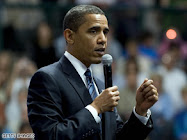
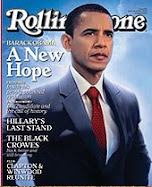
Even though Barack Obama did not get a majority of the white vote, this Times article makes a strong case that white nationalism was defeated in this transformative election. While America might not be anew, American politics with Barack Obama as president will be anew. The divisiveness of white nationalism is no longer hegemonic. The discourse will be different. The anticipated overturning of right-wing Executive Orders, like more freedom when it comes to stem cell research, is just one example of a changed discourse. Political discourse in this country will no longer find support for Justice Department "hands off" when it comes to outrageous cases like the "Jena 6." Justice will be demanded and the political apparatus will find no need to capitulate to a "southern strategy." Elections have consequences and in this transformation white nationalism has been marginalized. RGN
--------------------------------------------------------------------------------
November 11, 2008
For South, a Waning Hold on National Politics
By ADAM NOSSITER
VERNON, Ala. — Fear of the politician with the unusual name and look did not end with last Tuesday’s vote in this rural red swatch where buck heads and rifles hang on the wall. This corner of the Deep South still resonates with negative feelings about the race of President-elect Barack Obama.
What may have ended on Election Day, though, is the centrality of the South to national politics. By voting so emphatically for Senator John McCain over Mr. Obama — supporting him in some areas in even greater numbers than they did President Bush — voters from Texas to South Carolina and Kentucky may have marginalized their region for some time to come, political experts say.
The region’s absence from Mr. Obama’s winning formula means it “is becoming distinctly less important,” said Wayne Parent, a political scientist at Louisiana State University. “The South has moved from being the center of the political universe to being an outside player in presidential politics.”
One reason for that is that the South is no longer a solid voting bloc. Along the Atlantic Coast, parts of the “suburban South,” notably Virginia and North Carolina, made history last week in breaking from their Confederate past and supporting Mr. Obama. Those states have experienced an influx of better educated and more prosperous voters in recent years, pointing them in a different political direction than states farther west, like Alabama, Arkansas, Louisiana and Mississippi, and Appalachian sections of Kentucky and Tennessee.
Southern counties that voted more heavily Republican this year than in 2004 tended to be poorer, less educated and whiter, a statistical analysis by The New York Times shows. Mr. Obama won in only 44 counties in the Appalachian belt, a stretch of 410 counties that runs from New York to Mississippi. Many of those counties, rural and isolated, have been less exposed to the diversity, educational achievement and economic progress experienced by more prosperous areas.
The increased turnout in the South’s so-called Black Belt, or old plantation-country counties, was visible in the results, but it generally could not make up for the solid white support for Mr. McCain. Alabama, for example, experienced a heavy black turnout and voted slightly more Democratic than in 2004, but the state over all gave 60 percent of its vote to Mr. McCain. (Arkansas, however, doubled the margin of victory it gave to the Republican over 2004.)
Less than a third of Southern whites voted for Mr. Obama, compared with 43 percent of whites nationally. By leaving the mainstream so decisively, the Deep South and Appalachia will no longer be able to dictate that winning Democrats have Southern accents or adhere to conservative policies on issues like welfare and tax policy, experts say.
That could spell the end of the so-called Southern strategy, the doctrine that took shape under President Richard M. Nixon in which national elections were won by co-opting Southern whites on racial issues. And the Southernization of American politics — which reached its apogee in the 1990s when many Congressional leaders and President Bill Clinton were from the South — appears to have ended.
“I think that’s absolutely over,” said Thomas Schaller, a political scientist who argued prophetically that the Democrats could win national elections without the South.
The Republicans, meanwhile, have “become a Southernized party,” said Mr. Schaller, who teaches at the University of Maryland, Baltimore County. “They have completely marginalized themselves to a mostly regional party,” he said, pointing out that nearly half of the current Republican House delegation is now Southern.
Merle Black, an expert on the region’s politics at Emory University in Atlanta, said the Republican Party went too far in appealing to the South, alienating voters elsewhere.
“They’ve maxed out on the South,” he said, which has “limited their appeal in the rest of the country.”
Even the Democrats made use of the Southern strategy, as the party’s two presidents in the last 40 years, Jimmy Carter and Mr. Clinton, were Southerners whose presence on the ticket served to assuage regional anxieties. Mr. Obama has now proved it is no longer necessary to include a Southerner on the national ticket — to quiet racial fears, for example — in order to win, in the view of analysts.
Several Southern states, including Arkansas, Louisiana and Tennessee, have voted for the winner in presidential elections for decades. No more. And Mr. Obama’s race appears to have been the critical deciding factor in pushing ever greater numbers of white Southerners away from the Democrats.
Here in Alabama, where Mr. McCain won 60.4 percent of the vote in his best Southern showing, he had the support of nearly 9 in 10 whites, according to exit polls, a figure comparable to other Southern states. Alabama analysts pointed to the persistence of traditional white Southern attitudes on race as the deciding factor in Mr. McCain’s strong margin. Mr. Obama won in Jefferson County, which includes the city of Birmingham, and in the Black Belt, but he made few inroads elsewhere.
“Race continues to play a major role in the state,” said Glenn Feldman, a historian at the University of Alabama, Birmingham. “Alabama, unfortunately, continues to remain shackled to the bonds of yesterday.”
David Bositis, senior political analyst at the Joint Center for Political and Economic Studies, pointed out that the 18 percent share of whites that voted for Senator John Kerry in 2004 was almost cut in half for Mr. Obama.
“There’s no other explanation than race,” he said.
In Arkansas, which had among the nation’s largest concentration of counties increasing their support for the Republican candidate over the 2004 vote, “there’s a clear indication that racial conservatism was a component of that shift away from the Democrat,” said Jay Barth, a political scientist in the state.
Race was a strong subtext in post-election conversations across the socioeconomic spectrum here in Vernon, the small, struggling seat of Lamar County on the Mississippi border.
One white woman said she feared that blacks would now become more “aggressive,” while another volunteered that she was bothered by the idea of a black man “over me” in the White House.
Mr. McCain won 76 percent of the county’s vote, about five percentage points more than Mr. Bush did, because “a lot more people came out, hoping to keep Obama out,” Joey Franks, a construction worker, said in the parking lot of the Shop and Save.
Mr. Franks, who voted for Mr. McCain, said he believed that “over 50 percent voted against Obama for racial reasons,” adding that in his own case race mattered “a little bit. That’s in my mind.”
Many people made it clear that they were deeply apprehensive about Mr. Obama, though some said they were hoping for the best.
“I think any time you have someone elected president of the United States with a Muslim name, whether they are white or black, there are some very unsettling things,” George W. Newman, a director at a local bank and the former owner of a trucking business, said over lunch at Yellow Creek Fish and Steak.
Don Dollar, the administrative assistant at City Hall, said bitterly that anyone not upset with Mr. Obama’s victory should seek religious forgiveness.
“This is a community that’s supposed to be filled with a bunch of Christian folks,” he said. “If they’re not disappointed, they need to be at the altar.”
Customers of Bill Pennington, a barber whose downtown shop is decorated with hunting and fishing trophies, were “scared because they heard he had a Muslim background,” Mr. Pennington said over the country music on the radio. “Over and over again I heard that.”
Mr. Obama remains an unknown quantity in this corner of the South, and there are deep worries about the changes he will bring.
“I am concerned,” Gail McDaniel, who owns a cosmetics business, said in the parking lot of the Shop and Save. “The abortion thing bothers me. Same-sex marriage.”
“I think there are going to be outbreaks from blacks,” she added. “From where I’m from, this is going to give them the right to be more aggressive.”
Ford Fessenden contributed reporting.
For graphics see the full article
Tuesday, November 11, 2008


Monday, November 10, 2008
Krugman, FDR, and Obama
Nobel Laureate Paul Krugman gives Obama the license to be bold. He argues that FDR, while right on establishment of institutions, like FDIC and Social Security, he was timid in other aspects of his economic policies. His public works programs provide of the infrastructure that we take for granted. Though impressive the gains of these programs for the economy were offset by other policies and tax hikes. While the public spending will be helpful, the real growth and progress will be the legacy of the institutions, for example a universal health care system, and similar institutions that will be lasting and support a broad base of the American people. RGN
November 10, 2008
OP-ED COLUMNIST
Franklin Delano Obama?
By Paul Krugman
Suddenly, everything old is New Deal again. Reagan is out; F.D.R. is in. Still, how much guidance does the Roosevelt era really offer for today’s world?
The answer is, a lot. But Barack Obama should learn from F.D.R.’s failures as well as from his achievements: the truth is that the New Deal wasn’t as successful in the short run as it was in the long run. And the reason for F.D.R.’s limited short-run success, which almost undid his whole program, was the fact that his economic policies were too cautious.
About the New Deal’s long-run achievements: the institutions F.D.R. built have proved both durable and essential. Indeed, those institutions remain the bedrock of our nation’s economic stability. Imagine how much worse the financial crisis would be if the New Deal hadn’t insured most bank deposits. Imagine how insecure older Americans would feel right now if Republicans had managed to dismantle Social Security.
Can Mr. Obama achieve something comparable? Rahm Emanuel, Mr. Obama’s new chief of staff, has declared that “you don’t ever want a crisis to go to waste.” Progressives hope that the Obama administration, like the New Deal, will respond to the current economic and financial crisis by creating institutions, especially a universal health care system, that will change the shape of American society for generations to come.
But the new administration should try not to emulate a less successful aspect of the New Deal: its inadequate response to the Great Depression itself.
Now, there’s a whole intellectual industry, mainly operating out of right-wing think tanks, devoted to propagating the idea that F.D.R. actually made the Depression worse. So it’s important to know that most of what you hear along those lines is based on deliberate misrepresentation of the facts. The New Deal brought real relief to most Americans.
That said, F.D.R. did not, in fact, manage to engineer a full economic recovery during his first two terms. This failure is often cited as evidence against Keynesian economics, which says that increased public spending can get a stalled economy moving. But the definitive study of fiscal policy in the ’30s, by the M.I.T. economist E. Cary Brown, reached a very different conclusion: fiscal stimulus was unsuccessful “not because it does not work, but because it was not tried.”
This may seem hard to believe. The New Deal famously placed millions of Americans on the public payroll via the Works Progress Administration and the Civilian Conservation Corps. To this day we drive on W.P.A.-built roads and send our children to W.P.A.-built schools. Didn’t all these public works amount to a major fiscal stimulus?
Well, it wasn’t as major as you might think. The effects of federal public works spending were largely offset by other factors, notably a large tax increase, enacted by Herbert Hoover, whose full effects weren’t felt until his successor took office. Also, expansionary policy at the federal level was undercut by spending cuts and tax increases at the state and local level.
And F.D.R. wasn’t just reluctant to pursue an all-out fiscal expansion — he was eager to return to conservative budget principles. That eagerness almost destroyed his legacy. After winning a smashing election victory in 1936, the Roosevelt administration cut spending and raised taxes, precipitating an economic relapse that drove the unemployment rate back into double digits and led to a major defeat in the 1938 midterm elections.
What saved the economy, and the New Deal, was the enormous public works project known as World War II, which finally provided a fiscal stimulus adequate to the economy’s needs.
This history offers important lessons for the incoming administration.
The political lesson is that economic missteps can quickly undermine an electoral mandate. Democrats won big last week — but they won even bigger in 1936, only to see their gains evaporate after the recession of 1937-38. Americans don’t expect instant economic results from the incoming administration, but they do expect results, and Democrats’ euphoria will be short-lived if they don’t deliver an economic recovery.
The economic lesson is the importance of doing enough. F.D.R. thought he was being prudent by reining in his spending plans; in reality, he was taking big risks with the economy and with his legacy. My advice to the Obama people is to figure out how much help they think the economy needs, then add 50 percent. It’s much better, in a depressed economy, to err on the side of too much stimulus than on the side of too little.
In short, Mr. Obama’s chances of leading a new New Deal depend largely on whether his short-run economic plans are sufficiently bold. Progressives can only hope that he has the necessary audacity.
November 10, 2008
OP-ED COLUMNIST
Franklin Delano Obama?
By Paul Krugman
Suddenly, everything old is New Deal again. Reagan is out; F.D.R. is in. Still, how much guidance does the Roosevelt era really offer for today’s world?
The answer is, a lot. But Barack Obama should learn from F.D.R.’s failures as well as from his achievements: the truth is that the New Deal wasn’t as successful in the short run as it was in the long run. And the reason for F.D.R.’s limited short-run success, which almost undid his whole program, was the fact that his economic policies were too cautious.
About the New Deal’s long-run achievements: the institutions F.D.R. built have proved both durable and essential. Indeed, those institutions remain the bedrock of our nation’s economic stability. Imagine how much worse the financial crisis would be if the New Deal hadn’t insured most bank deposits. Imagine how insecure older Americans would feel right now if Republicans had managed to dismantle Social Security.
Can Mr. Obama achieve something comparable? Rahm Emanuel, Mr. Obama’s new chief of staff, has declared that “you don’t ever want a crisis to go to waste.” Progressives hope that the Obama administration, like the New Deal, will respond to the current economic and financial crisis by creating institutions, especially a universal health care system, that will change the shape of American society for generations to come.
But the new administration should try not to emulate a less successful aspect of the New Deal: its inadequate response to the Great Depression itself.
Now, there’s a whole intellectual industry, mainly operating out of right-wing think tanks, devoted to propagating the idea that F.D.R. actually made the Depression worse. So it’s important to know that most of what you hear along those lines is based on deliberate misrepresentation of the facts. The New Deal brought real relief to most Americans.
That said, F.D.R. did not, in fact, manage to engineer a full economic recovery during his first two terms. This failure is often cited as evidence against Keynesian economics, which says that increased public spending can get a stalled economy moving. But the definitive study of fiscal policy in the ’30s, by the M.I.T. economist E. Cary Brown, reached a very different conclusion: fiscal stimulus was unsuccessful “not because it does not work, but because it was not tried.”
This may seem hard to believe. The New Deal famously placed millions of Americans on the public payroll via the Works Progress Administration and the Civilian Conservation Corps. To this day we drive on W.P.A.-built roads and send our children to W.P.A.-built schools. Didn’t all these public works amount to a major fiscal stimulus?
Well, it wasn’t as major as you might think. The effects of federal public works spending were largely offset by other factors, notably a large tax increase, enacted by Herbert Hoover, whose full effects weren’t felt until his successor took office. Also, expansionary policy at the federal level was undercut by spending cuts and tax increases at the state and local level.
And F.D.R. wasn’t just reluctant to pursue an all-out fiscal expansion — he was eager to return to conservative budget principles. That eagerness almost destroyed his legacy. After winning a smashing election victory in 1936, the Roosevelt administration cut spending and raised taxes, precipitating an economic relapse that drove the unemployment rate back into double digits and led to a major defeat in the 1938 midterm elections.
What saved the economy, and the New Deal, was the enormous public works project known as World War II, which finally provided a fiscal stimulus adequate to the economy’s needs.
This history offers important lessons for the incoming administration.
The political lesson is that economic missteps can quickly undermine an electoral mandate. Democrats won big last week — but they won even bigger in 1936, only to see their gains evaporate after the recession of 1937-38. Americans don’t expect instant economic results from the incoming administration, but they do expect results, and Democrats’ euphoria will be short-lived if they don’t deliver an economic recovery.
The economic lesson is the importance of doing enough. F.D.R. thought he was being prudent by reining in his spending plans; in reality, he was taking big risks with the economy and with his legacy. My advice to the Obama people is to figure out how much help they think the economy needs, then add 50 percent. It’s much better, in a depressed economy, to err on the side of too much stimulus than on the side of too little.
In short, Mr. Obama’s chances of leading a new New Deal depend largely on whether his short-run economic plans are sufficiently bold. Progressives can only hope that he has the necessary audacity.
Frank Rich on the Morning After

The morning after?? Frank Rich spells out what the transformation is looking like. From the omnipresent white nationalism of Karl Rove et al, the election of Barack Obama as president is indicative of a changed America. While there are and will be many bumps along the way, America elected a black man as the leader of the so-called Free World. RGN
November 9, 2008
Op-Ed Columnist
It Still Felt Good the Morning After
By FRANK RICH
ON the morning after a black man won the White House, America’s tears of catharsis gave way to unadulterated joy.
Our nation was still in the same ditch it had been the day before, but the atmosphere was giddy. We felt good not only because we had breached a racial barrier as old as the Republic. Dawn also brought the realization that we were at last emerging from an abusive relationship with our country’s 21st-century leaders. The festive scenes of liberation that Dick Cheney had once imagined for Iraq were finally taking place — in cities all over America.
For eight years, we’ve been told by those in power that we are small, bigoted and stupid — easily divided and easily frightened. This was the toxic catechism of Bush-Rove politics. It was the soiled banner picked up by the sad McCain campaign, and it was often abetted by an amen corner in the dominant news media. We heard this slander of America so often that we all started to believe it, liberals most certainly included. If I had a dollar for every Democrat who told me there was no way that Americans would ever turn against the war in Iraq or definitively reject Bush governance or elect a black man named Barack Hussein Obama president, I could almost start to recoup my 401(k). Few wanted to take yes for an answer.
So let’s be blunt. Almost every assumption about America that was taken as a given by our political culture on Tuesday morning was proved wrong by Tuesday night.
The most conspicuous clichés to fall, of course, were the twin suppositions that a decisive number of white Americans wouldn’t vote for a black presidential candidate — and that they were lying to pollsters about their rampant racism. But the polls were accurate. There was no “Bradley effect.” A higher percentage of white men voted for Obama than any Democrat since Jimmy Carter, Bill Clinton included.
Obama also won all four of those hunting-and-Hillary-loving Rust Belt states that became 2008’s obsession among slumming upper-middle-class white journalists: Pennsylvania and Michigan by double digits, as well as Ohio and even Indiana, which has gone Democratic only once (1964) since 1936. The solid Republican South, led by Virginia and North Carolina, started to turn blue as well. While there are still bigots in America, they are in unambiguous retreat.
And what about all those terrified Jews who reportedly abandoned their progressive heritage to buy into the smears libeling Obama as an Israel-hating terrorist? Obama drew a larger percentage of Jews nationally (78) than Kerry had (74) and — mazel tov, Sarah Silverman! — won Florida.
Let’s defend Hispanic-Americans, too, while we’re at it. In one of the more notorious observations of the campaign year, a Clinton pollster, Sergio Bendixen, told The New Yorker in January that “the Hispanic voter — and I want to say this very carefully — has not shown a lot of willingness or affinity to support black candidates.” Let us say very carefully that a black presidential candidate won Latinos — the fastest-growing demographic in the electorate — 67 percent to 31 (up from Kerry’s 53-to-44 edge and Gore’s 62-to-35).
Young voters also triumphed over the condescension of the experts. “Are they going to show up?” Cokie Roberts of ABC News asked in February. “Probably not. They never have before. By the time November comes, they’ll be tired.” In fact they turned up in larger numbers than in 2004, and their disproportionate Democratic margin made a serious difference, as did their hard work on the ground. They’re not the ones who need Geritol.
The same commentators who dismissed every conceivable American demographic as racist, lazy or both got Sarah Palin wrong too. When she made her debut in St. Paul, the punditocracy was nearly uniform in declaring her selection a brilliant coup. There hadn’t been so much instant over-the-top praise by the press for a cynical political stunt since President Bush “landed” a jet on the U.S.S. Abraham Lincoln in that short-lived triumph “Mission Accomplished.”
The rave reviews for Palin were completely disingenuous. Anyone paying attention (with the possible exception of John McCain) could see she was woefully ill-equipped to serve half-a-heartbeat away from the presidency. The conservatives Peggy Noonan and Mike Murphy said so on MSNBC when they didn’t know their mikes were on. But, hey, she was a dazzling TV presence, the thinking went, so surely doltish Americans would rally around her anyway. “She killed!” cheered Noonan about the vice-presidential debate, revising her opinion upward and marveling at Palin’s gift for talking “over the heads of the media straight to the people.” Many talking heads thought she tied or beat Joe Biden.
The people, however, were reaching a less charitable conclusion and were well ahead of the Beltway curve in fleeing Palin. Only after polls confirmed that she was costing McCain votes did conventional wisdom in Washington finally change, demoting her from Republican savior to scapegoat overnight.
But Palin’s appeal wasn’t overestimated only because of her kitschy “American Idol” star quality. Her fierce embrace of the old Karl Rove wedge politics, the divisive pitting of the “real America” against the secular “other” America, was also regarded as a sure-fire winner. The second most persistent assumption by both pundits and the McCain campaign this year — after the likely triumph of racism — was that the culture war battlegrounds from 2000 and 2004 would remain intact.
This is true in exactly one instance: gay civil rights. Though Rove’s promised “permanent Republican majority” lies in humiliating ruins, his and Bush’s one secure legacy will be their demagogic exploitation of homophobia. The success of the four state initiatives banning either same-sex marriage or same-sex adoptions was the sole retro trend on Tuesday. And Obama, who largely soft-pedaled the issue this year, was little help. In California, where other races split more or less evenly on a same-sex marriage ban, some 70 percent of black voters contributed to its narrow victory.
That lagging indicator aside, nearly every other result on Tuesday suggests that while the right wants to keep fighting the old boomer culture wars, no one else does. Three state initiatives restricting abortion failed. Bill Ayers proved a lame villain, scaring no one. Americans do not want to revisit Vietnam (including in Iraq). For all the attention paid by the news media and McCain-Palin to rancorous remembrances of things past, I sometimes wondered whether most Americans thought the Weather Underground was a reunion band and the Hanoi Hilton a chain hotel. Socialism, the evil empire and even Ronald Reagan may be half-forgotten blurs too.
If there were any doubts the 1960s are over, they were put to rest Tuesday night when our new first family won the hearts of the world as it emerged on that vast blue stage to join the celebration in Chicago’s Grant Park. The bloody skirmishes that took place on that same spot during the Democratic convention 40 years ago — young vs. old, students vs. cops, white vs. black — seemed as remote as the moon. This is another America — hardly a perfect or prejudice-free America, but a union that can change and does, aspiring to perfection even if it can never achieve it.
Still, change may come slowly to the undying myths bequeathed to us by the Bush decade. “Don’t think for a minute that power concedes,” Obama is fond of saying. Neither does groupthink. We now keep hearing, for instance, that America is “a center-right nation” — apparently because the percentages of Americans who call themselves conservative (34), moderate (44) and liberal (22) remain virtually unchanged from four years ago. But if we’ve learned anything this year, surely it’s that labels are overrated. Those same polls find that more and more self-described conservatives no longer consider themselves Republicans. Americans now say they favor government doing more (51 percent), not less (43) — an 11-point swing since 2004 — and they still overwhelmingly reject the Iraq war. That’s a centrist country tilting center-left, and that’s the majority who voted for Obama.
The post-Bush-Rove Republican Party is in the minority because it has driven away women, the young, suburbanites, black Americans, Latino-Americans, Asian-Americans, educated Americans, gay Americans and, increasingly, working-class Americans. Who’s left? The only states where the G.O.P. increased its percentage of the presidential vote relative to the Democrats were West Virginia, Tennessee, Louisiana and Arkansas. Even the North Carolina county where Palin expressed her delight at being in the “real America” went for Obama by more than 18 percentage points.
The actual real America is everywhere. It is the America that has been in shell shock since the aftermath of 9/11, when our government wielded a brutal attack by terrorists as a club to ratchet up our fears, betray our deepest constitutional values and turn Americans against one another in the name of “patriotism.” What we started to remember the morning after Election Day was what we had forgotten over the past eight years, as our abusive relationship with the Bush administration and its press enablers dragged on: That’s not who we are.
So even as we celebrated our first black president, we looked around and rediscovered the nation that had elected him. “We are the ones we’ve been waiting for,” Obama said in February, and indeed millions of such Americans were here all along, waiting for a leader. This was the week that they reclaimed their country.
Bankrupt Republicans and What Else?
This article by John Harwood is very interesting in that it explodes some myths about the size of turnout as being crucial to an Obama victory. The bankruptcy of an ideological conservatism and Republicanism, often accompanied by the corruption, doomed the McCain campaign. He had no message to share. For those that wonder if an Obama presidency is transformative, there is an examination of North Carolina that is instructive. From Harold Ickes, you get a Clinton camp caution as to whether or not an Obama presidency is transformative. With Barack’s notion of change from below, there is even prediction that South Carolina could be the next state to turn blue. RGN
November 10, 2008
THE CAUCUS
Democrats Have G.O.P. to Thank, at Least in Part
By JOHN HARWOOD
The encomiums greeting Barack Obama’s victory last week presented a reverse image of the darts for John Kerry after his 2004 defeat. But Kerry campaign veterans could not help noticing a surprise in the returns.
In the battleground state of Ohio, where Mr. Kerry lost the presidency to George W. Bush, the 2.74 million votes he received almost precisely matched Mr. Obama’s 2008 total. Mr. Obama won because John McCain received 300,000 fewer votes than Mr. Bush did.
That points to a cautionary reminder for Mr. Obama and his team: the election turned partly on what they did right, but also on what Republicans did wrong. And there is no assurance that Democrats will confront a similarly star-crossed opposition in elections to come.
“We should be confident, but not cocky,” said Donald Fowler of South Carolina, a former national Democratic Party chairman. “Several things that worked against them in this campaign could change quickly.”
Among them, Mr. Fowler said of the deeply unpopular Republican incumbent in the White House, “Bush is going to disappear.”
Mr. Obama, a senator from Illinois, inarguably fashioned an impressive victory for any Democrat, much less the first black nominee in American history. His 52 percent share of the popular vote exceeded that of any Democratic candidate since Lyndon B. Johnson in 1964 — and topped Ronald Reagan’s 1980 majority against Jimmy Carter. With breakthroughs in the South, Midwest and Mountain West, Mr. Obama captured at least nine states carried by Mr. Bush in 2004, with the outcome in Missouri still unclear.
Yet the record-shattering turnout that some observers predicted appears not to have materialized. Curtis Gans of the Committee for the Study of the American Electorate projects that, when outstanding votes are tallied, the number of Americans casting ballots will fall short of the 130-million floor predicted by the McCain and Obama campaigns.
Mr. Gans ascribes that shortfall in part to diminished Republican fervor — a “demobilization” that created political openings for Mr. Obama’s disciplined campaign organization. The reasons for that begin with Mr. Bush’s political infirmity, but they do not end there.
Lacking a deep wellspring of support among conservative party regulars, Mr. McCain courted them to win the Republican nomination — in the process weakening his once-formidable standing among independents. He sought to appeal to both factions with his selection of Gov. Sarah Palin of Alaska, and saw most Americans deem her unqualified for the presidency.
The campaign’s unalloyed appeals to cultural populism drove well-educated, high-income voters to the Democratic ticket. Meantime, disarray among Congressional Republicans over the financial bailout package in September compounded injuries Republicans suffered throughout Mr. Bush’s second term to their reputation for pragmatism and competence.
Democrats “benefited greatly from tapping into voters’ frustrations about a very badly damaged Republican brand,” said Mr. McCain’s political director, Mike DuHaime, a former Republican National Committee official.
That created new campaign dynamics for the post-civil rights era in which Deep South states became the Republicans’ redoubt. Instead of distancing themselves from their national ticket, as Democrats have customarily done, the North Carolina candidate for governor Bev Perdue and the Senate candidate Kay Hagan linked themselves to Mr. Obama.
All three won in the Tar Heel state, and Democrats gained a House seat for the second consecutive election. After controlling a majority of North Carolina House seats at the outset of Mr. Bush’s term, Republicans now hold just 5 of 13.
“Without Bush and Cheney and Rove, the Democrats couldn’t have done what they did” in 2006 or 2008, observed David Rohde, a political scientist at Duke University. In his first television advertisement for the Dec. 2 Senate runoff in Georgia with the Republican incumbent, Saxby Chambliss, the Democratic Senate candidate, Jim Martin, promises to “work with Barack Obama to get our economy moving again.”
Democratic veterans warn against assuming the party can sustain such successes against a reinvigorated Republican opposition. “The country remains very evenly divided,” said Harold Ickes, a former deputy chief of staff in the Clinton administration. “The lease on the office space is likely very short.”
Indeed, Mr. Clinton’s experience highlights the risks. The misadventures of his first two White House years helped pave the way for the Republican Revolution led by Newt Gingrich that ousted Democrats from control of Congress.
After four years in the Senate, Mr. Obama may move into 1600 Pennsylvania Avenue with closer ties to the Democratic Congress than Mr. Clinton brought from the Arkansas governor’s mansion. If he gives higher priority than Mr. Clinton did to party-building below the presidential level, Mr. Fowler said, the political breakthroughs may continue.
“If we improve as much between now and 2012 as we did between 2004 and 2008,” Mr. Fowler predicted, “we can win South Carolina.”
November 10, 2008
THE CAUCUS
Democrats Have G.O.P. to Thank, at Least in Part
By JOHN HARWOOD
The encomiums greeting Barack Obama’s victory last week presented a reverse image of the darts for John Kerry after his 2004 defeat. But Kerry campaign veterans could not help noticing a surprise in the returns.
In the battleground state of Ohio, where Mr. Kerry lost the presidency to George W. Bush, the 2.74 million votes he received almost precisely matched Mr. Obama’s 2008 total. Mr. Obama won because John McCain received 300,000 fewer votes than Mr. Bush did.
That points to a cautionary reminder for Mr. Obama and his team: the election turned partly on what they did right, but also on what Republicans did wrong. And there is no assurance that Democrats will confront a similarly star-crossed opposition in elections to come.
“We should be confident, but not cocky,” said Donald Fowler of South Carolina, a former national Democratic Party chairman. “Several things that worked against them in this campaign could change quickly.”
Among them, Mr. Fowler said of the deeply unpopular Republican incumbent in the White House, “Bush is going to disappear.”
Mr. Obama, a senator from Illinois, inarguably fashioned an impressive victory for any Democrat, much less the first black nominee in American history. His 52 percent share of the popular vote exceeded that of any Democratic candidate since Lyndon B. Johnson in 1964 — and topped Ronald Reagan’s 1980 majority against Jimmy Carter. With breakthroughs in the South, Midwest and Mountain West, Mr. Obama captured at least nine states carried by Mr. Bush in 2004, with the outcome in Missouri still unclear.
Yet the record-shattering turnout that some observers predicted appears not to have materialized. Curtis Gans of the Committee for the Study of the American Electorate projects that, when outstanding votes are tallied, the number of Americans casting ballots will fall short of the 130-million floor predicted by the McCain and Obama campaigns.
Mr. Gans ascribes that shortfall in part to diminished Republican fervor — a “demobilization” that created political openings for Mr. Obama’s disciplined campaign organization. The reasons for that begin with Mr. Bush’s political infirmity, but they do not end there.
Lacking a deep wellspring of support among conservative party regulars, Mr. McCain courted them to win the Republican nomination — in the process weakening his once-formidable standing among independents. He sought to appeal to both factions with his selection of Gov. Sarah Palin of Alaska, and saw most Americans deem her unqualified for the presidency.
The campaign’s unalloyed appeals to cultural populism drove well-educated, high-income voters to the Democratic ticket. Meantime, disarray among Congressional Republicans over the financial bailout package in September compounded injuries Republicans suffered throughout Mr. Bush’s second term to their reputation for pragmatism and competence.
Democrats “benefited greatly from tapping into voters’ frustrations about a very badly damaged Republican brand,” said Mr. McCain’s political director, Mike DuHaime, a former Republican National Committee official.
That created new campaign dynamics for the post-civil rights era in which Deep South states became the Republicans’ redoubt. Instead of distancing themselves from their national ticket, as Democrats have customarily done, the North Carolina candidate for governor Bev Perdue and the Senate candidate Kay Hagan linked themselves to Mr. Obama.
All three won in the Tar Heel state, and Democrats gained a House seat for the second consecutive election. After controlling a majority of North Carolina House seats at the outset of Mr. Bush’s term, Republicans now hold just 5 of 13.
“Without Bush and Cheney and Rove, the Democrats couldn’t have done what they did” in 2006 or 2008, observed David Rohde, a political scientist at Duke University. In his first television advertisement for the Dec. 2 Senate runoff in Georgia with the Republican incumbent, Saxby Chambliss, the Democratic Senate candidate, Jim Martin, promises to “work with Barack Obama to get our economy moving again.”
Democratic veterans warn against assuming the party can sustain such successes against a reinvigorated Republican opposition. “The country remains very evenly divided,” said Harold Ickes, a former deputy chief of staff in the Clinton administration. “The lease on the office space is likely very short.”
Indeed, Mr. Clinton’s experience highlights the risks. The misadventures of his first two White House years helped pave the way for the Republican Revolution led by Newt Gingrich that ousted Democrats from control of Congress.
After four years in the Senate, Mr. Obama may move into 1600 Pennsylvania Avenue with closer ties to the Democratic Congress than Mr. Clinton brought from the Arkansas governor’s mansion. If he gives higher priority than Mr. Clinton did to party-building below the presidential level, Mr. Fowler said, the political breakthroughs may continue.
“If we improve as much between now and 2012 as we did between 2004 and 2008,” Mr. Fowler predicted, “we can win South Carolina.”
Alice Walker's Letter to Obama
Here's the Alice Walker letter:
Nov. 5, 2008
Dear Brother Obama,
You have no idea, really, of how profound this moment is for us. Us being the black people of the Southern United States. You think you know, because you are thoughtful, and you have studied our history. But seeing you deliver the torch so many others before you carried, year after year, decade after decade, century after century, only to be struck down before igniting the flame of justice and of law, is almost more than the heart can bear. And yet, this observation is not intended to burden you, for you are of a different time, and, indeed, because of all the relay runners before you, North America is a different place. It is really only to say: Well done. We knew, through all the generations, that you were with us, in us, the best of the spirit of Africa and of the Americas. Knowing this, that you would actually appear, someday, was part of our strength. Seeing you take your rightful place, based solely on your wisdom, stamina and character, is a balm for the weary warrior! s ! ! of hope, previously only sung about.
I would advise you to remember that you did not create the disaster that the world is experiencing, and you alone are not responsible for bringing the world back to balance. A primary responsibility that you do have, however, is to cultivate happiness in your own life. To make a schedule that permits sufficient time of rest and play with your gorgeous wife and lovely daughters. And so on. One gathers that your family is large. We are used to seeing men in the White House soon become juiceless and as white-haired as the building; we notice their wives and children looking strained and stressed. They soon have smiles so lacking in joy that they remind us of scissors. This is no way to lead. Nor does your family deserve this fate. One way of thinking about all this is: It is so bad now that there is no excuse not to relax. From your happy, relaxed state, you can model real success, which is all that so many people in the world really want. They may buy endless cars and houses a! nd! ! furs and gobble up all the attention and space they can manage, or barely manage, but this is because it is not yet clear to them that success is truly an inside job. That it is within the reach of almost everyone.
I would further advise you not to take on other people's enemies. Most damage that others do to us is out of fear, humiliation and pain. Those feelings occur in all of us, not just in those of us who profess a certain religious or racial devotion. We must learn actually not to have enemies, but only confused adversaries who are ourselves in disguise. It is understood by all that you are commander in chief of the United States and are sworn to protect our beloved country; this we understand, completely. However, as my mother used to say, quoting a Bible with which I often fought, "hate the sin, but love the sinner." There must be no more crushing of whole communities, no more torture, no more dehumanizing as a means of ruling a people's spirit. This has already happened to people of color, poor people, women, children. We see where this leads, where it has led.
A good model of how to "work with the enemy" internally is presented by the Dalai Lama, in his endless caretaking of his soul as he confronts the Chinese government that invaded Tibet. Because, finally, it is the soul that must be preserved, if one is to remain a credible leader. All else might be lost; but when the soul dies, the connection to earth, to peoples, to animals, to rivers, to mountain ranges, purple and majestic, also dies. And your smile, with which we watch you do gracious battle with unjust characterizations, distortions and lies, is that expression of healthy self-worth, spirit and soul, that, kept happy and free and relaxed, can find an answering smile in all of us, lighting our way, and brightening the world.
We are the ones we have been waiting for.
In Peace and Joy,
Alice Walker
From a beautiful fall morning in Maryland, Maggie East
Nov. 5, 2008
Dear Brother Obama,
You have no idea, really, of how profound this moment is for us. Us being the black people of the Southern United States. You think you know, because you are thoughtful, and you have studied our history. But seeing you deliver the torch so many others before you carried, year after year, decade after decade, century after century, only to be struck down before igniting the flame of justice and of law, is almost more than the heart can bear. And yet, this observation is not intended to burden you, for you are of a different time, and, indeed, because of all the relay runners before you, North America is a different place. It is really only to say: Well done. We knew, through all the generations, that you were with us, in us, the best of the spirit of Africa and of the Americas. Knowing this, that you would actually appear, someday, was part of our strength. Seeing you take your rightful place, based solely on your wisdom, stamina and character, is a balm for the weary warrior! s ! ! of hope, previously only sung about.
I would advise you to remember that you did not create the disaster that the world is experiencing, and you alone are not responsible for bringing the world back to balance. A primary responsibility that you do have, however, is to cultivate happiness in your own life. To make a schedule that permits sufficient time of rest and play with your gorgeous wife and lovely daughters. And so on. One gathers that your family is large. We are used to seeing men in the White House soon become juiceless and as white-haired as the building; we notice their wives and children looking strained and stressed. They soon have smiles so lacking in joy that they remind us of scissors. This is no way to lead. Nor does your family deserve this fate. One way of thinking about all this is: It is so bad now that there is no excuse not to relax. From your happy, relaxed state, you can model real success, which is all that so many people in the world really want. They may buy endless cars and houses a! nd! ! furs and gobble up all the attention and space they can manage, or barely manage, but this is because it is not yet clear to them that success is truly an inside job. That it is within the reach of almost everyone.
I would further advise you not to take on other people's enemies. Most damage that others do to us is out of fear, humiliation and pain. Those feelings occur in all of us, not just in those of us who profess a certain religious or racial devotion. We must learn actually not to have enemies, but only confused adversaries who are ourselves in disguise. It is understood by all that you are commander in chief of the United States and are sworn to protect our beloved country; this we understand, completely. However, as my mother used to say, quoting a Bible with which I often fought, "hate the sin, but love the sinner." There must be no more crushing of whole communities, no more torture, no more dehumanizing as a means of ruling a people's spirit. This has already happened to people of color, poor people, women, children. We see where this leads, where it has led.
A good model of how to "work with the enemy" internally is presented by the Dalai Lama, in his endless caretaking of his soul as he confronts the Chinese government that invaded Tibet. Because, finally, it is the soul that must be preserved, if one is to remain a credible leader. All else might be lost; but when the soul dies, the connection to earth, to peoples, to animals, to rivers, to mountain ranges, purple and majestic, also dies. And your smile, with which we watch you do gracious battle with unjust characterizations, distortions and lies, is that expression of healthy self-worth, spirit and soul, that, kept happy and free and relaxed, can find an answering smile in all of us, lighting our way, and brightening the world.
We are the ones we have been waiting for.
In Peace and Joy,
Alice Walker
From a beautiful fall morning in Maryland, Maggie East
Saturday, November 8, 2008
Bill Ayers on Bill Ayers
What a Long, Strange Trip It's Been
Friday 07 November 2008
by: Bill Ayers, In These Times
Upon the end of a surreal campaign season, Bill Ayers speaks out. (Photo: Chris Walker / The Chicago Tribune)
Bill Ayers looks back on a surreal campaign season.
Whew! What was all that mess? I'm still in a daze, sorting it all out, decompressing.
Pass the Vitamin C.
For the past few years, I have gone about my business, hanging out with my kids and, now, my grandchildren, taking care of our elders (they moved in as the kids moved out), going to work, teaching and writing. And every day, I participate in the never-ending effort to build a powerful and irresistible movement for peace and social justice.
In years past, I would now and then - often unpredictably - appear in the newspapers or on TV, sometimes with a reference to Fugitive Days, my 2001 memoir of the exhilarating and difficult years of resistance against the American war in Vietnam. It was a time when the world was in flames, revolution was in the air, and the serial assassinations of black leaders disrupted our utopian dreams.
These media episodes of fleeting notoriety always led to some extravagant and fantastic assertions about what I did, what I might have said and what I probably believe now.
It was always a bit surreal. Then came this political season.
During the primary, the blogosphere was full of chatter about my relationship with President-elect Barack Obama. We had served together on the board of the Woods Foundation and knew one another as neighbors in Chicago's Hyde Park. In 1996, at a coffee gathering that my wife, Bernardine Dohrn, and I held for him, I made a $200 donation to his campaign for the Illinois State Senate.
Obama's political rivals and enemies thought they saw an opportunity to deepen a dishonest perception that he is somehow un-American, alien, linked to radical ideas, a closet terrorist who sympathizes with extremism - and they pounced.
Sen. Hillary Clinton's (D-N.Y.) campaign provided the script, which included guilt by association, demonization of people Obama knew (or might have known), creepy questions about his background and dark hints about hidden secrets yet to be uncovered.
On March 13, Sen. John McCain (R-Ariz.), apparently in an attempt to reassure the base,- sat down for an interview with Sean Hannity of Fox News. McCain was not yet aware of the narrative Hannity had been spinning for months, and so Hannity filled him in: Ayers is an unrepentant "terrorist," he explained, "On 9/11, of all days, he had an article where he bragged about bombing our Pentagon, bombing the Capitol and bombing New York City police headquarters. ... He said, 'I regret not doing more.'"
McCain couldn't believe it.
Neither could I.
On the campaign trail, McCain immediately got on message. I became a prop, a cartoon character created to be pummeled.
When Alaska Gov. Sarah Palin got hold of it, the attack went viral. At a now-famous Oct. 4 rally, she said Obama was Ïpallin' around with terrorists.- (I pictured us sharing a milkshake with two straws.)
The crowd began chanting, "Kill him!" "Kill him"- It was downhill from there.
My voicemail filled up with hate messages. They were mostly from men, all venting and sweating and breathing heavily. A few threats: "Watch out!" and "You deserve to be shot." And some e-mails, like this one I got from satan@hell.com: "I'm coming to get you and when I do, I'll water-board you."
The police lieutenant who came to copy down those threats deadpanned that he hoped the guy who was going to shoot me got there before the guy who was going to water-board me, since it would be most foul to be tortured and then shot. (We have been pals ever since he was first assigned to investigate threats made against me in 1987, after I was hired as an assistant professor at the University of Illinois at Chicago.)
The good news was that every time McCain or Palin mentioned my name, they lost a point or two in the polls. The cartoon invented to hurt Obama was now poking holes in the rapidly sinking McCain-Palin ship.
That '60s Show
On Aug. 28, Stephen Colbert, the faux right-wing commentator from Comedy Central who channels Bill O'Reilly on steroids, observed:
To this day, when our country holds a presidential election, we judge the candidates through the lens of the 1960s. ... We all know Obama is cozy with William Ayers a '60s radical who planted a bomb in the capital building and then later went on to even more heinous crimes by becoming a college professor. ... Let us keep fighting the culture wars of our grandparents. The '60s are a political gift that keeps on giving.
It was inevitable. McCain would bet the house on a dishonest and largely discredited vision of the '60s, which was the defining decade for him. He built his political career on being a prisoner of war in Vietnam.
The '60s - as myth and symbol - is much abused: the downfall of civilization in one account, a time of defeat and humiliation in a second, and a perfect moment of righteous opposition, peace and love in a third.
The idea that the 2008 election may be the last time in American political life that the '60s plays any role whatsoever is a mixed blessing. On the one hand, let's get over the nostalgia and move on. On the other, the lessons we might have learned from the black freedom movement and from the resistance against the Vietnam War have never been learned. To achieve this would require that we face history fully and honestly, something this nation has never done.
The war in Vietnam was an illegal invasion and occupation, much of it conducted as a war of terror against the civilian population. The U.S. military killed millions of Vietnamese in air raids - like the one conducted by McCain - and entire areas of the country were designated free-fire zones, where American pilots indiscriminately dropped surplus ordinance - an immoral enterprise by any measure.
What Is Really Important
McCain and Palin - or as our late friend Studs Terkel put it, "Joe McCarthy in drag" - would like to bury the '60s. The '60s, after all, was a time of rejecting obedience and conformity in favor of initiative and courage. The '60s pushed us to a deeper appreciation of the humanity of every human being. And that is the threat it poses to the right wing, hence the attacks and all the guilt by association.
McCain and Palin demanded to "know the full extent" of the Obama-Ayers "relationship" so that they can know if Obama, as Palin put it, "is telling the truth to the American people or not."
This is just plain stupid.
Obama has continually been asked to defend something that ought to be at democracy's heart: the importance of talking to as many people as possible in this complicated and wildly diverse society, of listening with the possibility of learning something new, and of speaking with the possibility of persuading or influencing others.
The McCain-Palin attacks not only involved guilt by association, they also assumed that one must apply a political litmus test to begin a conversation.
On Oct. 4, Palin described her supporters as those who "see America as the greatest force for good in this world" and as a "beacon of light and hope for others who seek freedom and democracy." But Obama, she said, "Is not a man who sees America as you see it and how I see America." In other words, there are "real" Americans - and then there are the rest of us.
In a robust and sophisticated democracy, political leaders - and all of us - ought to seek ways to talk with many people who hold dissenting, or even radical, ideas. Lacking that simple and yet essential capacity to question authority, we might still be burning witches and enslaving our fellow human beings today.
Maybe we could welcome our current situation - torn by another illegal war, as it was in the '60s - as an opportunity to search for the new.
Perhaps we might think of ourselves not as passive consumers of politics but as fully mobilized political actors. Perhaps we might think of our various efforts now, as we did then, as more than a single campaign, but rather as our movement-in-the-making.
We might find hope in the growth of opposition to war and occupation worldwide. Or we might be inspired by the growing movements for reparations and prison abolition, or the rising immigrant rights movement and the stirrings of working people everywhere, or by gay and lesbian and transgender people courageously pressing for full recognition.
Yet hope - my hope, our hope - resides in a simple self-evident truth: the future is unknown, and it is also entirely unknowable.
History is always in the making. It's up to us. It is up to me and to you. Nothing is predetermined. That makes our moment on this earth both hopeful and all the more urgent - we must find ways to become real actors, to become authentic subjects in our own history.
We may not be able to will a movement into being, but neither can we sit idly for a movement to spring full-grown, as from the head of Zeus.
We have to agitate for democracy and egalitarianism, press harder for human rights, learn to build a new society through our self-transformations and our limited everyday struggles.
At the turn of the last century, Eugene Debs, the great Socialist Party leader from Terre Haute, Ind., told a group of workers in Chicago, "If I could lead you into the Promised Land, I would not do it, because someone else would come along and lead you out."
In this time of new beginnings and rising expectations, it is even more urgent
that we figure out how to become the people we have been waiting to be.
---------
Bill Ayers is a Distinguished Professor of Education and Senior University Scholar at the University of Illinois at Chicago. He is the author of "Fugitive Days" (Beacon) and co-author, with Bernardine Dohrn, of "Race Course: Against White Supremacy" (Third World Press).
Friday 07 November 2008
by: Bill Ayers, In These Times
Upon the end of a surreal campaign season, Bill Ayers speaks out. (Photo: Chris Walker / The Chicago Tribune)
Bill Ayers looks back on a surreal campaign season.
Whew! What was all that mess? I'm still in a daze, sorting it all out, decompressing.
Pass the Vitamin C.
For the past few years, I have gone about my business, hanging out with my kids and, now, my grandchildren, taking care of our elders (they moved in as the kids moved out), going to work, teaching and writing. And every day, I participate in the never-ending effort to build a powerful and irresistible movement for peace and social justice.
In years past, I would now and then - often unpredictably - appear in the newspapers or on TV, sometimes with a reference to Fugitive Days, my 2001 memoir of the exhilarating and difficult years of resistance against the American war in Vietnam. It was a time when the world was in flames, revolution was in the air, and the serial assassinations of black leaders disrupted our utopian dreams.
These media episodes of fleeting notoriety always led to some extravagant and fantastic assertions about what I did, what I might have said and what I probably believe now.
It was always a bit surreal. Then came this political season.
During the primary, the blogosphere was full of chatter about my relationship with President-elect Barack Obama. We had served together on the board of the Woods Foundation and knew one another as neighbors in Chicago's Hyde Park. In 1996, at a coffee gathering that my wife, Bernardine Dohrn, and I held for him, I made a $200 donation to his campaign for the Illinois State Senate.
Obama's political rivals and enemies thought they saw an opportunity to deepen a dishonest perception that he is somehow un-American, alien, linked to radical ideas, a closet terrorist who sympathizes with extremism - and they pounced.
Sen. Hillary Clinton's (D-N.Y.) campaign provided the script, which included guilt by association, demonization of people Obama knew (or might have known), creepy questions about his background and dark hints about hidden secrets yet to be uncovered.
On March 13, Sen. John McCain (R-Ariz.), apparently in an attempt to reassure the base,- sat down for an interview with Sean Hannity of Fox News. McCain was not yet aware of the narrative Hannity had been spinning for months, and so Hannity filled him in: Ayers is an unrepentant "terrorist," he explained, "On 9/11, of all days, he had an article where he bragged about bombing our Pentagon, bombing the Capitol and bombing New York City police headquarters. ... He said, 'I regret not doing more.'"
McCain couldn't believe it.
Neither could I.
On the campaign trail, McCain immediately got on message. I became a prop, a cartoon character created to be pummeled.
When Alaska Gov. Sarah Palin got hold of it, the attack went viral. At a now-famous Oct. 4 rally, she said Obama was Ïpallin' around with terrorists.- (I pictured us sharing a milkshake with two straws.)
The crowd began chanting, "Kill him!" "Kill him"- It was downhill from there.
My voicemail filled up with hate messages. They were mostly from men, all venting and sweating and breathing heavily. A few threats: "Watch out!" and "You deserve to be shot." And some e-mails, like this one I got from satan@hell.com: "I'm coming to get you and when I do, I'll water-board you."
The police lieutenant who came to copy down those threats deadpanned that he hoped the guy who was going to shoot me got there before the guy who was going to water-board me, since it would be most foul to be tortured and then shot. (We have been pals ever since he was first assigned to investigate threats made against me in 1987, after I was hired as an assistant professor at the University of Illinois at Chicago.)
The good news was that every time McCain or Palin mentioned my name, they lost a point or two in the polls. The cartoon invented to hurt Obama was now poking holes in the rapidly sinking McCain-Palin ship.
That '60s Show
On Aug. 28, Stephen Colbert, the faux right-wing commentator from Comedy Central who channels Bill O'Reilly on steroids, observed:
To this day, when our country holds a presidential election, we judge the candidates through the lens of the 1960s. ... We all know Obama is cozy with William Ayers a '60s radical who planted a bomb in the capital building and then later went on to even more heinous crimes by becoming a college professor. ... Let us keep fighting the culture wars of our grandparents. The '60s are a political gift that keeps on giving.
It was inevitable. McCain would bet the house on a dishonest and largely discredited vision of the '60s, which was the defining decade for him. He built his political career on being a prisoner of war in Vietnam.
The '60s - as myth and symbol - is much abused: the downfall of civilization in one account, a time of defeat and humiliation in a second, and a perfect moment of righteous opposition, peace and love in a third.
The idea that the 2008 election may be the last time in American political life that the '60s plays any role whatsoever is a mixed blessing. On the one hand, let's get over the nostalgia and move on. On the other, the lessons we might have learned from the black freedom movement and from the resistance against the Vietnam War have never been learned. To achieve this would require that we face history fully and honestly, something this nation has never done.
The war in Vietnam was an illegal invasion and occupation, much of it conducted as a war of terror against the civilian population. The U.S. military killed millions of Vietnamese in air raids - like the one conducted by McCain - and entire areas of the country were designated free-fire zones, where American pilots indiscriminately dropped surplus ordinance - an immoral enterprise by any measure.
What Is Really Important
McCain and Palin - or as our late friend Studs Terkel put it, "Joe McCarthy in drag" - would like to bury the '60s. The '60s, after all, was a time of rejecting obedience and conformity in favor of initiative and courage. The '60s pushed us to a deeper appreciation of the humanity of every human being. And that is the threat it poses to the right wing, hence the attacks and all the guilt by association.
McCain and Palin demanded to "know the full extent" of the Obama-Ayers "relationship" so that they can know if Obama, as Palin put it, "is telling the truth to the American people or not."
This is just plain stupid.
Obama has continually been asked to defend something that ought to be at democracy's heart: the importance of talking to as many people as possible in this complicated and wildly diverse society, of listening with the possibility of learning something new, and of speaking with the possibility of persuading or influencing others.
The McCain-Palin attacks not only involved guilt by association, they also assumed that one must apply a political litmus test to begin a conversation.
On Oct. 4, Palin described her supporters as those who "see America as the greatest force for good in this world" and as a "beacon of light and hope for others who seek freedom and democracy." But Obama, she said, "Is not a man who sees America as you see it and how I see America." In other words, there are "real" Americans - and then there are the rest of us.
In a robust and sophisticated democracy, political leaders - and all of us - ought to seek ways to talk with many people who hold dissenting, or even radical, ideas. Lacking that simple and yet essential capacity to question authority, we might still be burning witches and enslaving our fellow human beings today.
Maybe we could welcome our current situation - torn by another illegal war, as it was in the '60s - as an opportunity to search for the new.
Perhaps we might think of ourselves not as passive consumers of politics but as fully mobilized political actors. Perhaps we might think of our various efforts now, as we did then, as more than a single campaign, but rather as our movement-in-the-making.
We might find hope in the growth of opposition to war and occupation worldwide. Or we might be inspired by the growing movements for reparations and prison abolition, or the rising immigrant rights movement and the stirrings of working people everywhere, or by gay and lesbian and transgender people courageously pressing for full recognition.
Yet hope - my hope, our hope - resides in a simple self-evident truth: the future is unknown, and it is also entirely unknowable.
History is always in the making. It's up to us. It is up to me and to you. Nothing is predetermined. That makes our moment on this earth both hopeful and all the more urgent - we must find ways to become real actors, to become authentic subjects in our own history.
We may not be able to will a movement into being, but neither can we sit idly for a movement to spring full-grown, as from the head of Zeus.
We have to agitate for democracy and egalitarianism, press harder for human rights, learn to build a new society through our self-transformations and our limited everyday struggles.
At the turn of the last century, Eugene Debs, the great Socialist Party leader from Terre Haute, Ind., told a group of workers in Chicago, "If I could lead you into the Promised Land, I would not do it, because someone else would come along and lead you out."
In this time of new beginnings and rising expectations, it is even more urgent
that we figure out how to become the people we have been waiting to be.
---------
Bill Ayers is a Distinguished Professor of Education and Senior University Scholar at the University of Illinois at Chicago. He is the author of "Fugitive Days" (Beacon) and co-author, with Bernardine Dohrn, of "Race Course: Against White Supremacy" (Third World Press).
Bill Fletcher: A Progressive Perspective on Obama's Victory
Bill Fletcher provides an excellent progressive analysis on the election of Barack Hussein Obama to the presidency of the United States. The election of an African American to be president of the USA has thrilled the world. As a white South African woman said to me just recently in Cape Town, “it’s about time the U.S. elected an African American president.” With South Africa having had Nelson Mandela as its president more than a decade ago, it sounded as though she was comfortable about that transition and she wanted the same for the U.S. Fletcher provides an analysis showing that while young whites overwhelmingly voted for Obama, Barack did not receive a majority of the white vote. As a leading progressive and labor intellectual and activist, Fletcher hails the Obama victory in the election and its historic importance. At the same time, he argues that for change to take place it is up to us. As Barack has stated change comes from the bottom up. On the other hand, this election reflects a changed America. If it had not changed, there would have been no way for an African American to be elected president. Yet, America’s past and present require a “change we need,” a change that reduces economic and social injustice, a change that makes the U.S. more of a friend of the world rather than its adversary. Fletcher frames this very important the victory of Barack Obama for the presidency in the context of “history, challenges and possibilities.” RGN
Obama: History, challenges and possibilities
Bill Fletcher Jr. (2008-11-06)
With Barack Obama safely elected to his country’s highest seat of power, Bill Fletcher Jr. discusses the sense of fear and anticipation to have gripped him as the votes came in. As the wave of post-election excitement inspires the world, the author reviews the key issues revealed by the electoral process requiring attention in the immediate future, and argues that the tide of expectation around the Obama presidency will only be sustained by the regenerative role of grassroots organizational structures capable of educating and mobilizing the millions of people seeking a new political direction.
I found myself facing a peculiar choice. Because I was taking election day off to do election work, I could have submitted an absentee ballot. In fact, that would probably have been the most logical thing to do. It would have saved me a lot of time. I kept procrastinating in filing for such a ballot until it was too late.
On election day I realized why I did not file the absentee ballot. Like millions of other voters, and particularly African-Americans, I had to physically touch the voting machine. In my case, it was a touch-screen computer, but it would not have mattered whether it was that or an old-style lever that I had to push. 4 November 2008 was a moment when I had to make physical contact with the voting machine and actually see my vote counted. I had to know that it was actually happening. And I needed to stand in line – in our case for two and a half hours – with hundreds of other African-Americans and wait patiently for a moment to influence history.
Irrespective of any reservations one might have regarding the proposed policies of President-Elect Obama (yeah, I get a kick out of writing and saying ‘President-Elect’) there is no question but that the election victory had a profound emotional impact on black America specifically, as well as this country generally. I can honestly say that I never expected to see a liberal black person elected president of the USA, and I was not sure that a conservative black person would be elected either. As the election returns were coming in my stomach was tied up in knots unlike anything that I have experienced since my daughter was born. I did not make predictions and I do not trust polls. More importantly, I did not trust the white electorate.
WHAT TO MAKE OF THE ELECTION?
In reviewing the stats from the election, the results are quite interesting. Obama won the popular vote by 52% compared with McCain's 46%. This is extremely significant and has not been replicated by a Democrat since Lyndon Johnson won the presidency in 1964. Nevertheless, what it also shows is that the USA is quite divided. That 46% of the vote that McCain won represented more than 55 million people. What is noteworthy is that while Obama won only 43% of the white vote, whites under the age of 30 backed him by a 66-32% margin. Latinos voted with Obama at a rate of 67% (an important increase over those who went with Kerry in 2004). Women voted with Obama at a rate of 55%, though he lost white women by 5% points (though this was better than Senator Kerry in 2004). It is also noteworthy that though Obama only received 45% of the veterans’ vote, compared with McCain's 54%, this remains significant in light of the red-baiting and terrorist-baiting that was being targeted at him. Additionally, union voters went with Obama at 60% compared with McCain’s 38%, a lower percentage than should have sided with Obama in light of the current economic crisis but which probably reflects racial divisions within the house of labour.
In my view, the election reflected several important concerns and tendencies:
- The economy: there is no question that the economic crisis had a significant impact on the electorate. 63% of voters indicated that the economy was a priority issue. McCain was never successful in crafting a message on the economy that resonated with the public
- Concern about the perception of the USA overseas: there was a sense among Obama supporters that there needed to be a change in the relationship of the USA to the rest of the world. This was, however, very unfocused
- A decline in the importance that voters attached to both the Iraq war and terrorism: with regard to Iraq this probably reflects a growing sense that the war is coming to an end and that the occupation is not a critical issue
- The next Supreme Court appointments: for 47% of the electorate this was a critical issue. This was a hot-button issue with liberals and progressives who have been watching the Supreme Court make increasingly indefensible decisions that reflect its right-wing course
- Race matters…sort of: particularly among younger voters, race was a less significant factor in influencing voter behaviour than among older voters. It is also apparently the case that the economic meltdown led many white voters to put racial concerns on the back burner. That said, the ‘racial neutrality’ of the Obama campaign took matters of racist oppression largely off the table for any significant discussion, a fact that may return to haunt the incoming administration.
Without question the Obama victory needs to be understood as a tribute to exceptionally good organisation, the initial positioning of Obama as, at least in the primaries, an anti-war candidate, the onset of the economic crisis, the candidate's continuous message of optimism, and Obama's ability to remain cool under fire.
ACT II: BEGINNING RIGHT NOW
The implications of the Obama victory will need to be unpacked over the coming weeks and months. That said, there are a few points worth noting because they will have strategic implications:
Obama's mandate is vague yet identifiable: the mandate he has received is to address the economic crisis immediately in a manner that favours regular working people. This is evident from the polls and from plenty of anecdotal information. In addition, the mandate involves changing the relationship of the USA to the rest of the world. This particular point is very unfocused but it is evident that the US voters are increasingly concerned about the perception of the USA overseas and what that means for matters of national security.
Most people were unfamiliar with the actual programmatic steps Obama is advocating on the economy, yet they were unwilling to be swayed by the red-baiting rhetoric of McCain and Palin. This may offer an opportunity for progressives to advance one or another variant of a redistributionist approach toward the crisis.
With regard to foreign policy, this is extremely complicated and quite troubling. While Obama has emphasised the need for negotiations as a first step in international relations, when confronted by forces to his right, he has tended to back down and often suggest highly questionable military and crypto-military options in handling crises, e.g., unilateral attacks on al-Qaeda bases in Pakistan. Some people around Obama seem to be advocating a get-tough approach towards Iran which itself could lead to hostilities. While the people of the USA, by and large, are not looking for more war, the ability of the political Right to manufacture the ever-present threat from right-wing Islamists (including but not limited to targeting Iran) has successfully promoted a climate of fear. This will, more than likely, be a weak point for the president-elect and a place where pressure must be placed by anti-war forces.
The world is expecting a great deal from an Obama administration: all corners of the earth erupted in glee upon news of the Obama victory. Obama will more than likely reach out to traditional US allies in order to repair the damage done by the eight years of the Bush administration. There will more than likely be outreach to Africa, though the character of that outreach is as yet to be determined. Obama, while Senator, expressed a great deal of interest and concern with Africa, and developed legislation focussing on the ongoing crisis in the Democratic Republic of the Congo. He will probably try to alter the relationship of the US to Africa, though it is not entirely clear how thorough such an alteration will be. One should expect outreach to the African Union to offer support in cases of humanitarian disasters and crises, but unless Obama is prepared to break with the whole ‘war against terrorism framework’ there may be continued militarisation of the continent (through vehicles such as AFRICOM and the Trans-Sahel Military Initiative).
Progressives will need to perfect an approach of ‘critical support’ towards the Obama administration: the corporate backers of President-Elect Obama have no interest in a transformative agenda. They are interested in stabilising capitalism generally, but especially stabilising the financial sector. They are open to selective nationalisations as long as such nationalisations do not bring with them significant popular accountability. In light of this, progressive forces will need to be organised in such a way to mount a challenge from the left side of the aisle. President Obama will need to be pushed on many areas, including foreign policy, healthcare, housing, jobs, and in general, the need for a pro-people approach to addressing the economic crisis. Taking this approach of critical support means, tactically, pointing out what has not been accomplished in the Obama agenda on the one hand, and, on the other, challenging the new administration when it advances policies that are regressive, e.g., threatening Iran or Cuba, or compromising with the insurance companies on healthcare.
Critical support also means raising issues that the Obama administration may tend to shy away from or avoid altogether, such as race and racism. Race is fused into the US system. Racist oppression and the differential in treatment between people of colour and whites remains a major part of the US reality. For that reason, progressives must push the Obama administration to address the continuing impact of racist oppression. This may lead to clashes that at one and the same time appear to be tactical, i.e., matters of timing, but are actually quite fundamental, that is, about whether there needs to be a systemic challenge to racist oppression.
None of this happens in the absence of organization. Those who rallied to the Obama campaign came from various political tendencies and experiences, and many of them will seek to return to their ‘everyday life.’ At the same time, there are those who mobilized that are looking to be part of implementing the ‘dream’ and they will be unable to do this as individuals operating alone. If one really wants to advance an approach of critical support for the incoming administration, it will mean creating the grassroots organizational structures around the country that are capable of educating and mobilizing the millions of people who are seeking a new direction. This approach, what I have described elsewhere as a neo-rainbow approach, can be used to exert pressure to ensure that the incoming Obama administration lives up to its full potential.
So many of us cried with joy and amazement on the evening of 4 November with this historic breakthrough. Our excitement cannot rest with the electoral success but must be fused with a genuine effort to create a new politics.
* Bill Fletcher Jr. is the executive editor of BlackCommentator.com and a senior scholar with the Institute for Policy Studies. He is the immediate former president of the TransAfrica Forum and the co-author of ‘Solidarity Divided’ which analyses the crisis in organized labour in the USA.
* Please send comments to editor@pambazuka.org or comment online at http://www.pambazuka.org/
http://www.pambazuka.org/en/category/features/51786
Obama: History, challenges and possibilities
Bill Fletcher Jr. (2008-11-06)
With Barack Obama safely elected to his country’s highest seat of power, Bill Fletcher Jr. discusses the sense of fear and anticipation to have gripped him as the votes came in. As the wave of post-election excitement inspires the world, the author reviews the key issues revealed by the electoral process requiring attention in the immediate future, and argues that the tide of expectation around the Obama presidency will only be sustained by the regenerative role of grassroots organizational structures capable of educating and mobilizing the millions of people seeking a new political direction.
I found myself facing a peculiar choice. Because I was taking election day off to do election work, I could have submitted an absentee ballot. In fact, that would probably have been the most logical thing to do. It would have saved me a lot of time. I kept procrastinating in filing for such a ballot until it was too late.
On election day I realized why I did not file the absentee ballot. Like millions of other voters, and particularly African-Americans, I had to physically touch the voting machine. In my case, it was a touch-screen computer, but it would not have mattered whether it was that or an old-style lever that I had to push. 4 November 2008 was a moment when I had to make physical contact with the voting machine and actually see my vote counted. I had to know that it was actually happening. And I needed to stand in line – in our case for two and a half hours – with hundreds of other African-Americans and wait patiently for a moment to influence history.
Irrespective of any reservations one might have regarding the proposed policies of President-Elect Obama (yeah, I get a kick out of writing and saying ‘President-Elect’) there is no question but that the election victory had a profound emotional impact on black America specifically, as well as this country generally. I can honestly say that I never expected to see a liberal black person elected president of the USA, and I was not sure that a conservative black person would be elected either. As the election returns were coming in my stomach was tied up in knots unlike anything that I have experienced since my daughter was born. I did not make predictions and I do not trust polls. More importantly, I did not trust the white electorate.
WHAT TO MAKE OF THE ELECTION?
In reviewing the stats from the election, the results are quite interesting. Obama won the popular vote by 52% compared with McCain's 46%. This is extremely significant and has not been replicated by a Democrat since Lyndon Johnson won the presidency in 1964. Nevertheless, what it also shows is that the USA is quite divided. That 46% of the vote that McCain won represented more than 55 million people. What is noteworthy is that while Obama won only 43% of the white vote, whites under the age of 30 backed him by a 66-32% margin. Latinos voted with Obama at a rate of 67% (an important increase over those who went with Kerry in 2004). Women voted with Obama at a rate of 55%, though he lost white women by 5% points (though this was better than Senator Kerry in 2004). It is also noteworthy that though Obama only received 45% of the veterans’ vote, compared with McCain's 54%, this remains significant in light of the red-baiting and terrorist-baiting that was being targeted at him. Additionally, union voters went with Obama at 60% compared with McCain’s 38%, a lower percentage than should have sided with Obama in light of the current economic crisis but which probably reflects racial divisions within the house of labour.
In my view, the election reflected several important concerns and tendencies:
- The economy: there is no question that the economic crisis had a significant impact on the electorate. 63% of voters indicated that the economy was a priority issue. McCain was never successful in crafting a message on the economy that resonated with the public
- Concern about the perception of the USA overseas: there was a sense among Obama supporters that there needed to be a change in the relationship of the USA to the rest of the world. This was, however, very unfocused
- A decline in the importance that voters attached to both the Iraq war and terrorism: with regard to Iraq this probably reflects a growing sense that the war is coming to an end and that the occupation is not a critical issue
- The next Supreme Court appointments: for 47% of the electorate this was a critical issue. This was a hot-button issue with liberals and progressives who have been watching the Supreme Court make increasingly indefensible decisions that reflect its right-wing course
- Race matters…sort of: particularly among younger voters, race was a less significant factor in influencing voter behaviour than among older voters. It is also apparently the case that the economic meltdown led many white voters to put racial concerns on the back burner. That said, the ‘racial neutrality’ of the Obama campaign took matters of racist oppression largely off the table for any significant discussion, a fact that may return to haunt the incoming administration.
Without question the Obama victory needs to be understood as a tribute to exceptionally good organisation, the initial positioning of Obama as, at least in the primaries, an anti-war candidate, the onset of the economic crisis, the candidate's continuous message of optimism, and Obama's ability to remain cool under fire.
ACT II: BEGINNING RIGHT NOW
The implications of the Obama victory will need to be unpacked over the coming weeks and months. That said, there are a few points worth noting because they will have strategic implications:
Obama's mandate is vague yet identifiable: the mandate he has received is to address the economic crisis immediately in a manner that favours regular working people. This is evident from the polls and from plenty of anecdotal information. In addition, the mandate involves changing the relationship of the USA to the rest of the world. This particular point is very unfocused but it is evident that the US voters are increasingly concerned about the perception of the USA overseas and what that means for matters of national security.
Most people were unfamiliar with the actual programmatic steps Obama is advocating on the economy, yet they were unwilling to be swayed by the red-baiting rhetoric of McCain and Palin. This may offer an opportunity for progressives to advance one or another variant of a redistributionist approach toward the crisis.
With regard to foreign policy, this is extremely complicated and quite troubling. While Obama has emphasised the need for negotiations as a first step in international relations, when confronted by forces to his right, he has tended to back down and often suggest highly questionable military and crypto-military options in handling crises, e.g., unilateral attacks on al-Qaeda bases in Pakistan. Some people around Obama seem to be advocating a get-tough approach towards Iran which itself could lead to hostilities. While the people of the USA, by and large, are not looking for more war, the ability of the political Right to manufacture the ever-present threat from right-wing Islamists (including but not limited to targeting Iran) has successfully promoted a climate of fear. This will, more than likely, be a weak point for the president-elect and a place where pressure must be placed by anti-war forces.
The world is expecting a great deal from an Obama administration: all corners of the earth erupted in glee upon news of the Obama victory. Obama will more than likely reach out to traditional US allies in order to repair the damage done by the eight years of the Bush administration. There will more than likely be outreach to Africa, though the character of that outreach is as yet to be determined. Obama, while Senator, expressed a great deal of interest and concern with Africa, and developed legislation focussing on the ongoing crisis in the Democratic Republic of the Congo. He will probably try to alter the relationship of the US to Africa, though it is not entirely clear how thorough such an alteration will be. One should expect outreach to the African Union to offer support in cases of humanitarian disasters and crises, but unless Obama is prepared to break with the whole ‘war against terrorism framework’ there may be continued militarisation of the continent (through vehicles such as AFRICOM and the Trans-Sahel Military Initiative).
Progressives will need to perfect an approach of ‘critical support’ towards the Obama administration: the corporate backers of President-Elect Obama have no interest in a transformative agenda. They are interested in stabilising capitalism generally, but especially stabilising the financial sector. They are open to selective nationalisations as long as such nationalisations do not bring with them significant popular accountability. In light of this, progressive forces will need to be organised in such a way to mount a challenge from the left side of the aisle. President Obama will need to be pushed on many areas, including foreign policy, healthcare, housing, jobs, and in general, the need for a pro-people approach to addressing the economic crisis. Taking this approach of critical support means, tactically, pointing out what has not been accomplished in the Obama agenda on the one hand, and, on the other, challenging the new administration when it advances policies that are regressive, e.g., threatening Iran or Cuba, or compromising with the insurance companies on healthcare.
Critical support also means raising issues that the Obama administration may tend to shy away from or avoid altogether, such as race and racism. Race is fused into the US system. Racist oppression and the differential in treatment between people of colour and whites remains a major part of the US reality. For that reason, progressives must push the Obama administration to address the continuing impact of racist oppression. This may lead to clashes that at one and the same time appear to be tactical, i.e., matters of timing, but are actually quite fundamental, that is, about whether there needs to be a systemic challenge to racist oppression.
None of this happens in the absence of organization. Those who rallied to the Obama campaign came from various political tendencies and experiences, and many of them will seek to return to their ‘everyday life.’ At the same time, there are those who mobilized that are looking to be part of implementing the ‘dream’ and they will be unable to do this as individuals operating alone. If one really wants to advance an approach of critical support for the incoming administration, it will mean creating the grassroots organizational structures around the country that are capable of educating and mobilizing the millions of people who are seeking a new direction. This approach, what I have described elsewhere as a neo-rainbow approach, can be used to exert pressure to ensure that the incoming Obama administration lives up to its full potential.
So many of us cried with joy and amazement on the evening of 4 November with this historic breakthrough. Our excitement cannot rest with the electoral success but must be fused with a genuine effort to create a new politics.
* Bill Fletcher Jr. is the executive editor of BlackCommentator.com and a senior scholar with the Institute for Policy Studies. He is the immediate former president of the TransAfrica Forum and the co-author of ‘Solidarity Divided’ which analyses the crisis in organized labour in the USA.
* Please send comments to editor@pambazuka.org or comment online at http://www.pambazuka.org/
http://www.pambazuka.org/en/category/features/51786
Friday, November 7, 2008
K Street: Time for Right Wing Lobbyists to Hit the Road
K Street to be redefined. With Obama's election the influence and corruption of a Republican dominated K Street is doomed. It's about the time the government had some intelligence and integrity as opposed to right wing ideology. With the election, notice has been served. RGN
K Street suffers election anxiety
By: Jeanne Cummings
November 3, 2008 07:59 PM EST
Congressional Republicans aren’t the only ones bracing for big Election Night losses. Their partisan brethren in the business trade associations and corporate offices are, too.
Almost all of those high-paying jobs are held by Republicans — former Capitol Hill staffers and White House aides — whose influence will be significantly diminished if Democrats take over the White House and extend their majorities in the House and Senate.
The U.S. Chamber of Commerce, National Association of Manufacturers, National Association of Chain Stores, and Pharmaceutical Research and Manufacturers of America are all led by Republicans. And the list goes on and on.
The same red hue hangs over big corporate government affairs offices. Disney, AT&T, Verizon, Visa, Time Warner, Pfizer, Lockheed Martin and BlueCross BlueShield all are paying big bucks to top lobbyists with ties to the GOP, which is expected to lose power Tuesday rather than gain it.
Is a K Street partisan bloodbath in the offing?
That’s what many Republicans expect, even if Democrats don’t systematically go after their heads.
“I think corporate America will be very risk averse on this stuff,” said one Republican lobbyist. “They will try to do anything they can to avoid getting smacked. I definitely think there will be some pressure. They are a bunch of wussies.”
Already, the signs of change are in the air.
Global financial giant Citigroup last week promoted Jimmy Ryan, former chief counsel to Senate Majority Leader Harry Reid (D-Nev.), to senior vice president of federal government affairs. He will co-direct the company’s government affairs office with Heather Wingate, a former Bush White House adviser.
Also last week, Kerry Knott, a onetime top aide to former House Majority Leader Dick Armey (R-Texas), was ousted as head of Comcast Corp.’s government affairs office and replaced by Melissa Maxfield, who once worked for Tom Daschle, the former Senate Democratic leader who now advises presidential candidate Barack Obama.
Democratic leaders aren’t expected to initiate a formal campaign, as former House Majority Whip Tom DeLay (R-Texas) did in the 1990s, to change the partisan bias in the top business lobbying shops.
DeLay and former Sen. Rick Santorum (R-Pa.) openly pressured corporations and business trade groups to fire Democrats and replace them with Republicans in what was dubbed the K Street Project.
The sophisticated program included circulation around K Street of available Republican job candidates on the Hill and scorecards showing which firms were toeing the line and which ones weren’t.
DeLay’s efforts paid off later when those former Republican aides gained control of big corporate and trade association political action committees and doled out donations to their old friends in Congress. The former Hill aides also could galvanize the grass roots of the various trade groups to put pressure on members during legislative fights.
Reid and House Speaker Nancy Pelosi (D-Calif.) vowed not to duplicate such a program when they gained control of Congress in 2006. And last year, they pushed through ethics reform that could punish members if they interfered with a lobbying shop’s hiring practices. It also required members and their senior staffers to disclose any job negotiations with K Street.
But that’s not to say they aren’t willing to air their gripes about the continuing Republican dominance in the business lobby.
Last summer, Reid, Pelosi and others were furious when those organizations did not rally behind legislation that included popular tax extenders for industries.
New York Sen. Charles Schumer, who heads the Democratic Senatorial Campaign Committee, has recently criticized the Chamber for its multimillion-dollar ad campaign on behalf of Republican candidates.
Steve Elmendorf, a Democratic lobbyist who advised former House Majority Leader Dick Gephardt (D-Mo.), said that, despite the complaints, Democratic congressional leaders will be bound by their promise not to mimic DeLay’s K Street Project.
“You are going to see a shift over time,” Elmendorf predicted. “When jobs open up, more Democrats will be hired.”
“If you want to make a strategic decision about how you are going to lobby the next Congress and White House,” he added, “you have to think about hiring Democrats.”
One Republican lobbyist who heads a business trade group and asked to remain anonymous said the real game-changer for K Street could turn out to be the White House rather than shifts on Capitol Hill.
When Democrats regained control of the House and Senate in 2006, many trade and corporate lobbyists kept their jobs because of their close ties to people inside the Bush administration.
An Obama presidency would give Democrats complete control and could make it harder for many Republican business advocates to justify their positions.
On the other hand, the lobbyist speculated that the diversity of the expanded Democratic caucuses on Capitol Hill may curb any K Street bloodlust among the Democratic leadership.
Many of the incoming House and Senate freshmen are expected to come from conservative and moderate districts, swelling the pro-business Blue Dog wing of the caucus rather than the traditional liberal base.
He recalled the arrival of President Bill Clinton in 1993. Rather than going after business, Clinton presented a moderate image and reached out to the corporate community.
Clinton’s goal was to “co-opt a portion of the business community” through his positions on free trade and other issues, said this lobbyist. And the strategy worked pretty effectively with global corporations.
But that might be a tougher pivot for Obama, who has promised to rewrite some of the Clinton trade deals to make them more labor and environmentally friendly.
Another Republican lobbyist sees what he hopes is a silver lining in a Democratic takeover: the need for a Republican lobbyist or two in corporate shops who are willing to stand up to the majorities on behalf of their clients.
In addition, one-party rule may also force the business community to conduct broader and more expensive lobbying campaigns to get their messages heard, the second lobbyist predicted.
“These associations and firms are going to have to employ a different type of campaign to shape public opinion and move it on its side,” the lobbyist said. “That will require paid advertising, earned media campaigns, grass roots.
“It will require a whole different way of looking at how the lobbying game is played.”
© 2008 Capitol News Company, LLC
K Street suffers election anxiety
By: Jeanne Cummings
November 3, 2008 07:59 PM EST
Congressional Republicans aren’t the only ones bracing for big Election Night losses. Their partisan brethren in the business trade associations and corporate offices are, too.
Almost all of those high-paying jobs are held by Republicans — former Capitol Hill staffers and White House aides — whose influence will be significantly diminished if Democrats take over the White House and extend their majorities in the House and Senate.
The U.S. Chamber of Commerce, National Association of Manufacturers, National Association of Chain Stores, and Pharmaceutical Research and Manufacturers of America are all led by Republicans. And the list goes on and on.
The same red hue hangs over big corporate government affairs offices. Disney, AT&T, Verizon, Visa, Time Warner, Pfizer, Lockheed Martin and BlueCross BlueShield all are paying big bucks to top lobbyists with ties to the GOP, which is expected to lose power Tuesday rather than gain it.
Is a K Street partisan bloodbath in the offing?
That’s what many Republicans expect, even if Democrats don’t systematically go after their heads.
“I think corporate America will be very risk averse on this stuff,” said one Republican lobbyist. “They will try to do anything they can to avoid getting smacked. I definitely think there will be some pressure. They are a bunch of wussies.”
Already, the signs of change are in the air.
Global financial giant Citigroup last week promoted Jimmy Ryan, former chief counsel to Senate Majority Leader Harry Reid (D-Nev.), to senior vice president of federal government affairs. He will co-direct the company’s government affairs office with Heather Wingate, a former Bush White House adviser.
Also last week, Kerry Knott, a onetime top aide to former House Majority Leader Dick Armey (R-Texas), was ousted as head of Comcast Corp.’s government affairs office and replaced by Melissa Maxfield, who once worked for Tom Daschle, the former Senate Democratic leader who now advises presidential candidate Barack Obama.
Democratic leaders aren’t expected to initiate a formal campaign, as former House Majority Whip Tom DeLay (R-Texas) did in the 1990s, to change the partisan bias in the top business lobbying shops.
DeLay and former Sen. Rick Santorum (R-Pa.) openly pressured corporations and business trade groups to fire Democrats and replace them with Republicans in what was dubbed the K Street Project.
The sophisticated program included circulation around K Street of available Republican job candidates on the Hill and scorecards showing which firms were toeing the line and which ones weren’t.
DeLay’s efforts paid off later when those former Republican aides gained control of big corporate and trade association political action committees and doled out donations to their old friends in Congress. The former Hill aides also could galvanize the grass roots of the various trade groups to put pressure on members during legislative fights.
Reid and House Speaker Nancy Pelosi (D-Calif.) vowed not to duplicate such a program when they gained control of Congress in 2006. And last year, they pushed through ethics reform that could punish members if they interfered with a lobbying shop’s hiring practices. It also required members and their senior staffers to disclose any job negotiations with K Street.
But that’s not to say they aren’t willing to air their gripes about the continuing Republican dominance in the business lobby.
Last summer, Reid, Pelosi and others were furious when those organizations did not rally behind legislation that included popular tax extenders for industries.
New York Sen. Charles Schumer, who heads the Democratic Senatorial Campaign Committee, has recently criticized the Chamber for its multimillion-dollar ad campaign on behalf of Republican candidates.
Steve Elmendorf, a Democratic lobbyist who advised former House Majority Leader Dick Gephardt (D-Mo.), said that, despite the complaints, Democratic congressional leaders will be bound by their promise not to mimic DeLay’s K Street Project.
“You are going to see a shift over time,” Elmendorf predicted. “When jobs open up, more Democrats will be hired.”
“If you want to make a strategic decision about how you are going to lobby the next Congress and White House,” he added, “you have to think about hiring Democrats.”
One Republican lobbyist who heads a business trade group and asked to remain anonymous said the real game-changer for K Street could turn out to be the White House rather than shifts on Capitol Hill.
When Democrats regained control of the House and Senate in 2006, many trade and corporate lobbyists kept their jobs because of their close ties to people inside the Bush administration.
An Obama presidency would give Democrats complete control and could make it harder for many Republican business advocates to justify their positions.
On the other hand, the lobbyist speculated that the diversity of the expanded Democratic caucuses on Capitol Hill may curb any K Street bloodlust among the Democratic leadership.
Many of the incoming House and Senate freshmen are expected to come from conservative and moderate districts, swelling the pro-business Blue Dog wing of the caucus rather than the traditional liberal base.
He recalled the arrival of President Bill Clinton in 1993. Rather than going after business, Clinton presented a moderate image and reached out to the corporate community.
Clinton’s goal was to “co-opt a portion of the business community” through his positions on free trade and other issues, said this lobbyist. And the strategy worked pretty effectively with global corporations.
But that might be a tougher pivot for Obama, who has promised to rewrite some of the Clinton trade deals to make them more labor and environmentally friendly.
Another Republican lobbyist sees what he hopes is a silver lining in a Democratic takeover: the need for a Republican lobbyist or two in corporate shops who are willing to stand up to the majorities on behalf of their clients.
In addition, one-party rule may also force the business community to conduct broader and more expensive lobbying campaigns to get their messages heard, the second lobbyist predicted.
“These associations and firms are going to have to employ a different type of campaign to shape public opinion and move it on its side,” the lobbyist said. “That will require paid advertising, earned media campaigns, grass roots.
“It will require a whole different way of looking at how the lobbying game is played.”
© 2008 Capitol News Company, LLC
Christians Black and White: An Electoral Divide
Surprise! Surprise! There is a “race divergence” when it comes to Christians. The fact is that blacks want justice and equality Christian or not. The Southern Christian Leadership Conference found its struggle against Jim Crow and for justice based upon their faith. On the other hand, so much of white Christianity is really White Christian Nationalism. Much of the evangelical movement is fundamentally opposed to “race-mixing.” As might be expected, election results show that a “race gap” was apparent in the presidential election between Barack Obama, a person of African descent, and a white John MCain. RGN
Election Shows Race Gap Between Christians
NEW YORK, Nov. 8, 2008
________________________________________
(AP) The barrier-crossing election of Barack Obama did little to bridge the deep racial divide in American churches. In fact, some clergy say it has only served to underscore their differences.
While nonwhite Christians voted overwhelmingly for Obama, most white Christians backed John McCain, according to exit polls. Several black clergy said that criticism of Obama by some white Christians over his religious beliefs and support for abortion rights crossed the line, hurting longtime efforts to reconcile their communities.
"I think in the eagerness to protect the right to life issues, there were some things said, not about that issue, that were not always fair and that were insensitive that need to be rethought," said Bishop T.D. Jakes, a prominent African-American pastor and founder of The Potter's House, a theologically conservative megachurch in Dallas. "I would love to see black and white Christians find common ground, and a deeper understanding of each other's needs."
The Rev. Al Mohler, president of the Southern Baptist Theological Seminary, the denomination's flagship school, said white evangelicals backed McCain because of his opposition to abortion rights, not because of the race of either candidate.
"White conservative evangelicals, not just in this election, but in many successive cycles, tended to vote on the basis of moral issues," Mohler said. "Those evangelicals will still join in celebrating, very eagerly, that America has elected an African-American president and see it as a cause for celebration and recognize its deep spiritual significance."
According to Associated Press exit polls, 34 percent of white Protestants voted for Obama, while 65 percent went with McCain. Obama won the overall Roman Catholic vote, but white Catholics backed McCain by a slim majority, 52 percent to 47 percent. Among white Christians, the racial gap was most pronounced with evangelicals: 74 percent backed McCain, 24 percent backed Obama.
The pattern is not new and fits the larger trend of white voters overall, the majority of whom voted for McCain. Even so, white Christians were still part of Obama's winning coalition, drawing millions of their votes. However, the racial gaps stood out at a time when African-American churchgoers exulted in the historic first of Obama's victory.
"The contrast between the white religious community and the nonwhite religious community ... is particularly strong this year," said John Green, an expert on religion and politics and senior fellow at the Pew Forum on Religion and Public Life.
White conservative Christians are more concerned than ever about reaching out to minorities, particularly as immigration has led to what some call the "browning" of American Christianity. Right now, nearly all U.S. churches serve a single ethnic group.
While white and black Christian conservatives generally share an opposition to abortion rights and gay marriage, they often split over how to end social ills such as poverty and crime.
But the rhetoric this year went beyond the usual differences over worldview, said Derrick W. Hutchins, a leader in the Church of God in Christ. The predominantly African-American group is Pentecostal and one of the largest denomination's in the country.
Hutchins was angered by repeated accusations that he and other black theological conservatives had abandoned their religious beliefs simply to vote for an African-American. The claims came not only from white Christians, but also from some blacks who backed McCain.
"What they did is insult our biblical understanding," said Hutchins, who voted for Obama and has backed Democrats in past presidential elections. "The white religious right-wing determined that if you didn't vote for McCain, you were not meeting a standard of the Bible."
The Rev. Kirbyjon Caldwell, an African-American Methodist pastor from Houston, said that some white Christian conservatives had helped fuel false rumors that Obama was Muslim, by questioning whether he was truly Christian and calling his support for abortion rights "demonic" and "diabolical."
Caldwell, an Obama supporter who backed President Bush in the past two elections, said other candidates have diverged dramatically from Christian teachings in their policies and personal lives and have not been maligned as Obama has.
"Some members of the Christian community want to label him as the anti-Christ," said Caldwell. "What has he done to deserve that label, when none of his predecessors are so characterized?"
But Bishop Harry Jackson, an African-American pastor of Hope Christian Church in Washington, D.C., and a McCain supporter, said questions about Obama's more liberal reading of Scripture was fair game. Jackson noted that Obama became an observant Christian through the Rev. Jeremiah Wright, former pastor of Trinity United Church of Christ in Chicago. Videos of Wright's sermons that circulated widely earlier this year showed him cursing the government and accusing it of conspiring against blacks. Obama eventually left the church.
"Many, many people question whether Barack Obama had been under a legitimate Christian leadership figure," Jackson said. "I personally never ascribed any vitriolic character assassination to it."
© MMVIII The Associated Press. All Rights Reserved. This material may not be published, broadcast, rewritten, or redistributed.
Election Shows Race Gap Between Christians
NEW YORK, Nov. 8, 2008
________________________________________
(AP) The barrier-crossing election of Barack Obama did little to bridge the deep racial divide in American churches. In fact, some clergy say it has only served to underscore their differences.
While nonwhite Christians voted overwhelmingly for Obama, most white Christians backed John McCain, according to exit polls. Several black clergy said that criticism of Obama by some white Christians over his religious beliefs and support for abortion rights crossed the line, hurting longtime efforts to reconcile their communities.
"I think in the eagerness to protect the right to life issues, there were some things said, not about that issue, that were not always fair and that were insensitive that need to be rethought," said Bishop T.D. Jakes, a prominent African-American pastor and founder of The Potter's House, a theologically conservative megachurch in Dallas. "I would love to see black and white Christians find common ground, and a deeper understanding of each other's needs."
The Rev. Al Mohler, president of the Southern Baptist Theological Seminary, the denomination's flagship school, said white evangelicals backed McCain because of his opposition to abortion rights, not because of the race of either candidate.
"White conservative evangelicals, not just in this election, but in many successive cycles, tended to vote on the basis of moral issues," Mohler said. "Those evangelicals will still join in celebrating, very eagerly, that America has elected an African-American president and see it as a cause for celebration and recognize its deep spiritual significance."
According to Associated Press exit polls, 34 percent of white Protestants voted for Obama, while 65 percent went with McCain. Obama won the overall Roman Catholic vote, but white Catholics backed McCain by a slim majority, 52 percent to 47 percent. Among white Christians, the racial gap was most pronounced with evangelicals: 74 percent backed McCain, 24 percent backed Obama.
The pattern is not new and fits the larger trend of white voters overall, the majority of whom voted for McCain. Even so, white Christians were still part of Obama's winning coalition, drawing millions of their votes. However, the racial gaps stood out at a time when African-American churchgoers exulted in the historic first of Obama's victory.
"The contrast between the white religious community and the nonwhite religious community ... is particularly strong this year," said John Green, an expert on religion and politics and senior fellow at the Pew Forum on Religion and Public Life.
White conservative Christians are more concerned than ever about reaching out to minorities, particularly as immigration has led to what some call the "browning" of American Christianity. Right now, nearly all U.S. churches serve a single ethnic group.
While white and black Christian conservatives generally share an opposition to abortion rights and gay marriage, they often split over how to end social ills such as poverty and crime.
But the rhetoric this year went beyond the usual differences over worldview, said Derrick W. Hutchins, a leader in the Church of God in Christ. The predominantly African-American group is Pentecostal and one of the largest denomination's in the country.
Hutchins was angered by repeated accusations that he and other black theological conservatives had abandoned their religious beliefs simply to vote for an African-American. The claims came not only from white Christians, but also from some blacks who backed McCain.
"What they did is insult our biblical understanding," said Hutchins, who voted for Obama and has backed Democrats in past presidential elections. "The white religious right-wing determined that if you didn't vote for McCain, you were not meeting a standard of the Bible."
The Rev. Kirbyjon Caldwell, an African-American Methodist pastor from Houston, said that some white Christian conservatives had helped fuel false rumors that Obama was Muslim, by questioning whether he was truly Christian and calling his support for abortion rights "demonic" and "diabolical."
Caldwell, an Obama supporter who backed President Bush in the past two elections, said other candidates have diverged dramatically from Christian teachings in their policies and personal lives and have not been maligned as Obama has.
"Some members of the Christian community want to label him as the anti-Christ," said Caldwell. "What has he done to deserve that label, when none of his predecessors are so characterized?"
But Bishop Harry Jackson, an African-American pastor of Hope Christian Church in Washington, D.C., and a McCain supporter, said questions about Obama's more liberal reading of Scripture was fair game. Jackson noted that Obama became an observant Christian through the Rev. Jeremiah Wright, former pastor of Trinity United Church of Christ in Chicago. Videos of Wright's sermons that circulated widely earlier this year showed him cursing the government and accusing it of conspiring against blacks. Obama eventually left the church.
"Many, many people question whether Barack Obama had been under a legitimate Christian leadership figure," Jackson said. "I personally never ascribed any vitriolic character assassination to it."
© MMVIII The Associated Press. All Rights Reserved. This material may not be published, broadcast, rewritten, or redistributed.
Orlando Patterson on the Obama Victory.
Orlando Patterson, a noted black sociologist, provides a perspective on the Obama victory. Patterson places the election of Barack Obama to the presidency of the United States at the core of its history and transitions on the issue of race. A major point that he makes is that America has changed.
The fact is that various African American icons are embraced by much of white America. Examples are Will Smith, Oprah Winfrey, Michael Jordan, Tiger Woods and the Williams sisters. In contrast to a white mentality prior to the Civil Rights Movement and the fall of Jim Crow, these icons are now held in high esteem. This transition has not been limited to entertainers but political and economic leaders such as Colin Powell, Condoleeza Rice, Kenneth Chenault of American Express and Richard Parsons of AOL/Time-Warner are other examples of how race has declined in its determinancy.
The advances by African Americans and women are seen by Patterson to be linked. That the struggles of women and blacks are so intertwined, he cites the ways these two movements have complemented on another. Women were key in their support of Barack in this election. Barack has been given the honor of being "First Feminist."
Finally with regard to race, Patterson makes the case that Obama’s victory is not limited to some “racial” victory. It is a victory of a new generation who voted 2-1 for Obama in Iowa and beyond. It is a victory for an America that is a more inclusive democracy. RGN
November 7, 2008
Op-Ed Contributor
An Eternal Revolution
By ORLANDO PATTERSON
Cambridge, Mass.
BARACK OBAMA’S victory marks the end of another magnificent chapter in America’s experience of democracy. But rather than being seen as a radical transition, it is best viewed as part of an ever-evolving process that began with the election of George Washington in 1789. To interpret it as a foundational change, ushering something new and unknown, is to diminish the past, to unduly singularize Mr. Obama’s achievement and to raise unrealistic expectations about his presidency.
Mr. Obama owes his victory, first, to his gift of leadership and personality: the hybrid cool of his charisma, his cathartic power to mine unity from difference. But his triumph depended on voters, first prone to see his candidacy as exotic, to recognize it as something that could (and would) only happen here. That they did stems in large part from the founding fathers’ clear vision of the ideal makeup of a democracy: an inclusive electorate, political participation and political power sharing.
This was a vision that terrified as much as it fascinated the conservative men who were often amazed at what they had signed on to in 1787: a revolutionary “charter of power granted by liberty,” in James Madison’s nervously triumphalist prose. So they promptly ensured that it would only very slowly threaten the political hegemony of older white men.
Three groups, in particular, were excluded from the process: blacks, women and the young. The history of American democracy can be read in good part as the struggle of all three to become fully included in the process. The 2008 campaign was remarkable in the way all three groups worked together to realize, finally and fully, the ambivalent vision of the founders.
Most important to the Obama victory was the long struggle of black Americans to be incorporated in the public sphere. That entailed not just the dismantlement of Jim Crow but the election of black officers at all levels of the political system. The sheer presence of significant numbers of blacks in positions of political authority was as much the cause as the consequence of the profound change in white political attitudes. Colin Powell’s flirtation with a presidential run was a critical point in this shift in white attitude, effectively priming the nation for the possibility of a black candidate. But so too were the appointments of blacks such as Secretary of State Condoleezza Rice and former Commerce Secretary Ron Brown.
And while disdained by most social scientists, the cultural dimension of black public incorporation also prepared the way: a white population that venerates Will Smith, Oprah Winfrey and Michael Jordan, its youth steeped in hip-hop, has already gone a long way toward accepting a black leader in the highest office of the public sphere, even if whites are reluctant to do the same in their segregated private lives.
Of equal importance in explaining Senator Obama’s triumph, however, are American women. This campaign was, in a remarkable way, a condensed re-enactment of the entire intertwined struggle of blacks and women for political inclusion. White women first rejected their confinement to the role of virtuous motherhood in the private sphere of the early Republic by championing the very public struggle for the abolition of slavery. In much the same way, the modern second wave of feminism was facilitated by, and partly modeled on the black civil rights movement.
Black achievement has always presaged female advancement, not always from the noblest of motives: if blacks could vote, enjoy protection from discrimination and run for office, so should women. Hillary Clinton’s forceful campaign, however important, pales in comparison with this historic American tendency in explaining why a female president is now a near certainty and not long off.
But women have always repaid the debt. A quiet but momentous change took place in the 1980s that was just as important as the civil rights movement in explaining Barack Obama’s victory: the epochal shift in the voting behavior of women who, for the first time since enfranchisement, voted in greater numbers, and more progressively, than men. In raw demographic terms, the most important factor in explaining the Obama victory was women voting by a 13 percent margin in his favor, while men were almost evenly split. President Obama would neglect this base of support at his peril.
Finally, there is the much discussed resurgence in the youth vote. Here, again, change is best viewed as a critical moment in a pre-existing process. American youths have long voted at distressingly low levels, although the turnout of eligible voters between 18 and 29 surged moderately between 2000 and 2004, from 36 to 47 percent. While Tuesday’s exit polls are showing only an incremental change in this rate, Mr. Obama had a powerful impact on youth activism, deploying young Americans in voter mobilization ground operations and in the game-changing use of the Internet for voter outreach and campaign finance.
Young voters went 2-to-1 in Mr. Obama’s favor on Tuesday. Their advocacy in the Iowa caucuses was likely the decisive factor in his all-important victory there. The most lasting effect of all this may be a permanent shift of the youth vote toward the Democratic Party, although one can certainly expect the Republicans, who made successful efforts on campuses in the Ronald Reagan years, to mount a challenge.It appears, too, that the intense bonding of younger Americans with the youthful Mr. Obama initiates the transmission of power from baby boomers, who have for so long consumed the nation’s assets and attention, to a younger generation from whom so much has already been taken, in social security and resources.
To view the election of Barack Obama as notable only as an example of breaking through a racial barrier is to misunderstand the greater flow of our ever-more-inclusive democracy. America has, at last, delivered, in creating the most sublime example of democratic governance since its invention in Greece 25 centuries ago.
Orlando Patterson is a professor of sociology at Harvard and the author of “The Ordeal of Integration.”
The fact is that various African American icons are embraced by much of white America. Examples are Will Smith, Oprah Winfrey, Michael Jordan, Tiger Woods and the Williams sisters. In contrast to a white mentality prior to the Civil Rights Movement and the fall of Jim Crow, these icons are now held in high esteem. This transition has not been limited to entertainers but political and economic leaders such as Colin Powell, Condoleeza Rice, Kenneth Chenault of American Express and Richard Parsons of AOL/Time-Warner are other examples of how race has declined in its determinancy.
The advances by African Americans and women are seen by Patterson to be linked. That the struggles of women and blacks are so intertwined, he cites the ways these two movements have complemented on another. Women were key in their support of Barack in this election. Barack has been given the honor of being "First Feminist."
Finally with regard to race, Patterson makes the case that Obama’s victory is not limited to some “racial” victory. It is a victory of a new generation who voted 2-1 for Obama in Iowa and beyond. It is a victory for an America that is a more inclusive democracy. RGN
November 7, 2008
Op-Ed Contributor
An Eternal Revolution
By ORLANDO PATTERSON
Cambridge, Mass.
BARACK OBAMA’S victory marks the end of another magnificent chapter in America’s experience of democracy. But rather than being seen as a radical transition, it is best viewed as part of an ever-evolving process that began with the election of George Washington in 1789. To interpret it as a foundational change, ushering something new and unknown, is to diminish the past, to unduly singularize Mr. Obama’s achievement and to raise unrealistic expectations about his presidency.
Mr. Obama owes his victory, first, to his gift of leadership and personality: the hybrid cool of his charisma, his cathartic power to mine unity from difference. But his triumph depended on voters, first prone to see his candidacy as exotic, to recognize it as something that could (and would) only happen here. That they did stems in large part from the founding fathers’ clear vision of the ideal makeup of a democracy: an inclusive electorate, political participation and political power sharing.
This was a vision that terrified as much as it fascinated the conservative men who were often amazed at what they had signed on to in 1787: a revolutionary “charter of power granted by liberty,” in James Madison’s nervously triumphalist prose. So they promptly ensured that it would only very slowly threaten the political hegemony of older white men.
Three groups, in particular, were excluded from the process: blacks, women and the young. The history of American democracy can be read in good part as the struggle of all three to become fully included in the process. The 2008 campaign was remarkable in the way all three groups worked together to realize, finally and fully, the ambivalent vision of the founders.
Most important to the Obama victory was the long struggle of black Americans to be incorporated in the public sphere. That entailed not just the dismantlement of Jim Crow but the election of black officers at all levels of the political system. The sheer presence of significant numbers of blacks in positions of political authority was as much the cause as the consequence of the profound change in white political attitudes. Colin Powell’s flirtation with a presidential run was a critical point in this shift in white attitude, effectively priming the nation for the possibility of a black candidate. But so too were the appointments of blacks such as Secretary of State Condoleezza Rice and former Commerce Secretary Ron Brown.
And while disdained by most social scientists, the cultural dimension of black public incorporation also prepared the way: a white population that venerates Will Smith, Oprah Winfrey and Michael Jordan, its youth steeped in hip-hop, has already gone a long way toward accepting a black leader in the highest office of the public sphere, even if whites are reluctant to do the same in their segregated private lives.
Of equal importance in explaining Senator Obama’s triumph, however, are American women. This campaign was, in a remarkable way, a condensed re-enactment of the entire intertwined struggle of blacks and women for political inclusion. White women first rejected their confinement to the role of virtuous motherhood in the private sphere of the early Republic by championing the very public struggle for the abolition of slavery. In much the same way, the modern second wave of feminism was facilitated by, and partly modeled on the black civil rights movement.
Black achievement has always presaged female advancement, not always from the noblest of motives: if blacks could vote, enjoy protection from discrimination and run for office, so should women. Hillary Clinton’s forceful campaign, however important, pales in comparison with this historic American tendency in explaining why a female president is now a near certainty and not long off.
But women have always repaid the debt. A quiet but momentous change took place in the 1980s that was just as important as the civil rights movement in explaining Barack Obama’s victory: the epochal shift in the voting behavior of women who, for the first time since enfranchisement, voted in greater numbers, and more progressively, than men. In raw demographic terms, the most important factor in explaining the Obama victory was women voting by a 13 percent margin in his favor, while men were almost evenly split. President Obama would neglect this base of support at his peril.
Finally, there is the much discussed resurgence in the youth vote. Here, again, change is best viewed as a critical moment in a pre-existing process. American youths have long voted at distressingly low levels, although the turnout of eligible voters between 18 and 29 surged moderately between 2000 and 2004, from 36 to 47 percent. While Tuesday’s exit polls are showing only an incremental change in this rate, Mr. Obama had a powerful impact on youth activism, deploying young Americans in voter mobilization ground operations and in the game-changing use of the Internet for voter outreach and campaign finance.
Young voters went 2-to-1 in Mr. Obama’s favor on Tuesday. Their advocacy in the Iowa caucuses was likely the decisive factor in his all-important victory there. The most lasting effect of all this may be a permanent shift of the youth vote toward the Democratic Party, although one can certainly expect the Republicans, who made successful efforts on campuses in the Ronald Reagan years, to mount a challenge.It appears, too, that the intense bonding of younger Americans with the youthful Mr. Obama initiates the transmission of power from baby boomers, who have for so long consumed the nation’s assets and attention, to a younger generation from whom so much has already been taken, in social security and resources.
To view the election of Barack Obama as notable only as an example of breaking through a racial barrier is to misunderstand the greater flow of our ever-more-inclusive democracy. America has, at last, delivered, in creating the most sublime example of democratic governance since its invention in Greece 25 centuries ago.
Orlando Patterson is a professor of sociology at Harvard and the author of “The Ordeal of Integration.”
Maureen Dowd on Restoring Greatness to the White House

Maureen did it again: Hit the home run when it comes to putting things in perspective! Essentially, she makes the case for Obama’s election being a chance for not only dignity to be restored to the White House but greatness, as well. Unfortunately, President Carter’s White House was made into a laughing stock. Before that President Johnson, for all of his courage and contribution to civil rights, was run out of the White House in disgrace as a result of an unpopular war. Not withstanding his protestation that "I'm not a crook," Nixon stole the White House and he too left in disgrace as a result of scandal. Reagan legitimized white nationalism and unleashed mean anti-black policies, particularly with his attacks on the poor. Bush I was a moderate Republican trapped as the inept heir-apparent Ronald Reagan’s right-wing revolution. He was defeated in midstream. There is no need to elaborate what she thinks of the Clinton White House. With Bush II being, arguably, the worst president in the history of the nation, Dowd makes the case that the Obama presidency, with a puppy in the White House, the White House has a chance for greatness once again. RGN
November 6, 2008
Op-Ed Columnist
Bring on the Puppy and the Rookie
By MAUREEN DOWD
WASHINGTON
I walked over to the White House Tuesday night and leaned against the fence. How can such a lovely house make so many of its inhabitants nuts?
There was no U-Haul in the driveway. I don’t know if W. was inside talking to the portraits on the wall. Or if the portraits can vanish from their frames, as at Hogwarts Academy, to escape if W. is pestering them about his legacy.
The Obama girls, with their oodles of charm, will soon be moving in with their goldendoodle or some other fetching puppy, and they seem like the kind of kids who could have fun there, prowling around with their history-loving father.
I had been amazed during the campaign — not by the covert racism about Barack Obama and not by Hillary Clinton’s subtext when she insisted to superdelegates: “He can’t win.”
But I had been astonished by the overt willingness of some people who didn’t mind being quoted by name in The New York Times saying vile stuff, that a President Obama would turn the Rose Garden into a watermelon patch, that he’d have barbeques on the front lawn, that he’d make the White House the Black House.
Actually, the elegant and disciplined Obama, who is not descended from the central African-American experience but who has nonetheless embraced it and been embraced by it, has the chance to make the White House pristine again.
I grew up here, and I love all the monuments filled with the capital’s ghosts. I hate the thought that terrorists might target them again.
But the monuments have lost their luminescence in recent years.
How could the White House be classy when the Clintons were turning it into Motel 1600 for fund-raising, when Bill Clinton was using it for trysts with an intern and when he plunked a seven-seat hot tub with two Moto-Massager jets on the lawn?
How could the White House be inspiring when W. and Cheney were inside making torture and domestic spying legal, fooling Americans by cooking up warped evidence for war and scheming how to further enrich their buddies in the oil and gas industry?
How could the Lincoln Memorial — “With malice toward none; with charity for all” — be as moving if the black neighborhoods of a charming American city were left to drown while the president mountain-biked?
How can the National Archives, home of the Constitution, be as momentous if the president and vice president spend their days redacting the Constitution?
How can the black marble V of the Vietnam Memorial have power when those in power repeat the mistake of Vietnam?
How can the Capitol, where my dad proudly worked for so many years, hold its allure when the occupants have spent their days — and years — bickering and scoring petty political points instead of stopping White House chicanery and taking on risky big issues?
How can the F.D.R. Memorial along the Tidal Basin be an uplifting trip to the past when the bronze statue of five stooped men in a bread line and the words of F.D.R.’s second inaugural — “I see one-third of a nation ill-housed, ill-clad and ill-nourished” — evokes the depressing present?
Obama may be in over his head. Or he may be heading for his own monument one day.
His somber speech in the dark Chicago night was stark and simple and showed that he sees what he’s up against. There was a heaviness in his demeanor, as if he already had taken on the isolation and “splendid misery,” as Jefferson called it, of the office he’d won only moments before. Americans all over the place were jumping for joy, including the block I had been on in front of the White House, where they were singing: “Na, na, na, na. Hey, hey, hey. Goodbye.”
In the midst of such a phenomenal, fizzy victory overcoming so many doubts and crazy attacks and even his own middle name, Obama stood alone.
He rejected the Democratic kumbaya moment of having your broad coalition on stage with you, as he talked about how everyone would have to pull together and “resist the temptation to fall back on the same partisanship and pettiness and immaturity that has poisoned our politics for so long.”
He professed “humility,” but we’d heard that before from W., and look what happened there.
Promising to also be president for those who opposed him, Obama quoted Lincoln, his political idol and the man who ended slavery: “We are not enemies, but friends — though passion may have strained it must not break our bonds of affection.”
There have been many awful mistakes made in this country. But now we have another chance.
As we start fresh with a constitutional law professor and senator from the Land of Lincoln, the Lincoln Memorial might be getting its gleam back.
I may have to celebrate by going over there and climbing up into Abe’s lap.
It’s a $50 fine. But it’d be worth it.
Tuesday, November 4, 2008
Beyond Election Day!!!!!

One of the great transformations that will take place with an Obama presidency is that we will have a government based upon integrity and intelligence as opposed to the lies and distortions of right wing ideologues. There’s no reason that the head of FEMA will not be any incompetent “Brownies” padding their bank accounts based upon some ideological loyalty. Nor will there be Secretaries of Education whose reputations are based upon failed policies disguised as new hopes. An Obama administration will require competence.
The challenges, economic and otherwise, make someone who is bright, who has integrity, and who is committed to social justice, a necessity at this critical juncture in America’s history. With Barack as the man in charge, our “hopes” for the “change we need” can only be realized by a government is that “of the people, by the people, and for the people.” In his “Beyond Election Day,.” Bob Herbert writes about an aspect why this election is important. RGN
November 4, 2008
Op-Ed Columnist
Beyond Election Day
By BOB HERBERT
Conservative commentators had a lot of fun mocking Barack Obama’s use of the phrase, “the fierce urgency of now.”
Noting that it had originated with the Rev. Dr. Martin Luther King Jr., Senator Obama made it a cornerstone of his early campaign speeches.
Conservatives kicked the phrase around like a soccer ball. “The fierce urgency of now,” they would say, giggling. What does it mean?
Well, if your house is on fire and your family is still inside, that’s an example of the fierce urgency of now.
Something like that is the case in the United States right now as Americans go to the polls in what is probably the most important presidential election since World War II. A mind-boggling series of crises is threatening not just the short-term future but the very viability of the nation.
The economy is sinking into quicksand. The financial sector, guardian of the nation’s wealth, is leaning on the crutch of a trillion-dollar taxpayer bailout. The giant auto companies — for decades the high-powered, gas-guzzling, exhaust-spewing pride of American industry — are on life support.
As the holiday shopping season approaches, the nation is hemorrhaging jobs, the value of the family home has plunged, retirement plans are shrinking like ice cubes on a hot stove and economists are telling us the recession has only just begun.
It’s in that atmosphere that voters today will be choosing between the crisis-management skills of Senator Obama, who has enlisted Joe Biden as aide-de-camp, and those of Senator John McCain, who is riding to the rescue with Sarah Palin and Joe the Plumber in tow.
As important as this choice has become, the election is just a small first step. What Americans really have to decide is what kind of country they want.
Right now the United States is a country in which wealth is funneled, absurdly, from the bottom to the top. The richest 1 percent of Americans now holds close to 40 percent of all the wealth in the nation and maintains an iron grip on the levers of government power.
This is not only unfair, but self-defeating. The U.S. cannot thrive with its fabulous wealth concentrated at the top and the middle class on its knees. (No one even bothers to talk about the poor anymore.) How to correct this imbalance is one of the biggest questions facing the country.
The U.S. is also a country in which blissful ignorance is celebrated, and intellectual excellence (the key to 21st century advancement) is not just given short shrift, but is ridiculed. Paris Hilton and Britney Spears are cultural icons. The average American watches television a mind-numbing 4 1/2 hours a day.
At the same time, our public school system is plagued with some of the highest dropout rates in the industrialized world. Math and science? Forget about it. Too tough for these TV watchers, or too boring, or whatever.
“When I compare our high schools with what I see when I’m traveling abroad,” said Bill Gates, “I am terrified for our work force of tomorrow.”
The point here is that as we approach the end of the first decade of the 21st century, the United States is in deep, deep trouble. Yet instead of looking for creative, 21st-century solutions to these enormous problems, too many of our so-called leaders are behaving like clowns, or worse — spouting garbage in the public sphere that hearkens back to the 1940s and ’50s.
Thoughtful, well-educated men and women are denounced as elites, and thus the enemies of ordinary Americans. Attempts to restore a semblance of fiscal sanity to a government that has been looted with an efficiency that would have been envied by the mob, are derided as subversive — the work of socialists, Marxists, Communists.
In 2008!
In North Carolina, Senator Elizabeth Dole, a conservative Republican, is in a tough fight for re-election against a Democratic state senator, Kay Hagan. So Ms. Dole ran a television ad that showed a close-up of Ms. Hagan’s face while the voice of a different woman asserts, “There is no God!”
Americans have to decide if they want a country that tolerates this kind of debased, backward behavior. Or if they want a country that aspires to true greatness — a country that stands for more than the mere rhetoric of equality, freedom, opportunity and justice.
That decision will require more than casting a vote in one presidential election. It will require a great deal of reflective thought and hard work by a committed citizenry. The great promise of America hinges on a government that works, openly and honestly, for the broad interests of the American people, as opposed to the narrow benefit of the favored, wealthy few.
By all means, vote today. But that is just the first step toward meaningful change.
Friday, October 31, 2008
Ashley Rodd and the Poverty of Right Wing Talk...
Being out of the country at the time of the Ashley Todd hoax, I missed the right wing frenzy. Their frothing at the mouth came back to bite them. It just goes to demonstrate how desperate the right wing is for a narrative to justify their lies. The bankruptcy of their ideas is now evident to the world. They need a thread and that's what they got with the Ashley Todd story. Unfortunately for them, that was all that it was. On this issue they were discredited. That includes James Moody of Fox Noise who develops the scripts to be followed by Fox on-air. The fact is that right wing ideas are the real hoax. RGN
The aftermath of Ashley Todd’s story
By Jay Bookman | Friday, October 24, 2008, 04:50 PM
The Atlanta Journal-Constitution
McCain volunteer Ashley Todd has now confessed that she made up the story about being attacked by a large black man who carved the letter “B” into her cheek.
The young lady has issues, and I hope she gets the help she needs. End of story.
But let’s talk in a little more depth about the eagerness and even glee with which some in the right-wing blogosphere jumped on that story and immediately claimed it as proof of their worst nightmares coming true. So much of that story was unbelievable from the very beginning, yet certain people wanted to believe it so badly that they ignored all the warning signs and launched into full battle cry.
Andy McCarthy at the National Review’s Corner responded with a post so embarrassing he has now taken it down so nobody can see it.
Dan Riehl at riehlworldview.com posted under the headline “Thugs for change,” claiming that “Obama’s run his campaign just like a street thug out of Chicago. Now we get to see what some of his worst supporters are like.”
Noel Sheppard at newsbusters.org chastized AP for daring to be skeptical of the initial report. Most of all, he wanted to know why the AP didn’t report that the alleged perp was black. How dare they exclude a detail that had no bearing whatsoever on the alleged crime!!
Josh Painter at redstate.com blamed the attack on Barack Obama, suggesting an “Obama thugocracy” was coming: When Obama “urged his supporters to get in their face, did it not occur to him that some of his more deranged followers might take him literally?” Painter asked.
He was echoed by fellow redstater Erick Erickson, who wrote: “Hey! The dude was just doing what The One asked him to. Full pardon on January 21st.”
At Atlas Shugs, they posted the woman’s photo and called it “the new face of the Republican Party.”
“Shame on those that doubted this poor girl,” the post read. “Always ready to jump on the side of the leftists and thugs. ugh. Americans, I implore you to get off your asses and save this country from the radical left coup on the White House, Senate and House…. Perhaps the Obots misunderstood Obama urging his followers to Get In Their Face and GET IN THEIR FACES!” They got the advanced course of Camp Obama to cut up their faces.”
But perhaps the most interesting response came from John Moody, executive vice president at Fox News:
“If Ms. Todd’s allegations are proven accurate, some voters may revisit their support for Senator Obama, not because they are racists (with due respect to Rep. John Murtha), but because they suddenly feel they do not know enough about the Democratic nominee,” Moody wrote. “If the incident turns out to be a hoax, Senator McCain’s quest for the presidency is over, forever linked to race-baiting.”
Now, that is utter nonsense on two counts. First, while the incident did indeed turn out to be a hoax, it has in no way linked McCain to racebaiting and will have no impact whatsoever on the outcome of this race.
But Moody’s claim that Obama supporters might have revisited their position if the story were true is more intriguing, and more revealing as well. Moody claims that under those circumstances, people might suddenly feel they know less about Obama and thus change their vote. But what is the logical trail between those two thoughts?
Such an attack would tell people absolutely nothing about Obama.
The real explanation lies in the answer that Moody rejects: racism. A lot of white Americans voting for Obama have had to overcome various degrees of racism to get themselves to that point. That doesn’t make them bad people; to the contrary, they’re thinking things through, and that’s great.
However, for many of those people, an attack of the sort described by Ashley Todd would heighten those internal, emotional obstacles to voting for Obama. That’s precisely why some on the right — with notable exceptions such as Michelle Malkin, a person I do not ordinarily respect much — were so quick to try to make it a huge deal.
They ought to be ashamed.
The aftermath of Ashley Todd’s story
By Jay Bookman | Friday, October 24, 2008, 04:50 PM
The Atlanta Journal-Constitution
McCain volunteer Ashley Todd has now confessed that she made up the story about being attacked by a large black man who carved the letter “B” into her cheek.
The young lady has issues, and I hope she gets the help she needs. End of story.
But let’s talk in a little more depth about the eagerness and even glee with which some in the right-wing blogosphere jumped on that story and immediately claimed it as proof of their worst nightmares coming true. So much of that story was unbelievable from the very beginning, yet certain people wanted to believe it so badly that they ignored all the warning signs and launched into full battle cry.
Andy McCarthy at the National Review’s Corner responded with a post so embarrassing he has now taken it down so nobody can see it.
Dan Riehl at riehlworldview.com posted under the headline “Thugs for change,” claiming that “Obama’s run his campaign just like a street thug out of Chicago. Now we get to see what some of his worst supporters are like.”
Noel Sheppard at newsbusters.org chastized AP for daring to be skeptical of the initial report. Most of all, he wanted to know why the AP didn’t report that the alleged perp was black. How dare they exclude a detail that had no bearing whatsoever on the alleged crime!!
Josh Painter at redstate.com blamed the attack on Barack Obama, suggesting an “Obama thugocracy” was coming: When Obama “urged his supporters to get in their face, did it not occur to him that some of his more deranged followers might take him literally?” Painter asked.
He was echoed by fellow redstater Erick Erickson, who wrote: “Hey! The dude was just doing what The One asked him to. Full pardon on January 21st.”
At Atlas Shugs, they posted the woman’s photo and called it “the new face of the Republican Party.”
“Shame on those that doubted this poor girl,” the post read. “Always ready to jump on the side of the leftists and thugs. ugh. Americans, I implore you to get off your asses and save this country from the radical left coup on the White House, Senate and House…. Perhaps the Obots misunderstood Obama urging his followers to Get In Their Face and GET IN THEIR FACES!” They got the advanced course of Camp Obama to cut up their faces.”
But perhaps the most interesting response came from John Moody, executive vice president at Fox News:
“If Ms. Todd’s allegations are proven accurate, some voters may revisit their support for Senator Obama, not because they are racists (with due respect to Rep. John Murtha), but because they suddenly feel they do not know enough about the Democratic nominee,” Moody wrote. “If the incident turns out to be a hoax, Senator McCain’s quest for the presidency is over, forever linked to race-baiting.”
Now, that is utter nonsense on two counts. First, while the incident did indeed turn out to be a hoax, it has in no way linked McCain to racebaiting and will have no impact whatsoever on the outcome of this race.
But Moody’s claim that Obama supporters might have revisited their position if the story were true is more intriguing, and more revealing as well. Moody claims that under those circumstances, people might suddenly feel they know less about Obama and thus change their vote. But what is the logical trail between those two thoughts?
Such an attack would tell people absolutely nothing about Obama.
The real explanation lies in the answer that Moody rejects: racism. A lot of white Americans voting for Obama have had to overcome various degrees of racism to get themselves to that point. That doesn’t make them bad people; to the contrary, they’re thinking things through, and that’s great.
However, for many of those people, an attack of the sort described by Ashley Todd would heighten those internal, emotional obstacles to voting for Obama. That’s precisely why some on the right — with notable exceptions such as Michelle Malkin, a person I do not ordinarily respect much — were so quick to try to make it a huge deal.
They ought to be ashamed.
Subscribe to:
Posts (Atom)